Plage du Roussillon
Occitania, France: Excellent water quality
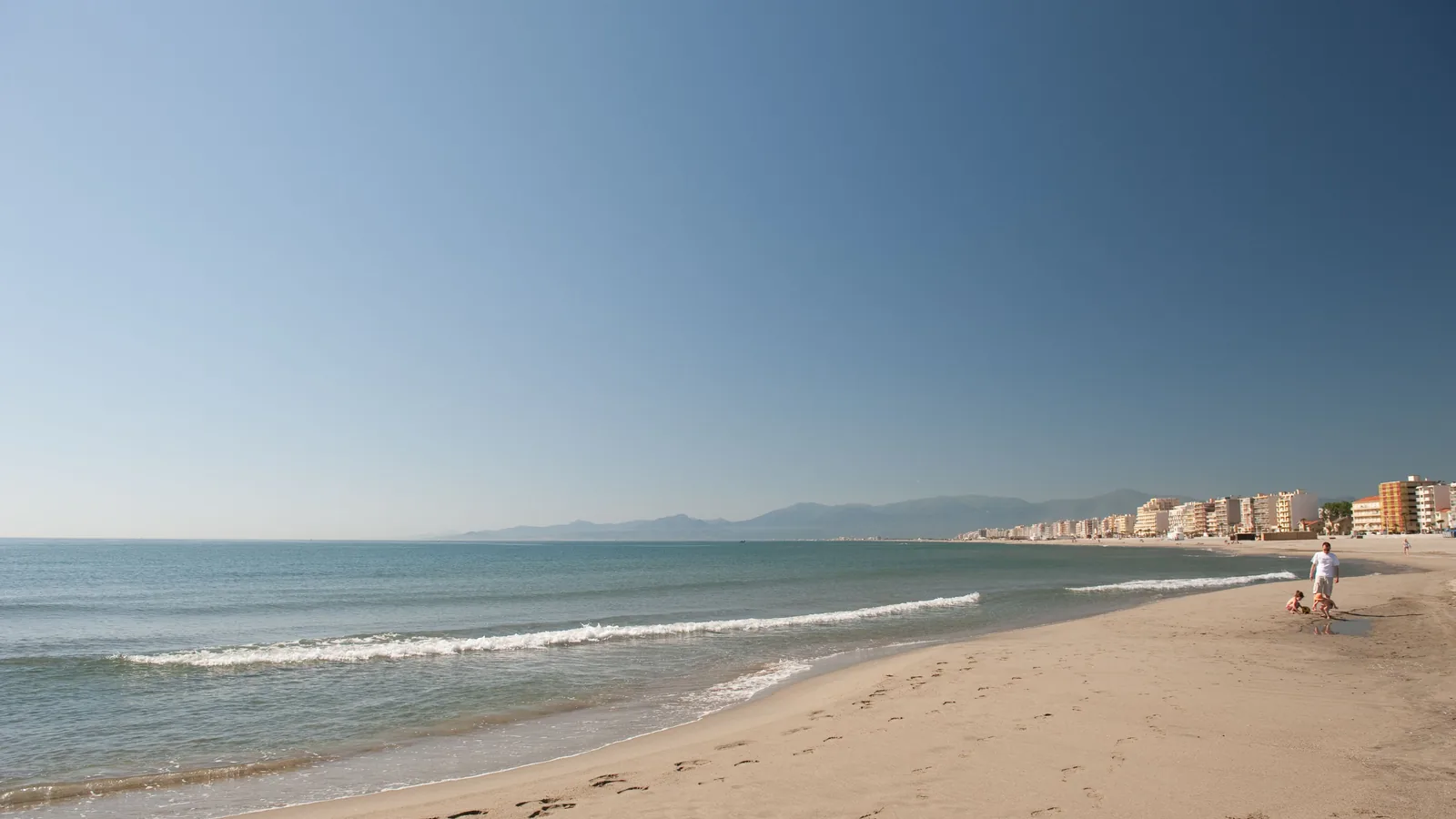
Canet-en-Roussillon sits 12 km south of Perpignan in the Pyrénées-Orientales, a Mediterranean resort with 1,000 years of history behind it. The town gets 325 days of sunshine annually and has 9 km of fine sand sloping gently into the sea. A working sailing harbor accommodates…
Quick Overview
Plan Your Visit to Plage du Roussillon
The key facts before you go
About the Beach
What is Plage du Roussillon?
Plage Du Roussillon stretches along the Mediterranean coast at Canet-en-Roussillon, a resort town with over 1,000 years of history sitting just 12 kilometers from Perpignan in the Pyrénées-Orientales department. This section of coastline forms part of a larger 9-kilometer expanse of fine sand that slopes gently into the sea, earning it Blue Flag status and Excellent bathing water quality ratings. The town claims around 325 days of sunshine annually, making it one of the sunniest spots along the French Mediterranean coast. Beyond the beach, a marina capable of hosting more than 1,000 boats anchors the local seafaring community. The area maintains strong connections to its Catalan roots, evident in its architecture and cultural offerings. Whether you're drawn by the consistent sunshine, the quality of the water, or the town's rich heritage including an 11th-century castle, Plage Du Roussillon delivers a genuine southern French coastal experience.
It sits alongside Blue Flag beaches in Occitania, part of a broader network of Blue Flag certified beaches across France certified annually by the Foundation for Environmental Education.
Sunrise, Sunset & Beach Direction
Plage du Roussillon faces west toward Mediterranean Sea. The best light for photography and swimming is typically in June. Direct sun hours follow that facing.
Planning
When to Go: Month by Month
| Month | Air Temp | Water Temp | Crowds |
|---|---|---|---|
| Jan | 8°C | 13°C | Low |
| Feb | 10°C | 13°C | Low |
| Mar | 12°C | 13°C | Low |
| Apr | 14°C | 14°C | Low |
| May | 18°C | 16°C | Low |
| Jun | 23°C | 20°C | Med |
| Jul | 26°C | 22°C | High |
| Aug | 26°C | 23°C | High |
| Sep | 22°C | 22°C | Med |
| Oct | 18°C | 19°C | Low |
| Nov | 12°C | 16°C | Low |
| Dec | 10°C | 14°C | Low |
The best time to visit Plage du Roussillon is June. Air temperatures peak around 25.9°C in summer. Peak water temperature reaches 21.9°C in July.
How crowded does Plage du Roussillon get?Who actually spends their days at Plage Du Roussillon? The demographics shift significantly between seasons, but certain patterns hold consistent. July and August draw the densest crowds, these months mark the official swimming season when lifeguards are on duty and water temperatures reach their 22-23°C peak. Families gravitate toward the gentle slope into the water, which allows children to wade safely under supervision. The 9-kilometer stretch of coastline helps distribute beachgoers, preventing the kind of overcrowding seen at smaller resort beaches. Still, prime summer weekends fill up by late morning, particularly near facilities and access points closest to town. Shoulder seasons tell a different story. June and September attract visitors seeking warmth without the August intensity. Water temperatures remain reasonable (around 20°C in June and 19°C in September) though lifeguard coverage may be reduced outside peak months. These periods suit couples and older travelers who prefer quieter conditions. The marina culture influences the crowd composition as well. With capacity for over 1,000 boats, Canet-en-Roussillon draws sailing enthusiasts and water sports participants who may spend mornings on the water before afternoon beach time. Winter visits remain rare among tourists but appeal to locals who walk the shoreline regardless of swimming conditions. January's 8°C air temperatures keep most visitors dressed warmly, appreciating the 325 days of annual sunshine from the promenade rather than the sand.
Is Plage du Roussillon open year-round?The beach itself is accessible year-round, though staffed facilities including lifeguards typically operate only during the official season (03-06 – 17-09). The Blue Flag is displayed during the certification period only.
The Water
Swimming and Beach Life at Plage du Roussillon
Is Plage du Roussillon safe to swim?Plage du Roussillon is Blue Flag certified, which requires meeting strict bathing water standards set by the EU Bathing Water Directive. The latest official class is Excellent (2025).
Water quality
Excellent (2025)
Earlier seasons: 2024 Excellent, 2023 Excellent, 2022 Excellent.
Excellent is the top class under the EU Bathing Water Directive. Recent samples stayed inside the strictest limits for bacteria.
Source: European Environment Agency
Peak water temperature at Plage du Roussillon reaches around 21.9°C in July, making it comfortable for swimming during the summer months. In winter (January), air temperatures average 8.2°C.
What is the beach like at Plage du Roussillon?What makes Plage Du Roussillon stand out among Mediterranean beaches? The answer lies in its combination of natural conditions and maintained standards. The beach carries Blue Flag certification backed by Excellent bathing water quality ratings, meaning regular testing confirms the water meets strict European health standards. The sand here is fine-grained, and the seabed descends gradually, a gentle slope that allows waders to ease into the Mediterranean rather than dropping off suddenly. Lifeguards patrol Plage Du Roussillon during the season, adding a layer of safety for swimmers and families. The beach forms part of the broader 9-kilometer sandy stretch that defines Canet-en-Roussillon's coastline, giving visitors options to spread out along the shore. Water temperatures follow typical Western Mediterranean patterns but with some regional variation. January sees the coldest readings at around 5°C, making winter swimming strictly for the hardy. February warms slightly to 12.8°C, and March reaches about 13.1°C. Spring brings gradual improvement: April averages 11°C and May climbs to around 15°C, still cool but tolerable on warm days. The real swimming season arrives with June's 20°C waters, peaking in July at nearly 23°C and holding through August at around 23.1°C. September remains swimmable at approximately 19°C before October drops to 19.1°C. November and December return to single digits at 9°C and 14.2°C respectively. Air temperatures complement the water nicely during summer months. July averages nearly 26°C while August sits at about 25.5°C. September maintains pleasant warmth at around 22°C. Even January, the coolest month, averages just over 8°C, mild by northern European standards. The beach's sunrise tag indicates east-facing orientation, meaning morning visitors catch the sun rising over the Mediterranean. Early risers benefit from this positioning, especially during summer when first light arrives early and the beach remains uncrowded. The official swimming season runs from July through August, corresponding with peak lifeguard presence and warmest water temperatures. However, the beach itself remains accessible year-round, and local swimmers often extend the season into June and September when conditions permit. Canet-en-Roussillon has invested in beach infrastructure, with numerous facilities and equipment options available along the shoreline. The adjacent marina, accommodating over 1,000 vessels, speaks to the area's commitment to water-based activities. Sport and cultural programming runs throughout the summer season, giving beachgoers options beyond lounging on the sand. The Catalan influence here adds character that distinguishes this stretch from beaches further along the French coast. The town sits close to the Spanish border, and that proximity shapes local culture, cuisine, and atmosphere in ways that feel distinctly southern.
Plage du Roussillon sits on the Mediterranean Sea: explore all Blue Flag beaches on the Mediterranean.
Planning a trip to France? Blue Flag Beaches France , our editorial guide to certified beaches across the country.
While You're Here
Beyond Plage du Roussillon
Canet-en-Roussillon offers substantial diversions when you've had your fill of sand and sea. The town aquarium houses 300 species of aquatic life sourced from five continents, a worthwhile stop particularly on the rare cloudy day. History enthusiasts should visit the Château Vicomtal, an 11th-century fortress featuring an unusual ice well that once stored winter ice for summer use. The Église Saint Jacques stands out with its distinctive square bell tower, typical of Catalan religious architecture in the region. Art lovers can explore the Galerie des Hospices, which hosts rotating exhibitions of painting and sculpture. The gallery occupies historic buildings that add context to the works displayed inside. Nature seekers should investigate the local étang (coastal lagoon) and the traditional fishermen's village, both offering quieter alternatives to the main beach scene. These areas provide insight into how communities here lived before tourism became the primary economy. Perpignan sits just 12 kilometers away, offering a proper city experience with Catalan character, excellent restaurants, and the Palais des Rois de Majorque, a medieval palace that once served Majorca's kings when they controlled this region.
Transport
Getting to Plage du Roussillon
How do I get to Plage du Roussillon by car?Plage du Roussillon is approximately 2.16 km from Canet-en-Roussillon. Follow local road signs to the beach. Check Google Maps or a local map for the most current directions.
What is the nearest airport to Plage du Roussillon?The nearest airport is Perpignan-Rivesaltes (Llabanère) Airport (PGF), approximately 14.3 km away.
Can I get to Plage du Roussillon by public transport?Local bus services connect Perpignan to Canet-en-Roussillon throughout the year, covering the 12-kilometer route between the city center and the coast. Summer schedules typically offer increased frequency to accommodate tourist demand. Regional bus networks also link surrounding towns along the Roussillon coast. Check current timetables through the Pyrénées-Orientales departmental transport system for specific routes and schedules. The nearest recorded bus stop is 166 m from the beach.
Is there a train to Plage du Roussillon?Perpignan serves as the main rail gateway to Plage Du Roussillon, sitting just 12 kilometers inland from Canet-en-Roussillon. The city connects to France's TGV high-speed network, with direct services from Paris, Montpellier, and other major French cities. The TGV from Paris takes approximately five hours. International travelers can also reach Perpignan via connections through Barcelona, as high-speed trains link the Catalan capital to the French network. From Perpignan station, local bus services and taxis complete the final leg to the coast. During summer months, connections to beach areas typically run more frequently.
Nearby
Near Plage du Roussillon
Mapped toilets, bus stops, cafés, parking, and shops within about 500 m of Plage du Roussillon. Distances are walking-line estimates from the beach pin.
Map loads when you ask. Tiles stay off the first paint.
Map: OpenStreetMap (ODbL)
Toilets near Plage du Roussillon
- Public toilets Public toilets 115 m
- Public toilets Public toilets 310 m
- Public toilets Public toilets 325 m
Bus near Plage du Roussillon
- Port Bus stop 166 m
- Port Bus stop 171 m
- Canet Plage Bus stop 495 m
- Canet Plage Bus stop 500 m
Cafés near Plage du Roussillon
- La Guérandaise Restaurant 7 m
- Les Frayettes Restaurant 11 m
- Pita Corner Restaurant 32 m
- Dimanche Canet Restaurant 55 m
- Can Marcel Restaurant 59 m
Parking near Plage du Roussillon
- Parking du port Parking 144 m
- Parking Aquarium Parking 162 m
- Parking du Port Parking 177 m
- Parking privé du levant Parking 233 m
- Parking Parking 308 m
Source: © OpenStreetMap contributors (ODbL). Names and positions come from mapped OSM features. Confirm on site.
On the beach
Facilities at Plage du Roussillon
- Lifeguards
- Yes, during the certified season
- Wheelchair access
- Accessible site facilities and water entry
- Visual assistance
- No
- Toilets
- Yes
- Showers
- No
- Parking
- Available nearby (street-side parking). 78 m away, a fee is charged
- Entry
- Free to enter
These details can change. Check on arrival.
Map data © OpenStreetMap contributors
Practical Details
Practical Information
| At the Beach | |
| Official Season | 03 Jun – 17 Sep |
|---|---|
| Beach Type | Sandy beach |
| Nearest supermarket | 40 m from the beach |
| Nearest bus stop | 166 m from the beach |
| Visiting Information | |
| GPS Coordinates | 42.7002°N, 3.0364°E |
| Water Quality | Excellent (2025) (EU Bathing Water Directive) |
| Blue Flag Operator | Foundation for Environmental Education (FEE), France |
Frequently Asked Questions
Plage du Roussillon FAQ
Is Plage Du Roussillon worth visiting?
Plage Du Roussillon earns its Blue Flag certification with Excellent water quality ratings and genuine appeal. The fine sand beach slopes gently into the Mediterranean, lifeguards patrol during summer, and the 325 days of annual sunshine provide reliable conditions. The broader Canet-en-Roussillon area adds value with its marina, 11th-century castle, aquarium, and Catalan heritage. It suits visitors seeking a full resort experience rather than isolated beach seclusion.
How do I get to Plage Du Roussillon?
Perpignan, just 12 kilometers inland, connects to France's TGV network with high-speed trains from Paris, Montpellier, and Barcelona. From Perpignan, local buses serve Canet-en-Roussillon regularly, with increased frequency during summer months. Rental cars offer the most flexibility for exploring the Roussillon coastline.
What is the best time of year to visit Plage Du Roussillon?
The official swimming season runs July through August when lifeguards are present and water temperatures reach 22-23°C. Air temperatures average around 26°C during these months. June and September offer milder crowds with water still around 19-20°C. The area claims 325 sunny days annually, so even shoulder seasons typically deliver good weather. Avoid winter swimming. January water temperatures drop to just 5°C.
What facilities are there at Plage Du Roussillon?
Plage Du Roussillon provides lifeguard supervision during the July-August swimming season. The beach forms part of a 9-kilometer stretch with various access points and facilities along Canet-en-Roussillon's coastline. The adjacent marina accommodates over 1,000 boats. The town offers sport and cultural activities, beach equipment, and standard resort amenities. The aquarium, historic sites, and restaurants sit within easy reach of the sand.
Is Plage Du Roussillon suitable for families?
The gentle slope into the water makes Plage Du Roussillon appropriate for families with children who can wade gradually rather than encountering sudden drop-offs. Lifeguards on duty during July and August add safety assurance. Excellent water quality ratings indicate clean bathing conditions. Beyond the beach, the aquarium with 300 species appeals to younger visitors, while the 9-kilometer stretch of coastline allows families to find less crowded spots along the shore.
Are there toilets near Plage du Roussillon?
Yes. OpenStreetMap maps 3 toilet locations near Plage du Roussillon, including 115 m away, 310 m away, and 325 m away. Distances are walking-line estimates within about 500 m of the beach pin. Confirm opening hours on site; some facilities are seasonal. © OpenStreetMap contributors (ODbL).
Is there a bus near Plage du Roussillon?
Yes. OpenStreetMap maps a public-transport stop 166 m from Plage du Roussillon (Port), plus 3 more within about 500 m. Check current timetables before you travel. © OpenStreetMap contributors (ODbL).
Are there cafés near Plage du Roussillon?
Yes. OpenStreetMap lists 5 cafés or restaurants near Plage du Roussillon, including La Guérandaise (7 m), Les Frayettes (11 m), Pita Corner (32 m), and Dimanche Canet (55 m). Hours and seasonal opening are not verified here. Check on the day. © OpenStreetMap contributors (ODbL).
Is there parking near Plage du Roussillon?
Yes. OpenStreetMap maps parking 144 m from Plage du Roussillon (Parking du port), with 5 lots or spaces inside about 500 m. Charges and time limits are not recorded here. © OpenStreetMap contributors (ODbL).
Explore More
Nearby Blue Flag Beaches
Editorial
From the Zeach Blog
Everything you need to know about what makes a beach qualify for Blue Flag status, from water quality to environmental education.
Read moreOur editorial team's pick of the standout Blue Flag beaches in France, rated for family friendliness, scenery, and facilities.
What the flag actually means, how certification works, and why a Blue Flag is a genuinely reliable signal, not just a marketing tool.
Read moreSources
- Foundation for Environmental Education: Blue Flag programme
- FEE site listing for Plage du Roussillon
- FEE France (Pavillon Bleu)
Last verified September 2026. National operator pages and FEE listings are the primary certification sources.