Nazaré
Leiria, Portugal: Excellent water quality
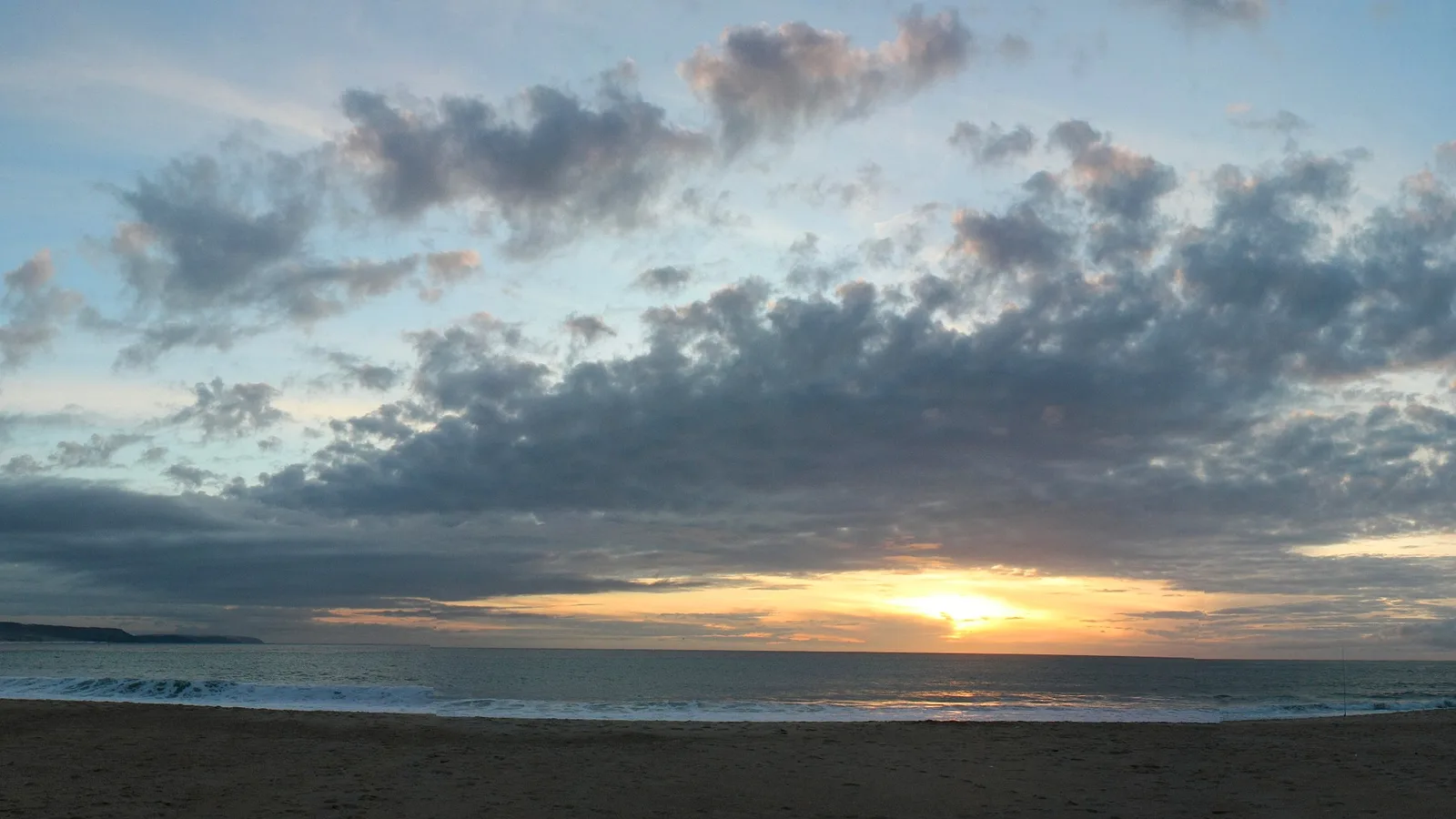
Nazaré is a working beach town on Portugal's central coast that has drawn visitors since the mid-19th century. The town grew steadily through the 1900s and today welcomes thousands of tourists annually, both Portuguese and international.
Quick Overview
Plan Your Visit to Nazaré
The key facts before you go
About the Beach
What is Nazaré?
Nazaré is a working fishing village and bathing beach on Portugal's central coast, in the Leiria region. Since the mid-19th century, it has been known as a seaside destination, and the town has grown considerably over the past hundred years. The beach itself sits on a south-facing stretch of Atlantic coastline, offering reliable conditions year-round. What draws visitors here is the genuine character of the place, narrow streets descend to the waterfront, where local life continues much as it has for generations. Modern amenities now serve the thousands of national and international tourists who visit annually, yet the town retains its distinct identity. The bathing water is rated Excellent, and the beach is staffed with lifeguards during peak seasons.
It sits alongside other certified beaches in Leiria, part of a broader network of other Blue Flag beaches in Portugal certified annually by the Foundation for Environmental Education.
Sunrise, Sunset & Beach Direction
Nazaré faces south toward Atlantic Ocean. The best light for photography and swimming is typically in June, September. Direct sun hours follow that facing.
Planning
When to Go: Month by Month
| Month | Air Temp | Water Temp | Crowds |
|---|---|---|---|
| Jan | 12°C | 15°C | Low |
| Feb | 13°C | 15°C | Low |
| Mar | 13°C | 15°C | Low |
| Apr | 14°C | 15°C | Low |
| May | 17°C | 17°C | Low |
| Jun | 18°C | 18°C | Med |
| Jul | 20°C | 19°C | High |
| Aug | 20°C | 20°C | High |
| Sep | 20°C | 20°C | Med |
| Oct | 18°C | 19°C | Low |
| Nov | 15°C | 18°C | Low |
| Dec | 13°C | 16°C | Low |
The best time to visit Nazaré is June, September. Air temperatures peak around 19.8°C in summer. Peak water temperature reaches 19.2°C in July.
How crowded does Nazaré get?Nazaré receives thousands of visitors annually, both Portuguese and international, but the beach itself rarely feels overcrowded in the way popular Algarve beaches do. This is because the town's modest beach size and working harbor limit capacity. During summer months (June–August) and Portuguese holiday periods, the waterfront becomes busier, and you'll see families, swimmers, and sunbathers mixing with the fishing community. The narrow streets leading to the beach can feel congested during peak afternoon hours. Winter and shoulder seasons (April–May, September–October) are noticeably quieter. Outside July and August, you can experience the beach with far fewer visitors, making it feel more like a local spot than a tourist destination. The crowd composition skews toward Portuguese families and European travelers seeking authentic coastal atmosphere rather than party scenes or resort-style tourism. The waterfront itself maintains its fishing village character regardless of season. You'll encounter local fishermen, nets being mended, and boats coming and going, this activity doesn't pause for tourism. This means Nazaré attracts visitors who appreciate that context rather than those seeking isolated tranquility. The liveliness people mention in descriptions of the town comes from this mix of working community and visitor presence, not from nightlife or commercial tourism infrastructure.
Is Nazaré open year-round?The beach itself is accessible year-round, though staffed facilities including lifeguards typically operate only during the official season (20-06 – 15-09). The Blue Flag is displayed during the certification period only.
The Water
Swimming and Beach Life at Nazaré
Is Nazaré safe to swim?Nazaré is Blue Flag certified, which requires meeting strict bathing water standards set by the EU Bathing Water Directive. The latest official class is Excellent (2025).
Water quality
Excellent (2025)
Earlier seasons: 2024 Excellent, 2023 Excellent, 2022 Excellent.
Excellent is the top class under the EU Bathing Water Directive. Recent samples stayed inside the strictest limits for bacteria.
Source: European Environment Agency
Peak water temperature at Nazaré reaches around 19.2°C in July, making it comfortable for swimming during the summer months. In winter (January), air temperatures average 11.5°C.
What is the beach like at Nazaré?Nazaré's beach is shaped by its role as a genuine fishing community alongside its function as a bathing destination. The shoreline faces south, which provides consistent conditions and exposure to Atlantic swells, something the town has become famous for in recent decades. The water temperature ranges from 15.1°C in January to 19.7°C in August, reflecting the Atlantic's seasonal cycle; most swimmers find conditions comfortable from June through September when temperatures reach 15–19.7°C. The beach itself is backed by the town's characteristic narrow streets and traditional architecture. These lanes slope down to the waterfront, creating a visual corridor between the built environment and the sea. Unlike purpose-built resort beaches, Nazaré retains working harbor infrastructure, fishing boats, nets, and the daily activity of a functioning port are part of the landscape. This authenticity is what many visitors come to experience. Lifeguards are present, which is important for safety. The bathing water quality is consistently rated Excellent, meeting strict European standards. The south-facing aspect means the beach receives good light during daylight hours and catches afternoon and evening sun throughout the year. For swimmers and bathers, the sea can be rough during winter months and Atlantic storm seasons. The same swells that attract big-wave surfers to nearby breaks can make casual swimming challenging outside summer. Spring and early autumn offer more moderate conditions. The beach is not particularly long (it's modest in size compared to other Portuguese beaches) but this is part of its character. The focus here is on integration with the town rather than endless sandy expanses. Visitors should expect a working beach, not a sanitized resort environment. You'll see fishing activity, local fishermen, and genuine community life. The water quality is high, and facilities meet modern standards, yet the atmosphere remains distinctly Portuguese and local rather than tourist-oriented.
Nazaré sits on the Atlantic Ocean: explore all Blue Flag beaches on the Atlantic.
Planning a trip to Portugal? Blue Flag Beaches Portugal , our editorial guide to certified beaches across the country.
While You're Here
Beyond Nazaré
The town of Nazaré itself offers more than just the beach. The narrow streets are worth exploring on foot, local restaurants serve fresh fish and traditional Portuguese dishes, many with views across the waterfront. The Sítio district sits on cliffs above the beach and provides different perspectives on the coast. The town's fishing heritage is visible throughout: harbor areas, boat repair yards, and fish markets show the working economy that sustains the community. For wider exploration, the central Portuguese coast offers several options within short drives. Nearby towns and beaches provide different characteristics. The region's inland areas contain traditional villages and countryside. Lisbon itself is accessible as a day trip or longer visit if you want urban culture, museums, and dining alongside coastal time. Nazaré has become notable in extreme sports circles for big-wave surfing at nearby breaks, particularly during Atlantic storm season (October–March). Even if you don't surf, the dramatic coastal geology and wave conditions are visible and interesting. The town is a functioning place with genuine Portuguese culture, which means exploring it rewards curiosity about local life, fishing practices, and regional food traditions.
Transport
Getting to Nazaré
How do I get to Nazaré by car?Nazaré is approximately 0.54 km from Nazaré. Follow local road signs to the beach. Check Google Maps or a local map for the most current directions.
What is the nearest airport to Nazaré?The nearest airport is Lisbon Humberto Delgado Airport (LIS), approximately 91.1 km away.
Can I get to Nazaré by public transport?Public transport options vary by season. Check local transport authority websites for current bus and train schedules connecting to Nazaré. The nearest recorded bus stop is 225 m from the beach.
Is there a train to Nazaré?Nazaré lists Centro as the nearest railway station, 0.44 km away. Check current timetables before travelling.
Nearby
Near Nazaré
Mapped toilets, bus stops, cafés, parking, and shops within about 500 m of Nazaré. Distances are walking-line estimates from the beach pin.
Map loads when you ask. Tiles stay off the first paint.
Map: OpenStreetMap (ODbL)
Toilets near Nazaré
- Toilet in Spar Public toilets 203 m
- Public toilets Public toilets 239 m
- Public toilets Public toilets 313 m
- Public toilets Public toilets 313 m
Bus near Nazaré
- Praça Dr. Manuel Arriaga Bus stop 225 m
- Mercado Bus stop 325 m
- Bus stop Bus stop 392 m
Cafés near Nazaré
- Adega Oceano Restaurant 89 m
- Sunset Boulevard Restaurant 91 m
- Sunset Boulevard Restaurant 91 m
- A Celeste Restaurant 92 m
- Parad'ice Gelateria Ice cream 95 m
Parking near Nazaré
- Parking Parking 80 m
- Parking Parking 91 m
- Parking Parking 100 m
- Parking Parking 152 m
- Parking Parking 206 m
Supermarket near Nazaré
- Spar Supermarket 202 m
- Sonia's Market Supermarket 217 m
- Supermarket Supermarket 343 m
Source: © OpenStreetMap contributors (ODbL). Names and positions come from mapped OSM features. Confirm on site.
On the beach
Facilities at Nazaré
- Lifeguards
- Yes, during the certified season
- Wheelchair access
- Accessible site facilities and water entry
- Visual assistance
- No
- Toilets
- Yes
- Showers
- Yes
- Parking
- Available nearby (street-side parking). 79 m away, no parking fee
- Entry
- Free to enter
These details can change. Check on arrival.
Map data © OpenStreetMap contributors
Practical Details
Practical Information
| At the Beach | |
| Official Season | 20 Jun – 15 Sep |
|---|---|
| Beach Type | Sandy beach |
| Nearest supermarket | 200 m from the beach |
| Nearest bus stop | 225 m from the beach |
| Visiting Information | |
| GPS Coordinates | 39.5989°N, 9.0736°W |
| Water Quality | Excellent (2025) (EU Bathing Water Directive) |
| Blue Flag Operator | Foundation for Environmental Education (FEE), Portugal |
Frequently Asked Questions
Nazaré FAQ
Is Nazaré worth visiting?
Yes, if you value authentic Portuguese coastal life over resort-style beaches. Nazaré's value lies in its working fishing community, genuine atmosphere, and Excellent water quality, not in isolated beauty or endless development. The modest beach size and active harbor mean it feels like a real place, not a staged destination. It suits visitors interested in local culture, traditional food, and understanding how Portuguese coastal towns function. Summer offers reliable bathing temperatures (16–19.7°C), and lifeguards are present. If you want crowded resort beaches or nightlife, look elsewhere. If you want to experience a actual Portuguese fishing village, Nazaré rewards the visit.
How do I get to Nazaré?
Car rental is the most practical option for this distance and gives flexibility. Alternatively, take a taxi, ride-share, or bus from Lisbon city center to onward transport to Nazaré. There is no direct rail service to the beach itself, though regional trains and buses connect Lisbon to nearby towns. The drive from Lisbon is straightforward and passes through interesting central Portuguese landscape.
What's the best time of year to visit Nazaré?
June through September offers the warmest water (15–19.7°C) and calmest conditions for swimming and bathing. July and August are busiest and warmest (air temperatures around 20°C). May and October provide good weather with fewer crowds and still-comfortable water temperatures (13–15°C). Winter (December–February) brings water temperatures below 10°C and rougher Atlantic conditions, but attracts experienced surfers and those seeking solitude. Spring (March–April) and early autumn (September) balance pleasant weather, reasonable water temperatures, and moderate crowds.
What facilities are there at Nazaré?
Lifeguards are present, providing safety oversight. Bathing water quality is rated Excellent and meets strict European standards. The town offers modern amenities including restaurants, shops, and accommodations despite its traditional character. However, this is not a facility-heavy resort beach, expect services integrated into a working town rather than concentrated beach infrastructure. Fish restaurants line the waterfront, and local shops serve both residents and visitors. Facilities are adequate for a day visit or longer stay, but not as comprehensive as purpose-built beach resorts.
Is Nazaré suitable for families?
Yes, with considerations. The Excellent water quality, lifeguards, and moderate beach size make it safe for children. Summer months (June–August) with water temperatures of 16–19.7°C are most comfortable for young swimmers. The town's narrow streets are pedestrian-friendly and interesting to explore. However, families seeking resort-style kids' clubs, lifeguard-supervised play areas, or isolated calm beaches should look elsewhere. Nazaré suits families interested in local culture, fishing heritage, and Portuguese seaside life. The working harbor and fishing activity are educational for children but not sterile or tourist-sanitized.
Are there toilets near Nazaré?
Yes. OpenStreetMap maps 4 toilet locations near Nazaré, including Toilet in Spar (203 m), 239 m away, 313 m away, and 313 m away. Distances are walking-line estimates within about 500 m of the beach pin. Confirm opening hours on site; some facilities are seasonal. © OpenStreetMap contributors (ODbL).
Is there a bus near Nazaré?
Yes. OpenStreetMap maps a public-transport stop 225 m from Nazaré (Praça Dr. Manuel Arriaga), plus 2 more within about 500 m. Check current timetables before you travel. © OpenStreetMap contributors (ODbL).
Are there cafés near Nazaré?
Yes. OpenStreetMap lists 5 cafés or restaurants near Nazaré, including Adega Oceano (89 m), Sunset Boulevard (91 m), Sunset Boulevard (91 m), and A Celeste (92 m). Hours and seasonal opening are not verified here. Check on the day. © OpenStreetMap contributors (ODbL).
Is there parking near Nazaré?
Yes. OpenStreetMap maps parking 80 m from Nazaré, with 5 lots or spaces inside about 500 m. Charges and time limits are not recorded here. © OpenStreetMap contributors (ODbL).
Is there a supermarket near Nazaré?
Yes. OpenStreetMap maps a supermarket 202 m from Nazaré (Spar). Walking-line distance; confirm opening hours locally. © OpenStreetMap contributors (ODbL).
Explore More
Nearby Blue Flag Beaches
Editorial
From the Zeach Blog
The 2026 accessible-beach award, matched to Blue Flag pages in Portugal, is covered in the 2026 Praia Acessível beaches that also hold a Blue Flag.
Everything you need to know about what makes a beach qualify for Blue Flag status, from water quality to environmental education.
Read moreOur editorial team's pick of the standout Blue Flag beaches in Portugal, rated for family friendliness, scenery, and facilities.
What the flag actually means, how certification works, and why a Blue Flag is a genuinely reliable signal, not just a marketing tool.
Read moreSources
- Foundation for Environmental Education: Blue Flag programme
- FEE site listing for Nazaré
- ABAE (Associação Bandeira Azul da Europa)
Last verified September 2026. National operator pages and FEE listings are the primary certification sources.