Plage du Grand Large
Occitania, France: Excellent water quality
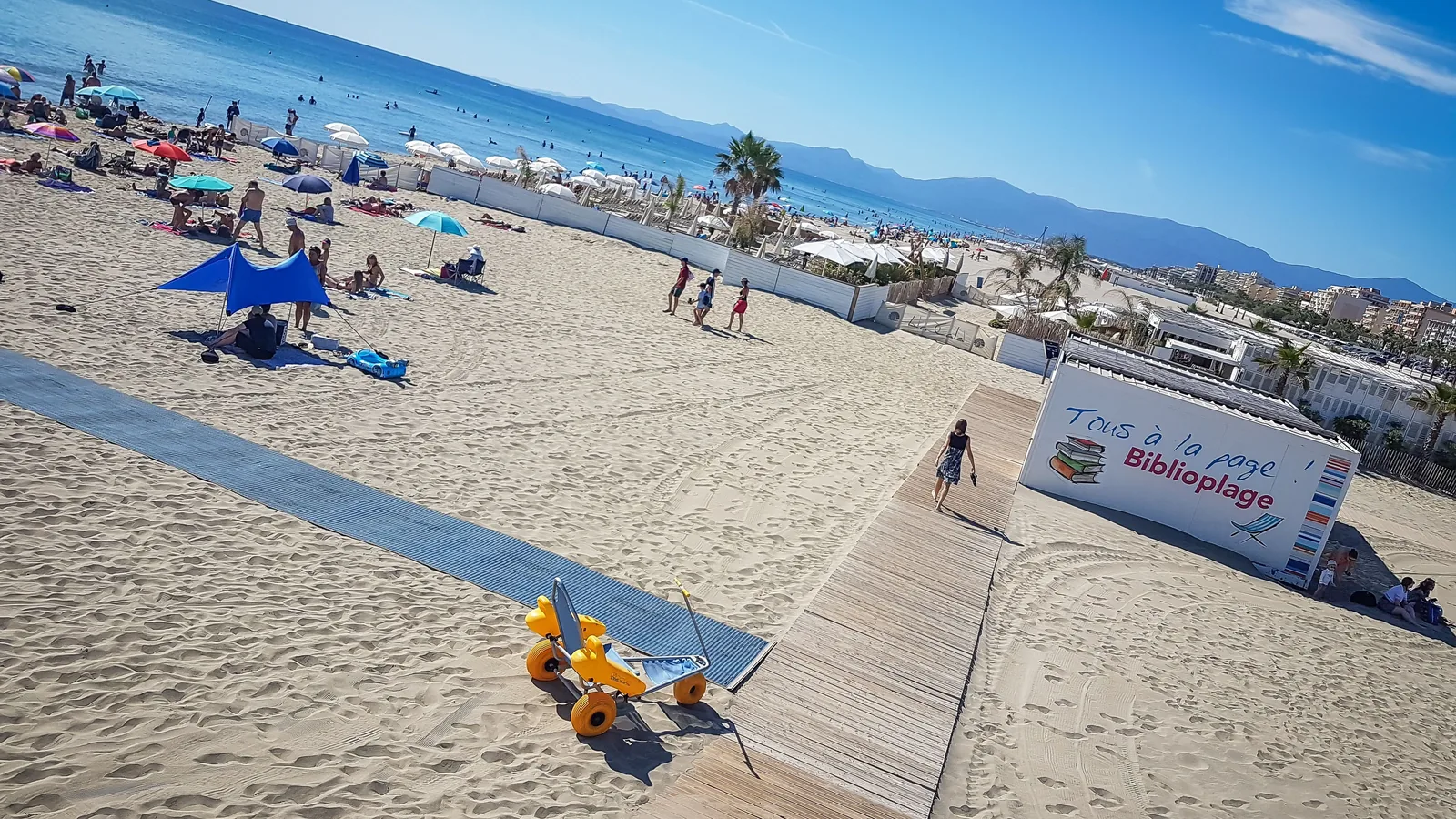
Canet-en-Roussillon sits 12 km south of Perpignan in the Pyrénées-Orientales, a Mediterranean beach town with 1,000 years of history behind it. The town gets roughly 325 days of sunshine annually and has 9 km of fine sand sloping gently into the sea.
Quick Overview
Plan Your Visit to Plage du Grand Large
The key facts before you go
About the Beach
What is Plage du Grand Large?
Plage Du Grand Large sits along the Mediterranean coastline of Canet-en-Roussillon, a resort town in France's Occitania region with over a thousand years of history behind it. This stretch of fine sand forms part of the 9 kilometers of coastline that define the area, gently sloping into waters that carry the Blue Flag designation for excellent bathing quality. Located just 12 kilometers from Perpignan in the Pyrénées-Orientales department, the beach benefits from the region's remarkable climate, locals count roughly 325 days of sunshine annually. The town combines its beach culture with a working marina capable of hosting more than 1,000 vessels, creating that characteristic blend of seaside leisure and maritime activity found along this part of the French coast. Summer brings lifeguard supervision to the beach, and the wider area offers everything from water sports to cultural sites, making it a functional base for exploring this corner of the Mediterranean.
It sits alongside certified beaches along Occitania, part of a broader network of certified beaches throughout France certified annually by the Foundation for Environmental Education.
Sunrise, Sunset & Beach Direction
Plage du Grand Large faces west toward Mediterranean Sea. The best light for photography and swimming is typically in June. Direct sun hours follow that facing.
Planning
When to Go: Month by Month
| Month | Air Temp | Water Temp | Crowds |
|---|---|---|---|
| Jan | 8°C | 13°C | Low |
| Feb | 10°C | 13°C | Low |
| Mar | 12°C | 13°C | Low |
| Apr | 14°C | 14°C | Low |
| May | 18°C | 16°C | Low |
| Jun | 23°C | 20°C | Med |
| Jul | 26°C | 22°C | High |
| Aug | 26°C | 23°C | High |
| Sep | 22°C | 22°C | Med |
| Oct | 17°C | 19°C | Low |
| Nov | 12°C | 16°C | Low |
| Dec | 10°C | 14°C | Low |
The best time to visit Plage du Grand Large is June. Air temperatures peak around 25.9°C in summer. Peak water temperature reaches 21.9°C in July.
How crowded does Plage du Grand Large get?What's the crowd situation really like at Plage Du Grand Large? The pattern follows Mediterranean norms but with some specifics worth understanding before you plan your visit. July and August represent peak season in every sense. These months combine school holidays across France and neighboring countries with the warmest water temperatures and lifeguard coverage. The beach fills accordingly, particularly during mid-morning through late afternoon. Families predominate during these months, the gentle slope and supervised swimming make this a natural choice for parents with children. The 9-kilometer stretch of sand along Canet-en-Roussillon does distribute visitors somewhat, so you're unlikely to find yourself packed towel-to-towel unless you're positioned directly in front of the main beach facilities. Walking a few hundred meters in either direction typically reveals less crowded sand. June and September see notably fewer visitors while still offering reasonable conditions. Water temperatures in June hover around 19.5°C (cool but swimmable) while September's 21.6°C suits hardier swimmers. Air temperatures remain comfortable, and the absence of peak-season crowds makes these months attractive for visitors who prioritize space over guaranteed warmth. The region's 325 days of annual sunshine means the beach sees activity year-round, though winter visitors come for walking and fresh air rather than swimming. Local residents use the area throughout the year, giving it a different character outside the tourist months, more authentically French, with regulars who know the best spots and quietest times.
Is Plage du Grand Large open year-round?The beach itself is accessible year-round, though staffed facilities including lifeguards typically operate only during the official season (01-06 – 20-09). The Blue Flag is displayed during the certification period only.
The Water
Swimming and Beach Life at Plage du Grand Large
Is Plage du Grand Large safe to swim?Plage du Grand Large is Blue Flag certified, which requires meeting strict bathing water standards set by the EU Bathing Water Directive. The latest official class is Excellent (2025).
Water quality
Excellent (2025)
Earlier seasons: 2024 Excellent, 2023 Excellent, 2022 Excellent.
Excellent is the top class under the EU Bathing Water Directive. Recent samples stayed inside the strictest limits for bacteria.
Source: European Environment Agency
Peak water temperature at Plage du Grand Large reaches around 21.9°C in July, making it comfortable for swimming during the summer months. In winter (January), air temperatures average 8.2°C.
What is the beach like at Plage du Grand Large?What actually makes Plage Du Grand Large worth your time? The answer lies in both the water quality and the physical characteristics that set this stretch of coastline apart from busier Mediterranean alternatives. The beach holds an excellent bathing water quality rating (the highest classification available) which means regular testing confirms the water meets strict European standards for cleanliness and safety. For swimmers, this translates to peace of mind when entering the water, particularly important if you're traveling with children or simply prefer knowing the conditions have been independently verified. The sand here is fine-grained and the beach profile follows a gentle slope into the sea, making entry gradual rather than abrupt. This matters for less confident swimmers and families with young children who benefit from the ability to wade progressively deeper. The beach is part of a continuous 9-kilometer sandy stretch along the Canet-en-Roussillon coastline, so even during busy periods, there's room to spread out. How warm does the water get at Plage Du Grand Large? The Mediterranean here reaches its peak temperatures in July at around 22.9°C, staying similarly warm through August at approximately 23.1°C. These are comfortable swimming temperatures for most visitors. June sees the water at roughly 19.5°C, swimmable for the acclimatized but noticeably cooler. By September, temperatures drop to around 21.6°C, still manageable for those who don't mind a refreshing dip. The shoulder months tell a different story. May averages just 16.4°C, which most swimmers would find too cold for extended time in the water. October drops further to 19.1°C, and the winter months see temperatures plunge to single digits. January averages only 13.1°C. The official swim season runs July through August, which aligns with both water temperature peaks and lifeguard presence on the beach. Lifeguard supervision operates during the designated swimming season, adding a layer of safety for beach users. This professional oversight is particularly valuable given the beach's popularity during peak summer months when visitor numbers increase substantially. Air temperatures complement the swimming conditions well. July sees averages around 25.9°C, August similar at 25.5°C, and September a milder 21.7°C. Even January doesn't become truly cold by northern European standards, averaging 8.2°C, explaining why the region attracts visitors year-round, even if swimming is off the agenda during cooler months. The beach faces east, catching the sunrise, a characteristic noted in its designation. Early morning visits during summer reward you with direct sunlight on the water before the day's crowds arrive. This orientation also means afternoon shade arrives earlier than on west-facing beaches, which can be welcome during July and August when midday heat intensifies. The marina nearby accommodates over 1,000 boats, and this proximity shapes the character of the area. You're never far from the activity of a working port, with vessels coming and going throughout the day. Beach equipment and water sports facilities cluster along this stretch of coast, providing options beyond simple swimming and sunbathing.
Plage du Grand Large sits on the Mediterranean Sea: explore all Blue Flag beaches on the Mediterranean.
Planning a trip to France? Blue Flag Beaches France , our editorial guide to certified beaches across the country.
While You're Here
Beyond Plage du Grand Large
Canet-en-Roussillon offers more than its coastline, with a thousand years of history concentrated in the old village area. The Château Vicomtal dates from the 11th century and includes an unusual ice well, a medieval refrigeration system worth seeing. The Church of Saint Jacques features a distinctive square bell tower that marks the village skyline. The local aquarium houses around 300 species of aquatic life from five continents, providing a rainy-day option or a break from beach time. For art enthusiasts, the Galerie des Hospices hosts rotating exhibitions of painting and sculpture in a converted historic building. The étang (the coastal lagoon that sits behind the beach area) creates a different environment entirely from the sea-facing shore. This wetland attracts birdlife and offers quieter walks away from the beach crowds. The fishermen's village preserves something of the area's working maritime heritage, contrasting with the modern marina's pleasure craft. Perpignan sits just 12 kilometers away, offering a proper city experience with its Catalan heritage, the Palace of the Kings of Majorca, and restaurants serving both French and Catalan cuisine. The Pyrénées-Orientales department provides mountain access within an hour's drive if you want dramatic scenery changes.
Transport
Getting to Plage du Grand Large
How do I get to Plage du Grand Large by car?Plage du Grand Large is approximately 2.66 km from Canet-en-Roussillon. Follow local road signs to the beach. Check Google Maps or a local map for the most current directions.
What is the nearest airport to Plage du Grand Large?The nearest airport is Perpignan-Rivesaltes (Llabanère) Airport (PGF), approximately 14.6 km away.
Can I get to Plage du Grand Large by public transport?Local bus services connect Perpignan to Canet-en-Roussillon, with frequency increasing during summer months when visitor numbers rise. The journey takes approximately 20-30 minutes depending on route and stops. Services typically run from Perpignan's central bus station, with schedules available through the regional transport network. The nearest recorded bus stop is 215 m from the beach.
Is there a train to Plage du Grand Large?Perpignan serves as the main rail gateway to Canet-en-Roussillon, with the city located just 12 kilometers from Plage Du Grand Large. Perpignan station sits on the main line connecting Paris to Barcelona, with TGV high-speed services reducing travel time from the French capital to around five hours. Regional TER trains link Perpignan to other cities in Occitania and beyond. From Perpignan station, you'll need onward transport to reach the beach, local buses run regularly during summer months, or taxis and rental cars provide more flexible options.
Nearby
Near Plage du Grand Large
Mapped toilets, bus stops, cafés, parking, and shops within about 500 m of Plage du Grand Large. Distances are walking-line estimates from the beach pin.
Map loads when you ask. Tiles stay off the first paint.
Map: OpenStreetMap (ODbL)
Toilets near Plage du Grand Large
- Public toilets Public toilets 67 m
- Public toilets Public toilets 415 m
Bus near Plage du Grand Large
- Bus stop Bus stop 215 m
- Floralies Bus stop 258 m
- Floralies Bus stop 266 m
- Grand Large Bus stop 304 m
- Grand Large Bus stop 322 m
Cafés near Plage du Grand Large
- La Cala Restaurant-Club de Plage Restaurant 98 m
- Les Gambines Restaurant 149 m
- Le Local Restaurant 150 m
- Ice cream Ice cream 201 m
- L'Eden club plage Restaurant 203 m
Parking near Plage du Grand Large
- Parking Côte Vermeille Parking 48 m
- Parking Héliport Parking 200 m
- Parking Parking 276 m
- Parking Foment Parking 456 m
Source: © OpenStreetMap contributors (ODbL). Names and positions come from mapped OSM features. Confirm on site.
On the beach
Facilities at Plage du Grand Large
- Lifeguards
- Yes, during the certified season
- Wheelchair access
- Accessible site facilities and water entry
- Visual assistance
- No
- Toilets
- Yes
- Showers
- No
- Parking
- Available nearby (surface parking). 2 m away, partial wheelchair access
- Entry
- Free to enter
These details can change. Check on arrival.
Map data © OpenStreetMap contributors
Practical Details
Practical Information
| At the Beach | |
| Official Season | 01 Jun – 20 Sep |
|---|---|
| Beach Type | Sandy beach |
| Nearest supermarket | 620 m from the beach |
| Nearest bus stop | 215 m from the beach |
| Visiting Information | |
| GPS Coordinates | 42.6885°N, 3.0349°E |
| Water Quality | Excellent (2025) (EU Bathing Water Directive) |
| Blue Flag Operator | Foundation for Environmental Education (FEE), France |
Frequently Asked Questions
Plage du Grand Large FAQ
Is Plage Du Grand Large worth visiting?
Plage Du Grand Large earns its appeal through verified excellent water quality, fine sand with a gentle gradient into the sea, and the broader package of Canet-en-Roussillon's facilities. The beach benefits from the region's exceptional sunshine (roughly 325 days annually) and lifeguard supervision during July and August. It suits families well given the gradual water depth and supervised swimming. If you're seeking dramatic cliffs or isolated coves, this isn't the beach for you. But for accessible Mediterranean swimming with proper infrastructure, quality testing, and nearby amenities including a large marina, it delivers what the coastline promises.
How do I get to Plage Du Grand Large?
Most visitors arrive via Perpignan, located 12 kilometers from the beach. Perpignan's train station receives TGV services from Paris and connects to Barcelona. From there, local buses serve Canet-en-Roussillon, especially during summer. By car, the A9 motorway provides access from both French and Spanish directions. Once in Canet-en-Roussillon, the beach is easily reached on foot or by local transport.
What is the best time of year to visit Plage Du Grand Large?
July and August offer optimal swimming conditions with water temperatures reaching 22-23°C and lifeguard coverage active. Air temperatures average around 25-26°C. However, these months bring peak crowds and prices. June provides a reasonable alternative with water at approximately 19.5°C (cooler but swimmable) and fewer visitors. September sees similar patterns with 21.6°C water and 21.7°C air temperatures. The region's year-round sunshine means pleasant visits outside summer, though swimming becomes impractical once water drops below 15°C in autumn.
What facilities are there at Plage Du Grand Large?
The beach operates with lifeguard supervision during the July-August swimming season. The wider Canet-en-Roussillon area provides extensive beach equipment and supports various water sports activities. A marina accommodating over 1,000 boats sits nearby, adding services and dining options to the immediate area. The resort town offers the full range of tourist infrastructure including restaurants, accommodation, and cultural activities. The beach itself forms part of 9 kilometers of sandy coastline, with facilities concentrated in certain areas while other stretches remain less developed.
Is Plage Du Grand Large suitable for families?
Plage Du Grand Large works well for families with children. The fine sand slopes gently into the water, allowing gradual entry rather than sudden drops, ideal for young swimmers gaining confidence. Excellent bathing water quality has been independently verified, providing reassurance about cleanliness. Lifeguards supervise during July and August when most families visit. The town's aquarium offers a child-friendly attraction beyond the beach, housing 300 species from five continents. Access to restaurants, facilities, and the marina area means parents have practical options nearby without lengthy travel.
Are there toilets near Plage du Grand Large?
Yes. OpenStreetMap maps 2 toilet locations near Plage du Grand Large, including 67 m away and 415 m away. Distances are walking-line estimates within about 500 m of the beach pin. Confirm opening hours on site; some facilities are seasonal. © OpenStreetMap contributors (ODbL).
Is there a bus near Plage du Grand Large?
Yes. OpenStreetMap maps a public-transport stop 215 m from Plage du Grand Large (Bus stop), plus 4 more within about 500 m. Check current timetables before you travel. © OpenStreetMap contributors (ODbL).
Are there cafés near Plage du Grand Large?
Yes. OpenStreetMap lists 5 cafés or restaurants near Plage du Grand Large, including La Cala Restaurant-Club de Plage (98 m), Les Gambines (149 m), Le Local (150 m), and 201 m away. Hours and seasonal opening are not verified here. Check on the day. © OpenStreetMap contributors (ODbL).
Is there parking near Plage du Grand Large?
Yes. OpenStreetMap maps parking 48 m from Plage du Grand Large (Parking Côte Vermeille), with 4 lots or spaces inside about 500 m. Charges and time limits are not recorded here. © OpenStreetMap contributors (ODbL).
Explore More
Nearby Blue Flag Beaches
Editorial
From the Zeach Blog
Everything you need to know about what makes a beach qualify for Blue Flag status, from water quality to environmental education.
Read moreOur editorial team's pick of the standout Blue Flag beaches in France, rated for family friendliness, scenery, and facilities.
What the flag actually means, how certification works, and why a Blue Flag is a genuinely reliable signal, not just a marketing tool.
Read moreSources
- Foundation for Environmental Education: Blue Flag programme
- FEE site listing for Plage du Grand Large
- FEE France (Pavillon Bleu)
Last verified September 2026. National operator pages and FEE listings are the primary certification sources.