Bali Livadi
Region of Crete, Greece: Excellent water quality
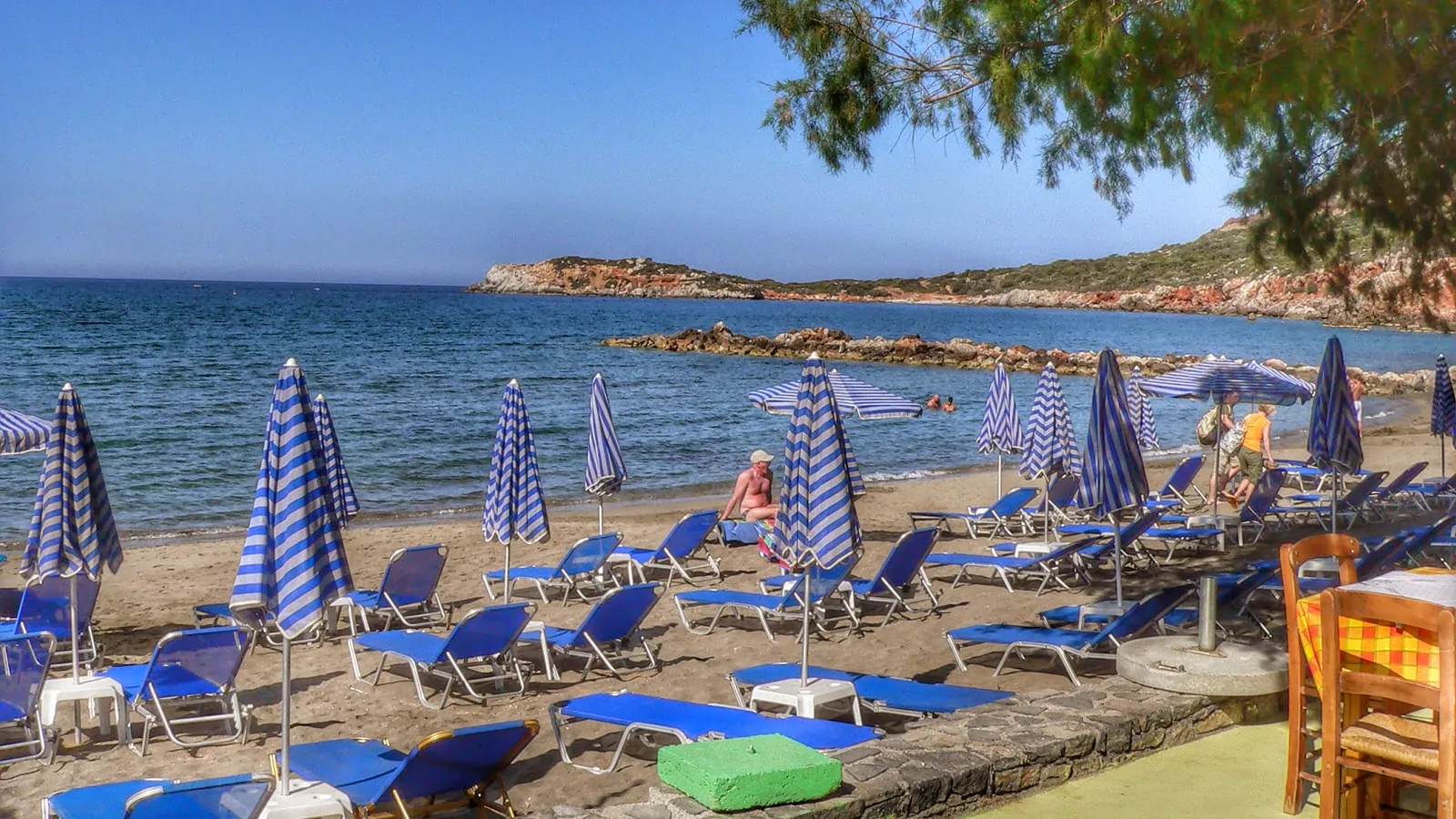
Livadi Beach is a 350-meter sandy beach in Bali, a small settlement in the Municipality of Geropotamous between Heraklion and Rethymno in Crete. The beach sits next to Bali Paradise Hotel, which offers direct access and is convenient for visitors exploring the north coast.
Quick Overview
Plan Your Visit to Bali Livadi
The key facts before you go
About the Beach
What is Bali Livadi?
Bali Livadi is a 350-meter sandy beach on Crete's north coast, positioned in the resort area of Bali between Heraklion and Rethymno. The beach faces east and sits in a sheltered bay, offering calm conditions and excellent bathing water quality. At 25 meters wide, it's modest in size but well-equipped for visitors seeking both relaxation and water sports. The beach benefits from lifeguard presence and serves a mixed clientele, from families to those interested in activities like windsurfing, scuba diving, and water polo. Its location near the Bali Paradise Hotel makes it accessible for day visits or longer stays, with the beach drawing visitors throughout the warmer months when water temperatures climb above 19°C.
It sits alongside other certified beaches in Region of Crete, part of a broader network of other Blue Flag beaches in Greece certified annually by the Foundation for Environmental Education.
Visitor Feedback
What Visitors Say About Bali Livadi
What visitors appreciate
- bay|harbor|sunbeds|taverns|clean sea|pedal boats|quiet bay|sea urchins|no waves|cliff jumping
- Well-staffed with lifeguards during season
- Excellent EU-rated bathing water quality
Points to consider
- Can be busy during July and August peak season
- Facilities may be reduced outside peak months
Based on aggregated public visitor feedback. Themes are synthesised from multiple sources, not individual quotes. Zeach does not reproduce individual reviews.
Sunrise, Sunset & Beach Direction
Bali Livadi faces east toward Mediterranean Sea. The best light for photography and swimming is typically in September. Direct sun hours follow that facing.
Planning
When to Go: Month by Month
| Month | Air Temp | Water Temp | Crowds |
|---|---|---|---|
| Jan | 12°C | 13°C | Low |
| Feb | 13°C | 14°C | Low |
| Mar | 15°C | 15°C | Low |
| Apr | 17°C | 18°C | Low |
| May | 21°C | 20°C | Low |
| Jun | 25°C | 23°C | Low |
| Jul | 27°C | 25°C | Med |
| Aug | 27°C | 25°C | High |
| Sep | 25°C | 23°C | High |
| Oct | 21°C | 21°C | Med |
| Nov | 17°C | 18°C | Low |
| Dec | 14°C | 14°C | Low |
The best time to visit Bali Livadi is September. Air temperatures peak around 26.7°C in summer. Peak water temperature reaches 25.2°C in July.
How crowded does Bali Livadi get?Bali Livadi operates as a managed beach within a resort framework. Lifeguards patrol during operational hours, and the commercial setup (sunbeds, taverns, water sports rentals) indicates organized tourism infrastructure. Reviews characterize it as a 'quiet bay,' suggesting moderate rather than heavy crowds, particularly outside peak July–August periods. The beach attracts a dual demographic: resort guests staying at the adjacent Bali Paradise Hotel and day visitors from Heraklion and Rethymno. Family presence is evident from the calm water and facility array. Sports-oriented visitors are drawn by windsurfing, scuba, water polo, and jet-ski options. The 'no waves' condition reported in reviews appeals to those avoiding rough conditions but may disappoint experienced surfers. Seasonal variation affects crowd density significantly. May and June see moderate activity as water temperatures (19.5–23.1°C) are still cooling for some. July–August peak season brings maximum occupancy, with all facilities (sunbeds, taverns, sports rental) at full capacity. September–October taper back to moderate levels as water cools toward 21.3–23.2°C and shoulder season tourists depart. Winter months (November–April) see minimal beach use despite the May swim-season-start designation, water temperatures below 17.7°C discourage casual bathing.
Is Bali Livadi open year-round?The beach itself is accessible year-round, though staffed facilities including lifeguards typically operate only during the official season (01-07 – 31-10). The Blue Flag is displayed during the certification period only.
The Water
Swimming and Beach Life at Bali Livadi
Is Bali Livadi safe to swim?Bali Livadi is Blue Flag certified, which requires meeting strict bathing water standards set by the EU Bathing Water Directive. Water quality is rated Excellent. Lifeguards are on duty during the official season.
What is the water temperature at Bali Livadi?Peak water temperature at Bali Livadi reaches around 25.2°C in July, making it comfortable for swimming during the summer months. In winter (January), air temperatures average 12.1°C.
What is the beach like at Bali Livadi?Bali Livadi is a compact sandy beach defined by its bay setting and east-facing exposure, which provides protection from westerly winds. The 350-meter length and 25-meter width create an intimate coastal space rather than an expansive strand. The bathing water maintains Excellent quality standards, supporting both swimmers and water sports participants without seasonal closures for quality reasons. Water temperatures rise progressively from May (19.5°C) through July and August (25.2–25.3°C), making the formal swim season May to October, though serious swimmers might extend into late April or early November. Air temperatures follow a similar pattern, peaking at 26.7–26.8°C in July and August. The beach supports multiple activities reflecting its equipment and facilities. Windsurfing and water polo are feasible in the bay environment. Scuba diving, jet-ski rentals, pedal boats, and canoes indicate infrastructure for water-based pursuits. Beach volleyball and tennis suggest land-based sports availability. Google reviews mention sunbeds and taverns within the beach precinct, indicating commercial infrastructure for day visitors. The presence of sea urchins (noted in reviews) suggests natural marine life, swimmers should wear water shoes as a precaution. The immediate landscape includes flora and fauna noted in the beach description as singular or distinctive species. Cliff jumping appears possible from nearby formations, though this isn't an official facility. The adjacent Bali Paradise Hotel provides accommodation directly next to the beach, eliminating any distance between lodging and water access. The bay configuration creates the 'no waves' condition mentioned in reviews, useful for beginners and families but limiting for experienced surfers seeking swell.
Does Bali Livadi have good facilities?As a Blue Flag certified beach, Bali Livadi meets the Foundation for Environmental Education's standards for facilities and services. Trained lifeguards are on duty during the season. Showers are available. Parking is available nearby.
Bali Livadi sits on the Mediterranean Sea: explore all Blue Flag beaches on the Mediterranean.
Planning a trip to Greece? How Greece earns the most Blue Flags , our editorial guide to certified beaches across the country.
While You're Here
Beyond Bali Livadi
Bali village functions as a small resort hub positioned strategically between Heraklion (west) and Rethymno (east), both offering museums, archaeological sites, and urban amenities. The Bali Paradise Hotel adjacent to Livadi Beach provides accommodation, conferencing, and seminar facilities, the beach itself hosts environmental cleanup activities and structured events. The beach's location on Crete's northern coast places it within reach of major attractions. Heraklion, roughly 40 kilometers west, contains the Minoan Palace of Knossos and the Heraklion Archaeological Museum. Rethymno, approximately 25 kilometers east, preserves Venetian fortifications and Old Town architecture. The New National Road connecting these cities provides straightforward access without requiring extensive detours. Water-based alternatives exist nearby: the north coast between Heraklion and Rethymno hosts several beaches, though Bali Livadi's east-facing bay and resort infrastructure distinguish it from more isolated strands. The calm bay conditions and structured water sports (windsurfing, scuba, water polo) position it differently than surf-oriented beaches on Crete's southern or eastern coasts. Visitor time splits typically between beach-based relaxation or sports and brief excursions to archaeological or historic sites.
Transport
Getting to Bali Livadi
How do I get to Bali Livadi by car?Bali Livadi is approximately 9.38 km from Municipality of Milopotamos. Follow local road signs to the beach. Check Google Maps or a local map for the most current directions.
What is the nearest airport to Bali Livadi?The nearest airport is Heraklion International "Nikos Kazantzakis" Airport (HER), approximately 36.7 km away. Heraklion International "Nikos Kazantzakis" Airport (HER) sits 36.7 kilometers from Bali Livadi, making it the primary air gateway. Flight time from major European hubs typically ranges 3–5 hours. From the airport, ground options include car rental (recommended for flexibility around Crete's coastal region), pre-arranged hotel shuttles through accommodation providers like Bali Paradise Hotel, or shared airport transfer services common in the Heraklion area. The drive from HER to Bali Livadi follows the New National Road toward Rethymno, with journey time approximately 45 minutes to an hour depending on traffic. No direct beach shuttle operates from the airport; transfers rely on private or commercial transport arrangements.
Can I get to Bali Livadi by public transport?Public bus services connect Heraklion and Rethymno via the New National Road, with Bali village accessible as a stop. However, specific schedules, frequencies, and final-leg access to Bali Livadi beach itself require confirmation with local operators, the 36.7-kilometer distance from Heraklion means travel time of 60–90 minutes depending on stops. Once arriving at Bali settlement, signage directs to the beach, though the final approach may involve walking or local taxi use if accommodation isn't within immediate walking distance. The nearest recorded bus stop is 105 m from the beach.
Nearby
Near Bali Livadi
Mapped toilets, bus stops, cafés, parking, and shops within about 500 m of Bali Livadi. Distances are walking-line estimates from the beach pin.
Map loads when you ask. Tiles stay off the first paint.
Map: OpenStreetMap (ODbL)
Toilets near Bali Livadi
- Public toilets Public toilets 41 m
Bus near Bali Livadi
- Livadi beach Bus stop 105 m
- Livadi Bus stop 182 m
- Big Blue Bus stop 255 m
- Varkotopos beach Bus stop 380 m
- Lakos Bus stop 494 m
Cafés near Bali Livadi
- Nostos Restaurant 39 m
- Talea Restaurant 41 m
- Del Mare Café 76 m
- Mousses Café 87 m
- Niriides Restaurant 127 m
Parking near Bali Livadi
- Golden Sun client parking Parking 171 m
- Parking Parking 263 m
- Parking Parking 305 m
- Bali Star parking Parking 455 m
Supermarket near Bali Livadi
- Kaloidas Georgios Supermarket 168 m
Source: © OpenStreetMap contributors (ODbL). Names and positions come from mapped OSM features. Confirm on site.
Practical Details
Practical Information
| At the Beach | |
| Entry | Free: no charge to access the beach |
|---|---|
| Lifeguards | ✓ On duty during official season |
| Disabled Access | ✗ No dedicated disabled access listed |
| Showers | ✓ Available during season |
| Toilets | ✗ |
| Official Season | 01 Jul – 31 Oct |
| Beach Type | Sandy beach |
| Parking | ✓ Available nearby (surface parking) |
| Nearest supermarket | 100 m from the beach |
| Nearest bus stop | 105 m from the beach |
| Visiting Information | |
| GPS Coordinates | 35.4077°N, 24.7844°E |
| Water Quality | Excellent (EU Bathing Water Directive) |
| Blue Flag Operator | Foundation for Environmental Education (FEE), Greece |
Frequently Asked Questions
Bali Livadi FAQ
Is Bali Livadi worth visiting?
Bali Livadi suits visitors seeking calm bay conditions, water sports access, and resort-based convenience. The Excellent bathing water quality and lifeguard presence support safe swimming. However, expectations should match reality: it's a 350-meter resort beach with managed crowds and commercial facilities rather than a secluded natural strand. Surfers seeking waves should look elsewhere, reviews confirm 'no waves' conditions. Families, windsurfers, scuba divers, and those valuing proximity to accommodation find it worthwhile. Day visitors from Heraklion or Rethymno appreciate the accessible location and tavern services.
How do I get to Bali Livadi?
From Heraklion Airport (HER), 36.7 kilometers away, drive or take a transfer service west along the New National Road toward Rethymno for approximately 45 minutes to an hour. Look for signage to Bali village, then follow beach directions from the settlement. Car rental provides maximum flexibility for exploring the north coast. Alternatively, prearrange hotel shuttle service through the Bali Paradise Hotel or similar accommodations. Public buses between Heraklion and Rethymno stop at Bali, though final beach access may require walking or a local taxi. No direct airport-to-beach shuttle currently operates.
What is the best time of year to visit Bali Livadi?
The official swim season runs May through October, with water temperatures rising from 19.5°C (May) to peaks of 25.2–25.3°C (July–August). June and September offer balanced conditions: warm enough for comfortable swimming (23.1°C and 23.2°C respectively), moderate crowds compared to peak July–August, and air temperatures of 24.7–26.8°C. May and October remain viable for water sports enthusiasts tolerant of cooler water (19.5–21.3°C). July–August attract maximum visitors but bring peak heat and crowding. Winter months are unsuitable for casual beach visits due to water temperatures below 15°C.
What facilities are available at Bali Livadi?
The beach offers sunbeds, taverns, and lifeguard services during operational hours. Water sports facilities include windsurfing, jet-ski rentals, scuba diving instruction, water polo courts, pedal boats, and canoes. Land-based activities feature beach volleyball and tennis courts. The adjacent Bali Paradise Hotel provides accommodation directly beside the beach. No mention of public restrooms, showers, or changing facilities appears in available information, verify these amenities on-site or with the hotel. Dog-friendly status is unknown and should be confirmed locally.
Is Bali Livadi suitable for families?
Yes, with considerations. The calm bay waters, Excellent bathing quality, lifeguard presence, and absence of waves create safe conditions for young swimmers. Taverns and sunbeds support all-day visits. Water sports (pedal boats, canoes, scuba basics) and land activities (beach volleyball, tennis) engage older children. Proximity to accommodation simplifies logistics. However, the 25-meter width and 350-meter length mean limited space during peak season, families should visit outside July–August for comfort. Sea urchins noted in reviews suggest wearing water shoes. Verify child-specific facilities (changing rooms, shallow areas, water temperature tolerance) directly with the beach or Bali Paradise Hotel.
Are there toilets near Bali Livadi?
Yes. OpenStreetMap maps toilets near Bali Livadi, including 41 m away. Distances are walking-line estimates within about 500 m of the beach pin. Confirm opening hours on site; some facilities are seasonal. © OpenStreetMap contributors (ODbL).
Is there a bus near Bali Livadi?
Yes. OpenStreetMap maps a public-transport stop 105 m from Bali Livadi (Livadi beach), plus 4 more within about 500 m. Check current timetables before you travel. © OpenStreetMap contributors (ODbL).
Are there cafés near Bali Livadi?
Yes. OpenStreetMap lists 5 cafés or restaurants near Bali Livadi, including Nostos (39 m), Talea (41 m), Del Mare (76 m), and Mousses (87 m). Hours and seasonal opening are not verified here. Check on the day. © OpenStreetMap contributors (ODbL).
Is there parking near Bali Livadi?
Yes. OpenStreetMap maps parking 171 m from Bali Livadi (Golden Sun client parking), with 4 lots or spaces inside about 500 m. Charges and time limits are not recorded here. © OpenStreetMap contributors (ODbL).
Is there a supermarket near Bali Livadi?
Yes. OpenStreetMap maps a supermarket 168 m from Bali Livadi (Kaloidas Georgios). Walking-line distance; confirm opening hours locally. © OpenStreetMap contributors (ODbL).
Explore More
Nearby Blue Flag Beaches
Editorial
From the Zeach Blog
Everything you need to know about what makes a beach qualify for Blue Flag status, from water quality to environmental education.
Read moreOur editorial team's pick of the standout Blue Flag beaches in Greece, rated for family friendliness, scenery, and facilities.
Explore GreeceWhat the flag actually means, how certification works, and why a Blue Flag is a genuinely reliable signal, not just a marketing tool.
Read moreSources
- Foundation for Environmental Education: Blue Flag programme
- FEE site listing for Bali Livadi
- Hellenic Society for the Protection of Nature (EEPF)
- European Environment Agency: bathing water quality
Last verified September 2026. National operator pages and FEE listings are the primary certification sources.