Plaza Kolovare
Zadar County, Croatia: Excellent water quality
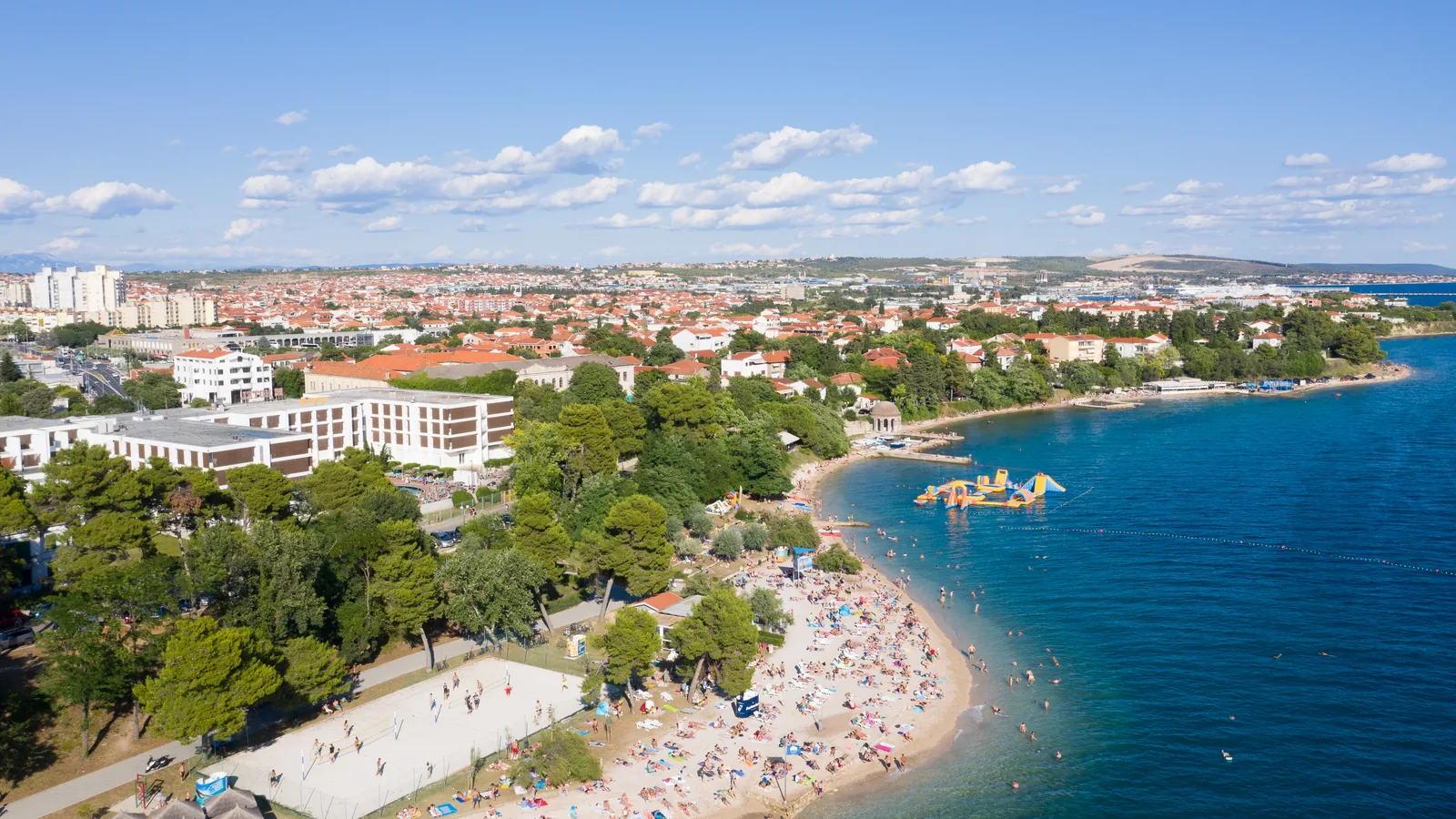
Beach Kolovare is a long urban pebble beach in Zadar County, 500 meters from the city center. It's one of Zadar's oldest and most popular beaches. A green area above the beach works well for children to play while parents relax in the shade of…
Quick Overview
Plan Your Visit to Plaza Kolovare
The key facts before you go
About the Beach
What is Plaza Kolovare?
Plaza Kolovare is Zadar's longest urban beach, stretching along the waterfront just 500 meters from the city center. This pebbly shoreline has been a local favorite since before Blue Flag certification arrived in 2014. The beach combines practical amenities with natural shade from pine trees overhead, making it functional rather than decorative. You'll find the usual coastal infrastructure (lifeguard tower, showers, toilets, changing rooms) plus a diving tower for those interested in deeper water. The setting is deliberately urban: shops, restaurants, and cafes line the approach, and there's a beach bar for younger visitors. Access is adapted for people with disabilities, including a lift for sea entry.
It sits alongside Blue Flag beaches in Zadar County, part of a broader network of Blue Flag certified beaches across Croatia certified annually by the Foundation for Environmental Education.
Visitor Feedback
What Visitors Say About Plaza Kolovare
What visitors appreciate
- pebbles|changing rooms|rocky beach|shade|pebble beach|sunbeds|stone beach|sea urchins|cash only|diving tower
- Well-staffed with lifeguards during season
- Excellent EU-rated bathing water quality
Points to consider
- Can be busy during July and August peak season
- Facilities may be reduced outside peak months
Based on aggregated public visitor feedback. Themes are synthesised from multiple sources, not individual quotes. Zeach does not reproduce individual reviews.
Sunrise, Sunset & Beach Direction
Plaza Kolovare faces east toward Adriatic Sea. The best light for photography and swimming is typically in June. Direct sun hours follow that facing.
Planning
When to Go: Month by Month
| Month | Air Temp | Water Temp | Crowds |
|---|---|---|---|
| Jan | 6°C | 3°C | Low |
| Feb | 8°C | 5°C | Low |
| Mar | 10°C | 7°C | Low |
| Apr | 13°C | 10°C | Low |
| May | 18°C | 15°C | Low |
| Jun | 23°C | 20°C | Med |
| Jul | 25°C | 22°C | High |
| Aug | 26°C | 23°C | High |
| Sep | 21°C | 18°C | Med |
| Oct | 16°C | 13°C | Low |
| Nov | 12°C | 9°C | Low |
| Dec | 9°C | 6°C | Low |
The best time to visit Plaza Kolovare is June. Air temperatures peak around 25.4°C in summer. Peak water temperature reaches 22.4°C in July.
How crowded does Plaza Kolovare get?What is the crowd actually like at Plaza Kolovare? It's a urban beach in a city of 75,000 people, so expect local residents rather than tourist overflow. The 500-meter distance from Zadar's center makes it accessible for morning swims before work and evening visits after work. Family groups dominate the daytime, especially in the green area above the beach where children play under supervision. Summer weekends draw more people, particularly July and August when water temperatures reach 22.6°C. The lifeguard presence from 10 a.m. to 8 p.m. structures the crowd pattern, families arrive when supervision is available. The beach bar appeals to younger crowds in evening hours, creating a split between family-oriented daytime use and social evening gathering. The pebbles and diving tower suggest mixed-use swimming, some people use it as a basic urban beach for cooling off, others come specifically for diving activity. The shade from pines keeps it more comfortable than exposed sandy alternatives, so crowds tend to linger rather than rotate through quickly. Expect moderate density on typical summer days, with peaks on weekends and holidays.
Is Plaza Kolovare open year-round?The beach itself is accessible year-round, though staffed facilities including lifeguards typically operate only during the official season (01-06 – 30-09). The Blue Flag is displayed during the certification period only.
The Water
Swimming and Beach Life at Plaza Kolovare
Is Plaza Kolovare safe to swim?Plaza Kolovare is Blue Flag certified, which requires meeting strict bathing water standards set by the EU Bathing Water Directive. Water quality is rated Excellent. Lifeguards are on duty during the official season.
What is the water temperature at Plaza Kolovare?Peak water temperature at Plaza Kolovare reaches around 22.4°C in July, making it comfortable for swimming during the summer months. In winter (January), air temperatures average 6.1°C.
What is the beach like at Plaza Kolovare?Plaza Kolovare stretches as a long pebbly beach with a rocky character typical of the Dalmatian coast. The pebbles are the defining feature, expect smooth stones underfoot that get uncomfortable without water shoes. The seabed drops gradually, making it manageable for mixed ability swimmers, though sea urchins inhabit the area, so proper footwear matters year-round. The beach faces east, catching morning sun and offering afternoon shade from the pine grove above. This green zone is intentional, parents can supervise children's play while staying sheltered. Sunbeds are available for rental, and the facilities are reliable. The lifeguard tower operates from 10 a.m. to 8 p.m., providing supervised swimming hours during the summer months. Water quality holds Excellent status. Summer temperatures peak at 22.6°C in August, making July and August the official swim season. Outside these months, the water drops significantly. May sits at 14.7°C, September at 17.6°C. Winter is cold, reaching 3.1°C in January. The diving tower indicates deeper water capability, and the beach tags confirm it serves divers. This suggests the seabed topology supports recreational diving activity alongside regular swimming. The presence of sea urchins is worth noting, they're not dangerous if you keep your distance and wear protection. Showers and toilets are onsite. Changing rooms provide basic privacy. The beach accepts recyclable waste, suggesting reasonable environmental management. You'll notice references to 'cash only' in reviews, so bring physical money for sunbeds and some vendors.
Does Plaza Kolovare have good facilities?As a Blue Flag certified beach, Plaza Kolovare meets the Foundation for Environmental Education's standards for facilities and services. Trained lifeguards are on duty during the season. Showers are available. Toilet facilities are on site. Parking is available nearby. The beach has disabled access facilities.
Plaza Kolovare sits on the Adriatic Sea: explore all Blue Flag beaches on the Adriatic.
Planning a trip to Croatia? Blue Flag Beaches Croatia , our editorial guide to certified beaches across the country.
While You're Here
Beyond Plaza Kolovare
Zadar itself offers enough to justify a multi-day visit. The Roman Forum and Church of St. Donatus are central landmarks within easy walking distance. The Sea Organ, a unique wave-powered sound installation, sits along the waterfront and provides an unusual coastal experience. The Museum of Ancient Glass holds genuine archaeological material from the region. Island ferries depart from Zadar's harbor, day trips to Ugljan and Pašman islands are practical. These islands offer quieter alternatives if you want to escape the urban beach atmosphere. The broader Dalmatian coast is accessible by car or bus; Dubrovnik lies further south (about 2.5 hours drive), and Split is to the northwest. Food-wise, the Zadar waterfront restaurants serve conventional Adriatic fare. The pebble beach itself has cafes and the beach bar mentioned in the data. Expect typical Croatian coastal pricing and the common 'cash only' arrangement for some vendors. The green area above Plaza Kolovare is suitable for picnics if you bring supplies from the nearby shops.
Transport
Getting to Plaza Kolovare
How do I get to Plaza Kolovare by car?Plaza Kolovare is approximately 1.37 km from Zadar. Follow local road signs to the beach. Check Google Maps or a local map for the most current directions.
What is the nearest airport to Plaza Kolovare?The nearest airport is Venice Marco Polo Airport (VCE), approximately 275.6 km away. The nearest airport is Venice Marco Polo (VCE), 275.6 kilometers away. From Venice, you have two main options: rent a car and drive southeast toward Zadar (roughly 4.5 hours), or use public transport. The drive takes you through northeastern Italy and into Slovenia before entering Croatia, crossing significant terrain. If you fly into Zadar Airport directly (smaller hub with fewer international connections), the drive into the city is under 10 kilometers. Driving to Plaza Kolovare from any airport means navigating to Zadar's city center, where the beach lies just 500 meters inland. Consider the Venice option only if other factors make it worthwhile, the distance adds real travel time.
Can I get to Plaza Kolovare by public transport?Bus services connect Venice and other European cities to Zadar, though journey times are comparable to trains (8-10 hours). Operators like FlixBus serve this route. The Zadar bus station is central, positioning you within walking distance of Plaza Kolovare (500 meters). Local buses in Zadar are minimal given the city's compact size, most destinations, including the beach, are reachable on foot from the center. The nearest recorded bus stop is 211 m from the beach.
Is there a train to Plaza Kolovare?Train connections to Zadar exist but require patience. The route from Venice involves crossing through Slovenia and down the Croatian coast, typically taking 8-12 hours depending on connections. You'll likely transfer multiple times. Once in Zadar, the main train station is walkable or a short taxi ride from Plaza Kolovare. The beach sits only 500 meters from the city center, so arriving by train and walking is straightforward. Check ÖBB and Croatian Railways for current schedules, frequency varies seasonally.
Map
Find Plaza Kolovare
Open the map or get directions to the Plaza Kolovare pin. Amenity names are listed here only when OpenStreetMap has a mapped feature nearby.
Map loads when you ask. Tiles stay off the first paint.
Map: OpenStreetMap (ODbL)
Practical Details
Practical Information
| At the Beach | |
| Entry | Free: no charge to access the beach |
|---|---|
| Lifeguards | ✓ On duty during official season |
| Disabled Access | ✓ Accessible site facilities and water entry |
| Showers | ✓ Available during season |
| Toilets | ✓ Available during season |
| Official Season | 01 Jun – 30 Sep |
| Beach Type | Rocky shore |
| Sand | Pebble / shingle beach |
| Parking | ✓ Available nearby (surface parking) |
| Nearest supermarket | 290 m from the beach |
| Nearest bus stop | 211 m from the beach |
| Visiting Information | |
| GPS Coordinates | 44.1045°N, 15.2344°E |
| Water Quality | Excellent (EU Bathing Water Directive) |
| Blue Flag Operator | Foundation for Environmental Education (FEE), Croatia |
Frequently Asked Questions
Plaza Kolovare FAQ
Is Plaza Kolovare worth visiting?
Yes, if you're staying in Zadar and want convenient urban swimming with reliable facilities. The Blue Flag status since 2014 reflects consistent water quality (rated Excellent). The beach suits families due to lifeguard supervision, disabled access, and the green play area above the sand. If you're seeking isolation or pristine scenery, this isn't it, it's functional and accessible. The pebbles require footwear, sea urchins are present, and the setting is decidedly urban. That said, it works well for what it is: a practical city beach with infrastructure.
How do I get to Plaza Kolovare?
Flying into Venice (275 km away) or Zadar directly are your main air options. From Venice, drive or take trains/buses to Zadar (4.5+ hours). The beach itself is just 500 meters from Zadar's city center, so arrival is straightforward, walk, taxi, or take a local bus once in the city. The train takes 8-12 hours from Venice with connections. Buses (FlixBus) are similarly slow but budget-friendly. Once in Zadar's center, the beach is within walking distance.
What's the best time of year to visit?
July and August are the official swim season, with water temperatures at 22.4°C and 22.6°C respectively. Air temperatures reach 25.4°C and 25.6°C, ideal for beach use. June is viable (20°C water), and September is acceptable (17.6°C water, 20.6°C air). Outside June-September, water temperature drops steeply. May is 14.7°C, October is 12.9°C. Winter swimming is extreme cold (3.1°C in January). Visit July-August for guaranteed comfort, June or September for shoulder season tolerance, or avoid water activities entirely in winter months.
What facilities are there at Plaza Kolovare?
Lifeguard tower (10 a.m.–8 p.m. daily), first aid, showers, changing rooms, and toilets are all present. A diving tower indicates deeper water access. Sunbeds are available (check payment method, reviews mention 'cash only'). The green area above the beach provides shaded space. Restaurants, cafes, and shops are nearby. A beach bar caters to younger crowds. The beach accepts recyclable waste. Disabled access includes adapted toilets and a lift for sea entry. Note that sea urchins are present, so water shoes are recommended.
Is Plaza Kolovare suitable for families?
Yes. Lifeguards supervise from 10 a.m. to 8 p.m. during peak season. The green pine-shaded area above the beach is designed for children's play while parents stay cool nearby. The gradual seabed drop suits mixed-ability swimmers. Changing rooms and toilets support family convenience. Disabled access, including a sea-entry lift, accommodates mobility needs. The main drawback is pebbles instead of sand, children need water shoes to manage the stones. Sea urchins are present, so supervision and footwear are essential. Overall, it's family-oriented by design and amenities.
Explore More
Nearby Blue Flag Beaches
Editorial
From the Zeach Blog
Everything you need to know about what makes a beach qualify for Blue Flag status, from water quality to environmental education.
Read moreOur editorial team's pick of the standout Blue Flag beaches in Croatia, rated for family friendliness, scenery, and facilities.
Explore CroatiaWhat the flag actually means, how certification works, and why a Blue Flag is a genuinely reliable signal, not just a marketing tool.
Read moreSources
- Foundation for Environmental Education: Blue Flag programme
- FEE site listing for Plaza Kolovare
- ODRAZ
- European Environment Agency: bathing water quality
Last verified September 2026. National operator pages and FEE listings are the primary certification sources.