Platanias B/Minos Mare Resort
Region of Crete, Greece: Excellent water quality
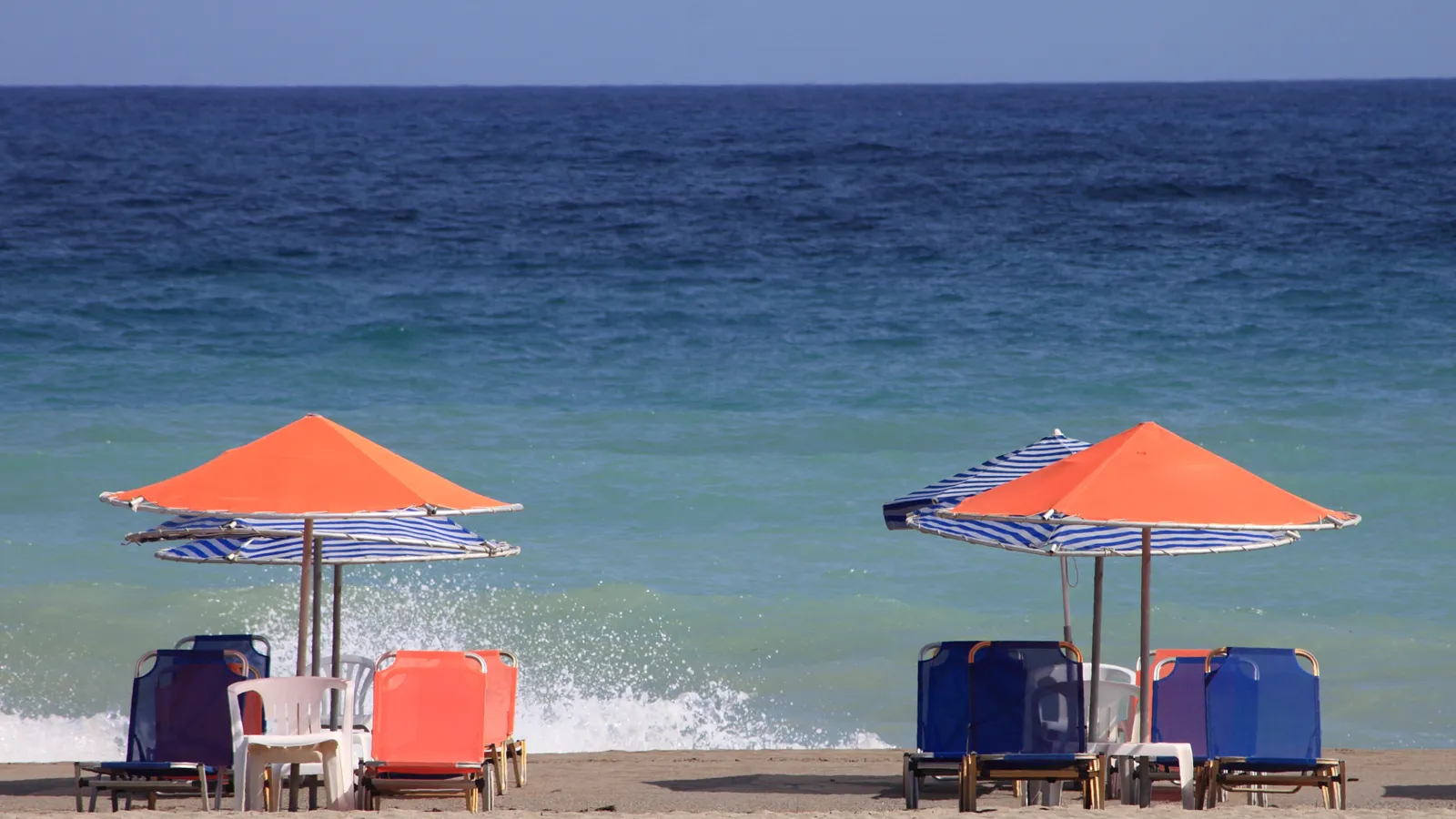
Minos Mare is a four-star hotel near Rethimno on Crete's north coast. It sits on Platanias beach, a long stretch of sand that has earned a Blue Flag for water quality. The hotel operates alongside its sister property, Minos Mare Royal, a five-star resort, together…
Quick Overview
Plan Your Visit to Platanias B/Minos Mare Resort
The key facts before you go
About the Beach
What is Platanias B/Minos Mare Resort?
Platanias B, home to the Minos Mare Resort, is a long sandy beach on Crete's north coast near Rethymno. The beach has earned Blue Flag status for its clean waters and well-maintained conditions. It's a family-oriented destination with lifeguards on duty during summer months. The beach faces east and benefits from calm morning conditions. Water temperatures range from 8.4°C in January to 23.2°C in August, making the June-August period the practical swimming season. The beach is backed by hotel facilities that provide direct access and beachside amenities.
It sits alongside other certified beaches in Region of Crete, part of a broader network of other Blue Flag beaches in Greece certified annually by the Foundation for Environmental Education.
Visitor Feedback
What Visitors Say About Platanias B/Minos Mare Resort
What visitors appreciate
- beach|pool|all inclusive|animator|sunbeds|proximity to the beach|private beach|beach location|availability of sunbeds|paddling pool for children
- Well-staffed with lifeguards during season
- Excellent EU-rated bathing water quality
Points to consider
- Can be busy during July and August peak season
- Facilities may be reduced outside peak months
Based on aggregated public visitor feedback. Themes are synthesised from multiple sources, not individual quotes. Zeach does not reproduce individual reviews.
Sunrise, Sunset & Beach Direction
Platanias B/Minos Mare Resort faces east toward Mediterranean Sea. The best light for photography and swimming is typically in April, May, June. Direct sun hours follow that facing.
Planning
When to Go: Month by Month
| Month | Air Temp | Water Temp | Crowds |
|---|---|---|---|
| Jan | 11°C | 8°C | Low |
| Feb | 13°C | 10°C | Low |
| Mar | 13°C | 10°C | Low |
| Apr | 17°C | 14°C | Low |
| May | 21°C | 18°C | Low |
| Jun | 25°C | 22°C | Low |
| Jul | 26°C | 23°C | Med |
| Aug | 26°C | 23°C | High |
| Sep | 24°C | 21°C | High |
| Oct | 20°C | 17°C | Med |
| Nov | 17°C | 14°C | Low |
| Dec | 13°C | 10°C | Low |
The best time to visit Platanias B/Minos Mare Resort is April, May, June. Air temperatures peak around 26.1°C in summer. Peak water temperature reaches 23.1°C in July.
How crowded does Platanias B/Minos Mare Resort get?What's the visitor pattern at Platanias B? The beach functions as a resort facility, so crowd levels depend directly on hotel occupancy rather than open-access beach dynamics. Summer months (June-August) will see regular crowds, particularly families with children who time visits around school holidays. The long sandy beach provides space to accommodate multiple user groups without excessive crowding. Peak hours typically follow standard resort patterns, late morning through mid-afternoon. Early mornings and late afternoons tend to be quieter. The presence of lifeguards indicates organized management during peak season. Amenities like sunbeds and paddling pools (noted in guest reviews) suggest the beach supports active recreation rather than quiet contemplation. Families with children form the primary visitor demographic, which shapes the overall atmosphere and facility offerings. Weekend periods may see higher usage than weekdays. Off-season (September-May) would see considerably fewer visitors, though exact patterns depend on the hotel's annual operating schedule.
Is Platanias B/Minos Mare Resort open year-round?The beach itself is accessible year-round, though staffed facilities including lifeguards typically operate only during the official season (01-07 – 31-10). The Blue Flag is displayed during the certification period only.
The Water
Swimming and Beach Life at Platanias B/Minos Mare Resort
Is Platanias B/Minos Mare Resort safe to swim?Platanias B/Minos Mare Resort is Blue Flag certified, which requires meeting strict bathing water standards set by the EU Bathing Water Directive. Water quality is rated Excellent. Lifeguards are on duty during the official season.
What is the water temperature at Platanias B/Minos Mare Resort?Peak water temperature at Platanias B/Minos Mare Resort reaches around 23.1°C in July, making it comfortable for swimming during the summer months. In winter (January), air temperatures average 11.4°C.
What is the beach like at Platanias B/Minos Mare Resort?Platanias B stretches as a genuine sandy beach, which is relatively common on this part of Crete's coastline but still valued by visitors seeking soft underfoot conditions. The sand extends to a reasonable depth, allowing comfortable space for sunbathing and movement. The bathing water quality is rated Excellent, reflecting consistent testing and maintenance standards. The east-facing orientation means the beach receives morning sun while the afternoon can shift into some shade from surrounding structures, useful during peak summer heat. Water entry is gradual, suitable for different swimming abilities. The seabed composition transitions from sand to rocky areas further out, which is typical for this region. Summer water temperatures peak at 23.1-23.2°C in July and August, making these months comfortable for extended swimming. By September, water temperature drops to 20.8°C, still swimmable but noticeably cooler. The beach operates within a resort setting, which means conditions are actively managed. Lifeguards are present during the swimming season, providing supervision for water safety. The beach's long sandy profile provides adequate separation between different user groups. Winter swimming is possible but water temperatures fall to single digits, 8.4°C in January requires thermal protection. The gradual temperature rise from spring through early summer (8.4°C in January to 21.5°C by June) makes May onwards the practical season for most visitors without wetsuits. The Excellent water quality rating is maintained through regular monitoring, which is a formal requirement for Blue Flag beaches.
Does Platanias B/Minos Mare Resort have good facilities?As a Blue Flag certified beach, Platanias B/Minos Mare Resort meets the Foundation for Environmental Education's standards for facilities and services. Trained lifeguards are on duty during the season. Parking is available nearby. The beach has disabled access facilities.
Platanias B/Minos Mare Resort sits on the Mediterranean Sea: explore all Blue Flag beaches on the Mediterranean.
Planning a trip to Greece? How Greece earns the most Blue Flags , our editorial guide to certified beaches across the country.
While You're Here
Beyond Platanias B/Minos Mare Resort
Rethymno, the nearest city, sits just inland from Platanias and offers the main town amenities. The old town contains Venetian architecture, local restaurants, and shops. It's a 15-25 minute journey from the beach, making day trips straightforward. Platanias itself sits along the extended north coast of Crete, which has additional beaches accessible by car. The broader region includes hiking opportunities in the surrounding hills and agricultural areas typical of western Crete. Local restaurants and tavernas serve Cretan cuisine in the surrounding area. The Minos Mare Resort environment means many visitor needs are met on-site, though Rethymno provides outside options for exploring local culture and food beyond the resort.
Transport
Getting to Platanias B/Minos Mare Resort
How do I get to Platanias B/Minos Mare Resort by car?Platanias B/Minos Mare Resort is approximately 5.05 km from Rethymno. Follow local road signs to the beach. Check Google Maps or a local map for the most current directions.
What is the nearest airport to Platanias B/Minos Mare Resort?The nearest airport is Heraklion International "Nikos Kazantzakis" Airport (HER), approximately 59.2 km away. Heraklion International "Nikos Kazantzakis" Airport (HER) is 59.2 km from Platanias B. This is Crete's largest airport with regular connections to mainland Greece and European cities. From the airport, transfer options include car rental, taxis, or shuttle services arranged through the hotel. The drive to Platanias follows the north coast road and takes approximately 50-70 minutes depending on traffic and exact routing. Many visitors arrange hotel transfers in advance, which simplifies the journey. The route is straightforward but involves some winding sections typical of Cretan coastal roads.
Can I get to Platanias B/Minos Mare Resort by public transport?Public bus services operate between Rethymno (the nearest city) and surrounding coastal areas. Platanias lies between Rethymno and Heraklion, making it accessible by regional bus routes. Journey times from Rethymno are typically 15-25 minutes depending on the specific service and stops. Bus schedules operate year-round but frequency varies seasonally, with reduced services outside the main summer period. Services are generally affordable but require checking current timetables for connection times. The nearest recorded bus stop is 422 m from the beach.
Nearby
Near Platanias B/Minos Mare Resort
Mapped toilets, bus stops, cafés, parking, and shops within about 500 m of Platanias B/Minos Mare Resort. Distances are walking-line estimates from the beach pin.
Map loads when you ask. Tiles stay off the first paint.
Map: OpenStreetMap (ODbL)
Bus near Platanias B/Minos Mare Resort
- ΠΛΑΤΑΝΙΑΣ Bus stop 422 m
- ΠΛΑΤΑΝΙΑΣ Bus stop 423 m
- Bus stop Bus stop 424 m
- ΠΛΑΤΑΝΙΑΣ Bus stop 430 m
- Bus stop Bus stop 436 m
Cafés near Platanias B/Minos Mare Resort
- Poseidon Minos Mare Restaurant 37 m
- Restaurant Ambrosia Restaurant 114 m
- Way to the Beach Restaurant 173 m
- Finikas Restaurant 260 m
- Restaurant Restaurant 312 m
Parking near Platanias B/Minos Mare Resort
- Parking Parking 220 m
- Parking Parking 236 m
- Parking Parking 366 m
- Parking Parking 367 m
- Parking Parking 426 m
Supermarket near Platanias B/Minos Mare Resort
- Παυλακης Α.Ε. Supermarket 442 m
Source: © OpenStreetMap contributors (ODbL). Names and positions come from mapped OSM features. Confirm on site.
Practical Details
Practical Information
| At the Beach | |
| Entry | Free: no charge to access the beach |
|---|---|
| Lifeguards | ✓ On duty during official season |
| Disabled Access | ✓ Accessible site facilities |
| Showers | ✗ |
| Toilets | ✗ |
| Official Season | 01 Jul – 31 Oct |
| Beach Type | Sandy beach |
| Parking | ✓ Available nearby (surface parking) |
| Nearest supermarket | 90 m from the beach |
| Nearest bus stop | 422 m from the beach |
| Visiting Information | |
| GPS Coordinates | 35.3717°N, 24.5290°E |
| Water Quality | Excellent (EU Bathing Water Directive) |
| Official Website | www.minosmare.gr/ |
| Blue Flag Operator | Foundation for Environmental Education (FEE), Greece |
Frequently Asked Questions
Platanias B/Minos Mare Resort FAQ
Is Platanias B worth visiting?
Platanias B suits visitors seeking a family-oriented beach with reliable facilities and clean water. The Excellent bathing water rating and Blue Flag status indicate consistent maintenance standards. The long sandy beach provides practical space for different activities. It's a straightforward choice if you value organized, managed beach facilities with immediate access to accommodation and services. Not ideal if you're seeking remote or undeveloped coastline.
How do I get to Platanias B?
Heraklion Airport (HER) is 59.2 km away, roughly 50-70 minutes by road. Car rental or airport transfers are standard options. Regional buses connect Rethymno (the nearest city, 15-25 minutes away) with the coastal area. Most visitors arrange hotel transfers when booking accommodation. The location on the north coast road makes it accessible by standard vehicle routes without special navigation challenges.
What's the best time of year to visit?
June through August offers peak swimming conditions with water temperatures between 21.5°C and 23.2°C. Air temperatures average 26°C or higher during this period. These months define the practical swim season. May and September are possible but cooler (water around 17-21°C). Water temperatures drop below 14°C from November through April, requiring thermal protection for swimming. Summer timing aligns with school holidays in most countries.
What facilities are available at Platanias B?
The beach includes lifeguards during the swimming season, sunbeds, a paddling pool for children, and full resort amenities through the adjacent Minos Mare hotel. The infrastructure reflects four-star hotel standards with on-site dining, accommodation, and organized services. Beach facilities are managed as part of the resort rather than as public-access infrastructure. Water quality is regularly monitored and maintains Excellent standards.
Is Platanias B suitable for families?
Yes, it's explicitly designated as family-oriented with specific child-focused features including a paddling pool and supervised beach. The gradual water entry, sandy bottom, and lifeguard presence support family swimming. The resort environment provides organized services and controlled conditions. Air temperatures in summer (26°C+) and water temperatures (21-23°C during peak months) are practical for children. The broader resort facilities offer varied activities beyond swimming.
Is there a bus near Platanias B/Minos Mare Resort?
Yes. OpenStreetMap maps a public-transport stop 422 m from Platanias B/Minos Mare Resort (ΠΛΑΤΑΝΙΑΣ), plus 4 more within about 500 m. Check current timetables before you travel. © OpenStreetMap contributors (ODbL).
Are there cafés near Platanias B/Minos Mare Resort?
Yes. OpenStreetMap lists 5 cafés or restaurants near Platanias B/Minos Mare Resort, including Poseidon Minos Mare (37 m), Restaurant Ambrosia (114 m), Way to the Beach (173 m), and Finikas (260 m). Hours and seasonal opening are not verified here. Check on the day. © OpenStreetMap contributors (ODbL).
Is there parking near Platanias B/Minos Mare Resort?
Yes. OpenStreetMap maps parking 220 m from Platanias B/Minos Mare Resort, with 5 lots or spaces inside about 500 m. Charges and time limits are not recorded here. © OpenStreetMap contributors (ODbL).
Is there a supermarket near Platanias B/Minos Mare Resort?
Yes. OpenStreetMap maps a supermarket 442 m from Platanias B/Minos Mare Resort (Παυλακης Α.Ε.). Walking-line distance; confirm opening hours locally. © OpenStreetMap contributors (ODbL).
Explore More
Nearby Blue Flag Beaches
Editorial
From the Zeach Blog
Everything you need to know about what makes a beach qualify for Blue Flag status, from water quality to environmental education.
Read moreOur editorial team's pick of the standout Blue Flag beaches in Greece, rated for family friendliness, scenery, and facilities.
Explore GreeceWhat the flag actually means, how certification works, and why a Blue Flag is a genuinely reliable signal, not just a marketing tool.
Read moreSources
- Foundation for Environmental Education: Blue Flag programme
- FEE site listing for Platanias B/Minos Mare Resort
- Hellenic Society for the Protection of Nature (EEPF)
- European Environment Agency: bathing water quality
Last verified September 2026. National operator pages and FEE listings are the primary certification sources.