Myrtos
Ioanian Islands, Greece: Excellent water quality
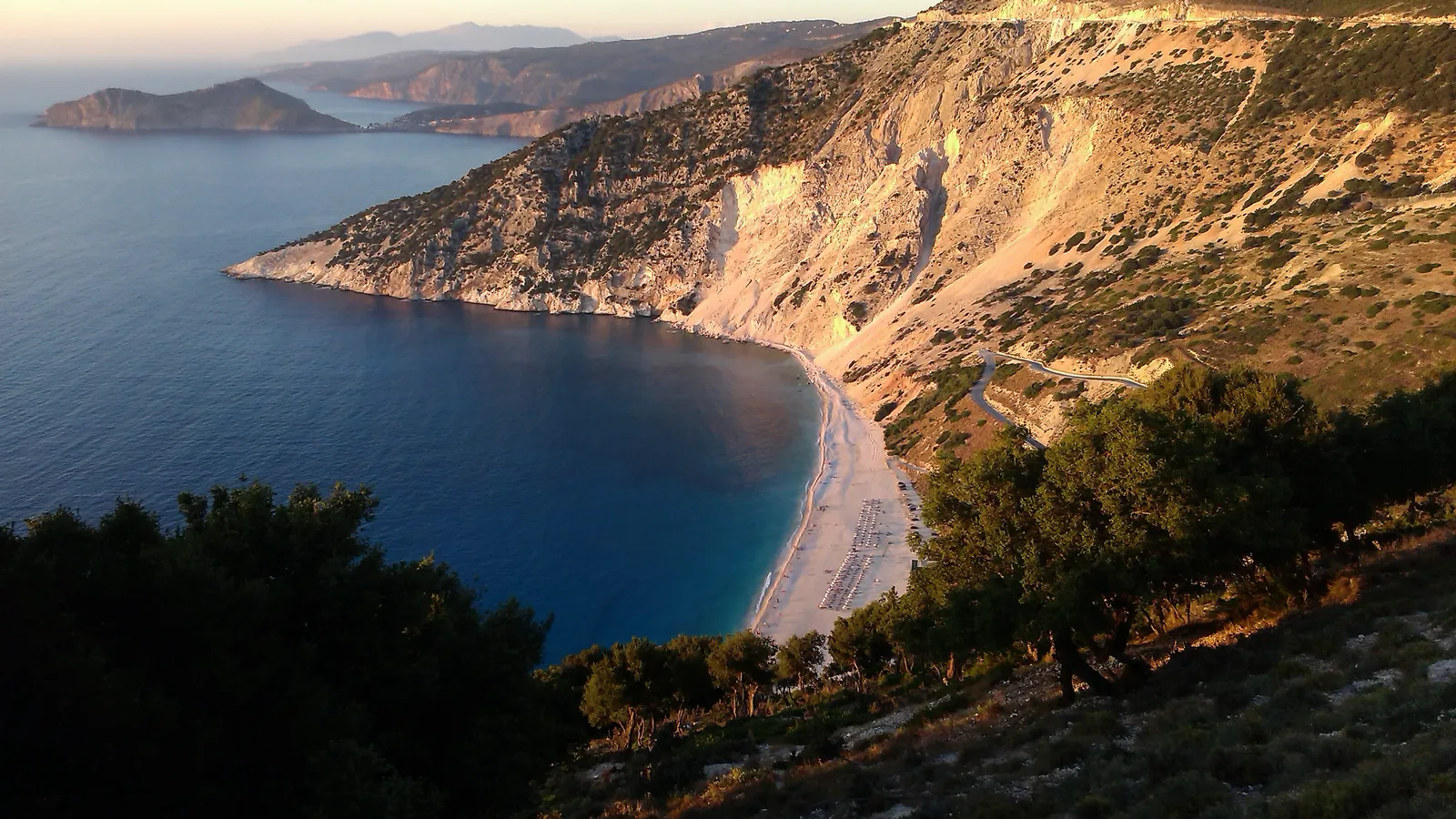
Myrtos Beach is Kefalonia's most famous beach. Located in the northern part of the island in the municipality of Pilaros, it sits 8 km from Agia Efimia, 3 km from the village Divarata, and about 30 km from Argostoli.
Quick Overview
Plan Your Visit to Myrtos
The key facts before you go
About the Beach
What is Myrtos?
Myrtos Beach serves as the trademark of Kefalonia, a sweeping crescent of white pebbles beneath towering green cliffs on the island's northern coast. This south-facing beach sits 8 km from Agia Efimia and approximately 30 km from the capital Argostoli, drawing visitors who come specifically for its distinctive turquoise waters and dramatic landscape. The beach has earned repeated Blue Flag awards from the Greek National Tourism Organization and consistently ranks among the best beaches in Greece. What sets Myrtos apart is the extreme depth of water just steps from shore, creating that remarkable colour contrast between the white pebble seabed and the deep blue beyond. The beach operates as a well-organized facility with sunbeds, umbrellas, a canteen, and lifeguard services throughout the swimming season from June through September. Those dramatic cliffs frame the beach on both sides, and the south-facing orientation makes Myrtos particularly renowned for its sunset views.
It sits alongside certified beaches along Ioanian Islands, part of a broader network of certified beaches throughout Greece certified annually by the Foundation for Environmental Education.
Visitor Feedback
What Visitors Say About Myrtos
What visitors appreciate
- pebbles|sunbeds|cave|umbrellas|water color|turquoise waters|deep water|pebble beach|rough sea|white pebbles
- Well-staffed with lifeguards during season
- Excellent EU-rated bathing water quality
Points to consider
- Can be busy during July and August peak season
- Facilities may be reduced outside peak months
Based on aggregated public visitor feedback. Themes are synthesised from multiple sources, not individual quotes. Zeach does not reproduce individual reviews.
Sunrise, Sunset & Beach Direction
Myrtos faces south toward Ionian Sea. The best light for photography and swimming is typically in April, May, June. Direct sun hours follow that facing.
Planning
When to Go: Month by Month
| Month | Air Temp | Water Temp | Crowds |
|---|---|---|---|
| Jan | 11°C | 8°C | Low |
| Feb | 12°C | 9°C | Low |
| Mar | 13°C | 10°C | Low |
| Apr | 16°C | 13°C | Low |
| May | 20°C | 17°C | Low |
| Jun | 24°C | 21°C | Low |
| Jul | 27°C | 24°C | Med |
| Aug | 28°C | 25°C | High |
| Sep | 24°C | 21°C | Med |
| Oct | 20°C | 17°C | Low |
| Nov | 17°C | 14°C | Low |
| Dec | 13°C | 10°C | Low |
The best time to visit Myrtos is April, May, June. Air temperatures peak around 26.8°C in summer. Peak water temperature reaches 23.8°C in July.
How crowded does Myrtos get?When does Myrtos Beach get crowded? July and August see the highest visitor numbers, with the beach's international reputation drawing tourists from across Europe and beyond. The organised facilities with sunbeds and umbrellas fill steadily through the morning, and the access road brings a regular stream of vehicles during peak hours. The swimming season runs June through September, matching the period when water temperatures support comfortable swimming. June offers a balance of warm conditions and fewer visitors than high summer. Early morning arrivals in July and August secure the best positions, as the beach tends to fill by late morning. September brings a noticeable reduction in crowds while water temperatures remain pleasant at 21.1°C. Air temperatures average 24.1°C, creating comfortable conditions without the intensity of August heat. How busy is the beach outside peak hours? Early mornings and late afternoons provide calmer experiences, with the sunset period attracting a dedicated crowd who come specifically for the evening light display. The beach's south-facing aspect means afternoon sun continues warming the pebbles into early evening. The lifeguard presence operates during standard beach hours throughout the season, providing supervision during busier periods. The canteen serves visitors throughout the day, reducing the need to leave for refreshments. Local visitors from Argostoli and surrounding villages mix with international tourists, particularly on weekends. The 30 km drive from the capital means Myrtos functions as both a day-trip destination and a base for those staying in northern Kefalonia near Agia Efimia or Divarata.
Is Myrtos open year-round?The beach itself is accessible year-round, though staffed facilities including lifeguards typically operate only during the official season (01-07 – 30-09). The Blue Flag is displayed during the certification period only.
The Water
Swimming and Beach Life at Myrtos
Is Myrtos safe to swim?Myrtos is Blue Flag certified, which requires meeting strict bathing water standards set by the EU Bathing Water Directive. Water quality is rated Excellent. Lifeguards are on duty during the official season.
What is the water temperature at Myrtos?Peak water temperature at Myrtos reaches around 23.8°C in July, making it comfortable for swimming during the summer months. In winter (January), air temperatures average 11°C.
What is the beach like at Myrtos?What makes Myrtos Beach worth the winding drive down from Divarata village? The answer lies in its unique geological combination: steep green cliffs plunging toward a long stretch of white pebbles, meeting water that shifts from pale turquoise at the shallows to deep blue within metres of the shore. The beach surface consists entirely of smooth white pebbles rather than sand, which contributes to that exceptional water clarity that appears in countless photographs. These pebbles can be warm underfoot during peak summer, so beach shoes prove useful for the walk between your sunbed and the water's edge. How deep does the water get at Myrtos? This is perhaps the beach's most distinctive characteristic. The seabed drops away dramatically just two steps from the shoreline, creating that striking colour gradient but also demanding respect from swimmers. The depth explains why the water maintains such impressive colouration throughout the day. Water temperatures reach their peak in August at 24.5°C, making the swimming season from June through September comfortable for extended time in the sea. July averages 23.8°C while September remains pleasant at 21.1°C. The Excellent bathing water quality rating confirms what the clarity already suggests. The beach facilities include everything needed for a full day: sunbeds and umbrellas available for rent, a canteen serving refreshments and snacks, and lifeguard presence during operating hours. This organisation means you can arrive without carrying extensive supplies. Currents at Myrtos require serious attention. On certain days, the water movement becomes genuinely dangerous, and protective nets mark the safe swimming boundaries. Swimmers should observe these nets and never venture beyond them. The lifeguards monitor conditions and can advise on daily safety. The south-facing orientation affects the beach experience throughout the day. Morning light illuminates the cliffs above, while afternoon sun warms the beach directly. This positioning also makes Myrtos one of Kefalonia's premier sunset locations. As the sun drops toward the Ionian Sea, the entire bay transforms through shades of orange and gold. What about those famous turquoise waters? The colour results from the combination of white pebble seabed, extreme water clarity, and the depth profile. Shallow areas near shore appear almost white-blue, transitioning quickly to deeper turquoise and then to rich navy further out. Photography captures this effect well, though the reality genuinely matches the images. The beach stretches for a considerable length, offering space even during busier periods to find a spot. The cliffs create a natural amphitheatre effect, with the beach curving between two headlands. A small cave feature adds to the coastal landscape. Air temperatures during the swimming season range from June averages around 21-22°C up to August highs averaging 27.5°C. September remains warm at 24.1°C, extending comfortable beach conditions into early autumn. The combination of warm air and water makes August the peak month for swimming comfort.
Does Myrtos have good facilities?As a Blue Flag certified beach, Myrtos meets the Foundation for Environmental Education's standards for facilities and services. Trained lifeguards are on duty during the season. Showers are available. Toilet facilities are on site. Parking is available nearby. The beach has disabled access facilities.
Myrtos sits on the Ionian Sea: explore all Blue Flag beaches on the Ionian.
Planning a trip to Greece? How Greece earns the most Blue Flags , our editorial guide to certified beaches across the country.
While You're Here
Beyond Myrtos
The village of Divarata sits just 3 km from Myrtos Beach, offering the famous viewpoint where most photographs of the bay originate. This elevated perspective captures the full sweep of white pebbles against turquoise water, framed by green cliffs. The viewpoint includes parking and a small café. Agia Efimia, 8 km from the beach, functions as a working harbour village with waterfront tavernas serving fresh seafood. The small port maintains a local character distinct from more developed resort areas, with fishing boats moored alongside visitor vessels. Argostoli lies approximately 30 km south, providing the full range of island services including shops, restaurants, and accommodation options. The capital's harbour area offers evening atmosphere with restaurants lining the waterfront. Kefalonia's northern region contains several other coastal areas worth exploring with a rental vehicle. The island's mountainous interior creates dramatic scenery on drives between beaches and villages. Local producers sell honey, wine, and olive oil throughout the island. The Pylaros Municipal Unit, where Myrtos officially sits, encompasses several traditional villages in the hills above the coast. These settlements maintain stone architecture and quieter atmospheres than coastal areas.
Transport
Getting to Myrtos
How do I get to Myrtos by car?Myrtos is approximately 4.52 km from Pylaros Municipal Unit. Follow local road signs to the beach. Check Google Maps or a local map for the most current directions.
What is the nearest airport to Myrtos?The nearest airport is Kefallinia Airport (EFL) (EFL), approximately 25.0 km away. Kefallinia Airport (EFL) serves as the gateway to Myrtos Beach, located approximately 25 km from the coastline. The airport operates seasonal connections with increased frequency during summer months when European carriers add routes to Kefalonia. From the airport, reaching Myrtos requires road transport as no direct public transit connects the two points. Car rental agencies operate from the terminal, and having a vehicle provides flexibility for exploring the island beyond a single beach visit. The drive takes roughly 40-50 minutes depending on route and traffic. Taxi services can arrange transfers from the airport, though booking in advance during peak season ensures availability. The journey passes through or near Argostoli, the island capital, before heading north toward the beach. Some accommodation providers in the Myrtos area offer airport pickup services for guests.
Can I get to Myrtos by public transport?Public bus connections to Myrtos Beach from Argostoli operate during summer months, though service remains limited compared to other island routes. Checking current KTEL Kefalonia schedules provides accurate departure times and frequency. The nearest recorded bus stop is 1.7 km from the beach.
Map
Find Myrtos
Open the map or get directions to the Myrtos pin. Amenity names are listed here only when OpenStreetMap has a mapped feature nearby.
Map loads when you ask. Tiles stay off the first paint.
Map: OpenStreetMap (ODbL)
Practical Details
Practical Information
| At the Beach | |
| Entry | Free: no charge to access the beach |
|---|---|
| Lifeguards | ✓ On duty during official season |
| Disabled Access | ✓ Accessible site facilities and water entry |
| Showers | ✓ Available during season |
| Toilets | ✓ Available during season |
| Official Season | 01 Jul – 30 Sep |
| Beach Type | Sandy beach |
| Sand | Pebble / shingle beach |
| Parking | ✓ Available nearby (surface parking) |
| Nearest supermarket | 1.6 km from the beach |
| Nearest bus stop | 1.7 km from the beach |
| Visiting Information | |
| GPS Coordinates | 38.3432°N, 20.5358°E |
| Water Quality | Excellent (EU Bathing Water Directive) |
| Blue Flag Operator | Foundation for Environmental Education (FEE), Greece |
Frequently Asked Questions
Myrtos FAQ
Is Myrtos Beach worth visiting?
Myrtos Beach consistently ranks among Greece's finest beaches and has earned repeated Blue Flag awards. The combination of white pebbles, dramatically deep turquoise water, and towering green cliffs creates a landscape unlike most other Greek beaches. The water colour results from extreme depth starting just steps from shore, producing that distinctive gradient. Organised facilities including sunbeds, umbrellas, a canteen, and lifeguards make full-day visits comfortable. The famous sunset views add to the experience. The beach requires attention to safety due to strong currents on certain days, but within marked boundaries, Myrtos delivers on its considerable reputation.
How do I get to Myrtos Beach?
Myrtos Beach is located in northern Kefalonia, approximately 25 km from Kefallinia Airport (EFL) and 30 km from the capital Argostoli. The beach sits 8 km from the village of Agia Efimia and just 3 km from Divarata. Access requires driving down a winding road from the clifftop, with parking available at beach level. Car rental from the airport provides the most flexibility, with the drive taking around 40-50 minutes. Limited summer bus services operate from Argostoli, though schedules should be confirmed with KTEL Kefalonia. Taxis can be arranged from the airport or Argostoli.
What is the best time of year to visit Myrtos Beach?
The swimming season runs June through September when water temperatures range from 21.4°C to 24.5°C. August offers the warmest conditions with water averaging 24.5°C and air temperatures around 27.5°C. June provides comfortable swimming with fewer crowds than peak summer. September maintains pleasant water temperatures at 21.1°C with reduced visitor numbers and air temperatures averaging 24.1°C. July and August are busiest but guarantee warm conditions. The south-facing orientation makes any day during the season suitable for sunset viewing, which locals recommend as essential to the Myrtos experience.
What facilities are there at Myrtos Beach?
Myrtos Beach operates as a well-organised facility with sunbeds and umbrellas available for rental along the pebble shore. A canteen provides refreshments and snacks, eliminating the need to bring extensive supplies. Lifeguards are present during the swimming season, monitoring conditions and the protective nets that mark safe swimming boundaries. Parking is available at beach level after the descent from the clifftop road. The beach has an Excellent bathing water quality rating. Beach shoes are recommended as the white pebbles can become warm during summer afternoons.
Is Myrtos Beach suitable for families?
Families should consider several factors before visiting Myrtos. The water becomes very deep within steps of the shoreline, which requires constant supervision of children. Strong currents occur on certain days, making swimming conditions variable. Lifeguards monitor the beach and protective nets mark safe areas. The pebble surface differs from sandy beaches and may be uncomfortable for young children. Organised facilities including sunbeds, umbrellas, and a canteen support comfortable day visits. The winding access road requires confident driving. For families with older children who are strong swimmers, Myrtos offers an exceptional beach experience with proper precautions.
Explore More
Nearby Blue Flag Beaches
Editorial
From the Zeach Blog
Everything you need to know about what makes a beach qualify for Blue Flag status, from water quality to environmental education.
Read moreOur editorial team's pick of the standout Blue Flag beaches in Greece, rated for family friendliness, scenery, and facilities.
Explore GreeceWhat the flag actually means, how certification works, and why a Blue Flag is a genuinely reliable signal, not just a marketing tool.
Read moreSources
- Foundation for Environmental Education: Blue Flag programme
- FEE site listing for Myrtos
- Hellenic Society for the Protection of Nature (EEPF)
- European Environment Agency: bathing water quality
Last verified September 2026. National operator pages and FEE listings are the primary certification sources.