Marmari/Caravia Beach
South Aegean, Greece: Excellent water quality
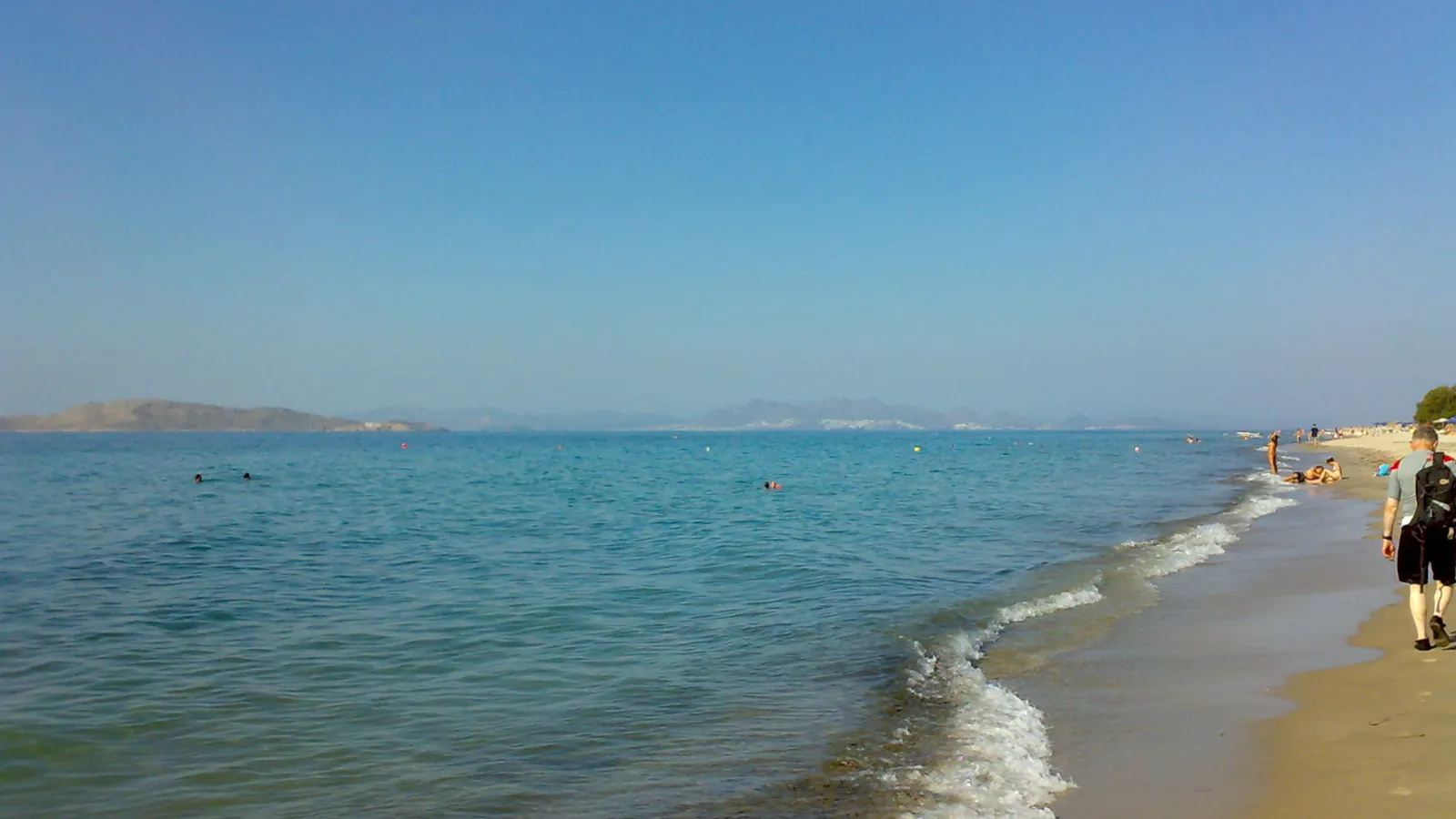
Caravia Beach is a white sandy beach on Kos's northeast coast, stretching about a kilometer along the shoreline. The 180-degree views of the Aegean Sea are the main draw here. Access is through Caravia Beach Hotel & Bungalows.
Quick Overview
Plan Your Visit to Marmari/Caravia Beach
The key facts before you go
About the Beach
What is Marmari/Caravia Beach?
Marmari/Caravia Beach sits on the northeastern coast of Kos, a kilometre-long stretch of white sand facing east across the Aegean Sea. The beach is part of the Caravia Beach Hotel & Bungalows complex and holds Blue Flag status, confirming its excellent bathing water quality and environmental standards. Summer visitors find the beach fully organized with sun beds and umbrellas, while the surrounding area supports palm trees and native brushwood. The setting offers genuine views of open water without the crowding found at some nearby beaches. Water temperatures peak at 24°C in August and drop to around 9°C by January, making the June-to-September window the practical swimming season.
It sits alongside other certified beaches in South Aegean, part of a broader network of other Blue Flag beaches in Greece certified annually by the Foundation for Environmental Education.
Sunrise, Sunset & Beach Direction
Marmari/Caravia Beach faces east toward Aegean Sea. The best light for photography and swimming is typically in April, May, June. Direct sun hours follow that facing.
Planning
When to Go: Month by Month
| Month | Air Temp | Water Temp | Crowds |
|---|---|---|---|
| Jan | 12°C | 9°C | Low |
| Feb | 14°C | 11°C | Low |
| Mar | 14°C | 11°C | Low |
| Apr | 17°C | 14°C | Low |
| May | 21°C | 18°C | Low |
| Jun | 24°C | 21°C | Low |
| Jul | 27°C | 24°C | Med |
| Aug | 27°C | 24°C | High |
| Sep | 25°C | 22°C | High |
| Oct | 21°C | 18°C | Med |
| Nov | 18°C | 15°C | Low |
| Dec | 14°C | 11°C | Low |
The best time to visit Marmari/Caravia Beach is April, May, June. Air temperatures peak around 26.9°C in summer. Peak water temperature reaches 23.9°C in July.
How crowded does Marmari/Caravia Beach get?How busy does Marmari/Caravia Beach get? During June through September, the organized summer setup with sun beds and umbrellas indicates consistent visitor flow. Peak August weeks will see the beach populated, particularly around midday when tour groups from nearby Kos town and hotel guests arrive together. The one-kilometre length helps distribute crowds, this isn't a narrow cove that fills to capacity quickly. September tends lighter than July-August as the season winds down. Outside the June-September swimming window, visitor numbers drop significantly. April-May and October see occasional swimmers during warm spells, but the water sits below 18°C, limiting casual swimming. Winter months from November through March attract few beach visitors, though the beach technically remains accessible. The hotel's full organization during summer (sun beds, umbrellas, facilities) means crowds concentrate during daylight hours rather than spreading across dawn and dusk. Evening visits outside peak season offer solitude. If you're seeking a quiet, completely undeveloped beach experience, this isn't it, the organized hotel infrastructure means structure and people come together. If you want organized facilities without fighting for space like major resort beaches, the one-kilometre span and moderate overall capacity work in your favour.
Is Marmari/Caravia Beach open year-round?The beach itself is accessible year-round, though staffed facilities including lifeguards typically operate only during the official season (01-07 – 31-10). The Blue Flag is displayed during the certification period only.
The Water
Swimming and Beach Life at Marmari/Caravia Beach
Is Marmari/Caravia Beach safe to swim?Marmari/Caravia Beach is Blue Flag certified, which requires meeting strict bathing water standards set by the EU Bathing Water Directive. Water quality is rated Excellent. The beach does not have lifeguards stationed on the beach. Swim with appropriate caution.
What is the water temperature at Marmari/Caravia Beach?Peak water temperature at Marmari/Caravia Beach reaches around 23.9°C in July, making it comfortable for swimming during the summer months. In winter (January), air temperatures average 12.3°C.
What is the beach like at Marmari/Caravia Beach?Marmari/Caravia Beach stretches for approximately one kilometre along Kos's northeast coast, with white sand and consistent access via the hotel grounds. The 180-degree Aegean outlook means you're facing eastward across open water, no sheltering islands block the horizon here. What defines this beach? The combination of organized facilities and environmental commitment. During summer months, sun beds and umbrellas cover much of the usable beach area, operated by the hotel. The sand itself remains light-coloured and fine, typical of this part of the Aegean. Flora around the beach includes palm trees and local brushwood species, creating a natural frame without feeling overgrown. The bathing water consistently meets excellent quality standards, backed by the Blue Flag certification, this isn't marketing language but verified testing. Underfoot, expect gradual depth progression into sand-based seabed. The hotel's environmental policy shapes what happens here: they organize beach cleanups, environmental lectures, and conservation activities during summer, which you'll notice in the general maintenance standards. Access requires either staying at the hotel or visiting as a day guest through their facilities. The beach's one-kilometre length means it can absorb holiday crowds without feeling compressed, though peak August weeks will still see busy conditions. Water temperature climbs from 13.9°C in April to a peak of 24.1°C in August, then retreats through autumn. Winter sees it drop below 11°C by December. This northeast-facing orientation means morning sun and afternoon shade patterns shift through the day, useful if you're planning around the heat.
Does Marmari/Caravia Beach have good facilities?As a Blue Flag certified beach, Marmari/Caravia Beach meets the Foundation for Environmental Education's standards for facilities and services. Toilet facilities are on site. Parking is available nearby. The beach has disabled access facilities.
Marmari/Caravia Beach sits on the Aegean Sea: explore all Blue Flag beaches on the Aegean.
Planning a trip to Greece? How Greece earns the most Blue Flags , our editorial guide to certified beaches across the country.
While You're Here
Beyond Marmari/Caravia Beach
Kos town, roughly 15 kilometres south of Marmari/Caravia Beach, contains the main facilities and accommodation options for the island. The town centers on its Venetian castle and ancient harbour, with restaurants, shops, and services distributed through the old quarter and waterfront. Kos has archaeological sites including the Asklepieion (ancient healing sanctuary) situated inland southwest of town, one of the Aegean's significant classical ruins. The island's interior supports agriculture and quieter villages if you want inland contrast to the coast. Day trips by boat operate to nearby Turkish coast and neighbouring islands depending on season. The northeast coast where Marmari/Caravia Beach sits faces directly toward Turkey's Bodrum peninsula across roughly 40 kilometres of water, this viewpoint matters if you're interested in cross-cultural geography. Kos itself has developed as a balanced resort island rather than an overdeveloped single-strip destination, so finding quieter corners alongside busy areas is feasible across the island's approximately 112 square kilometres.
Transport
Getting to Marmari/Caravia Beach
How do I get to Marmari/Caravia Beach by car?Marmari/Caravia Beach is approximately 11.67 km from Kos. Follow local road signs to the beach. Check Google Maps or a local map for the most current directions.
What is the nearest airport to Marmari/Caravia Beach?The nearest airport is Heraklion International "Nikos Kazantzakis" Airport (HER), approximately 246.7 km away. Heraklion International Airport (HER), located 247 kilometres away, serves as your main air gateway. This is Crete's primary airport with direct flights from most European cities and connections through Athens. From Heraklion, you'll need ground transport to reach Kos. The most straightforward option is car rental from the airport, allow 3.5 to 4 hours driving time via the road network to Kos town, then 15 minutes more to Marmari/Caravia Beach on the northeast coast. Alternatively, a bus journey from Heraklion connects to Kos (check current schedules with KTEL operators), though travel time extends to 5+ hours with transfers. Direct flights to Kos itself are limited depending on season, so most visitors route through Heraklion.
Can I get to Marmari/Caravia Beach by public transport?Bus services operate between Kos town and surrounding villages, though Marmari/Caravia Beach's location on the northeast coast means you'll need to check current routes with KTEL Dodecanese (the regional operator). The beach's access through the hotel grounds means the final approach differs from standard public beach stops, confirm drop-off feasibility with the hotel directly or local transport authorities before travelling. The nearest recorded bus stop is 475 m from the beach.
Nearby
Near Marmari/Caravia Beach
Mapped toilets, bus stops, cafés, parking, and shops within about 500 m of Marmari/Caravia Beach. Distances are walking-line estimates from the beach pin.
Map loads when you ask. Tiles stay off the first paint.
Map: OpenStreetMap (ODbL)
Toilets near Marmari/Caravia Beach
- Public toilets Public toilets 146 m
Bus near Marmari/Caravia Beach
- Bus stop Bus stop 475 m
Cafés near Marmari/Caravia Beach
- Mythos Restaurant 463 m
Source: © OpenStreetMap contributors (ODbL). Names and positions come from mapped OSM features. Confirm on site.
Practical Details
Practical Information
| At the Beach | |
| Entry | Free: no charge to access the beach |
|---|---|
| Lifeguards | ✗ |
| Disabled Access | ✓ Accessible site facilities |
| Showers | ✗ |
| Toilets | ✓ Available during season |
| Official Season | 01 Jul – 31 Oct |
| Beach Type | Sandy beach |
| Parking | ✓ Available nearby (surface parking) |
| Nearest supermarket | 470 m from the beach |
| Nearest bus stop | 475 m from the beach |
| Visiting Information | |
| GPS Coordinates | 36.8832°N, 27.1534°E |
| Water Quality | Excellent (EU Bathing Water Directive) |
| Blue Flag Operator | Foundation for Environmental Education (FEE), Greece |
Frequently Asked Questions
Marmari/Caravia Beach FAQ
Is Marmari/Caravia Beach worth visiting?
Yes, if you value organized facilities, verified water quality, and a full-length sandy beach without fighting for sand space. Blue Flag certification confirms excellent bathing water and environmental standards, this matters if water quality concerns you. The one-kilometre length absorbs crowds better than smaller beaches. However, if you want undeveloped, rustic beach experience with minimal infrastructure, this organized hotel-based setup won't match that aim. The June-September swimming season aligns with peak Mediterranean holiday timing, so expect company during those months. Consider visiting May or October for warmer weather with lighter crowds.
How do I get to Marmari/Caravia Beach?
Fly into Heraklion International Airport (247 km away), then rent a car or take a bus to Kos town, then continue 15 minutes north to the beach via the road to Marmari. Driving takes 3.5-4 hours from Heraklion. Bus options exist but involve transfers and longer overall time. The beach access runs through Caravia Beach Hotel & Bungalows, day visitors can typically visit through the hotel, though confirming access conditions in advance helps. No train connection reaches Kos. Your own transport provides most flexibility given the rural northeast location.
What's the best time of year to visit?
June through September represents the organized swimming season, water temperatures range from 21.4°C (June) to 24.1°C (August), with July-August peaking at 26.9-27.1°C air temperatures. Peak crowds occur in July-August, while June and September offer warmer water than spring with fewer visitors. May and October border the season, water sits around 17.5°C and 18.2°C respectively, swimmable for some but cool. April (13.9°C) and November (15°C) require tolerance for cooler temperatures. Winter months see water drop below 11°C. If avoiding crowds matters more than peak heat, June or early September work well.
What facilities are there?
Summer facilities include organized sun beds and umbrellas across the beach, plus hotel amenities through Caravia Beach Hotel & Bungalows. The hotel operates according to Blue Flag environmental standards, meaning organized waste management, water safety procedures, and lifeguard presence during operating hours. During summer, environmental activities run including beach cleanups and lectures. The beach has rich flora (palm trees, brushwood) providing natural shade alongside artificial facilities. Kos town (15 km south) supplies shops, restaurants, and medical services if you need provisions beyond the beach itself.
Is Marmari/Caravia Beach suitable for families?
Yes, with qualifications. The organized summer facilities (sun beds, umbrellas, safety procedures) suit families seeking structure. Excellent water quality and gradual depth progression into sandy seabed work for children learning to swim. The one-kilometre length means kids have space to explore without risk of losing sight of adults in crowded conditions. Environmental activities during summer (beach cleanups, lectures) can engage family groups. However, peak August weeks will be busy with tour groups, requiring patience. The beach's hotel-based access means day-visit facilities differ from open public beaches, confirm your family's specific needs (changing facilities, food availability) directly with the hotel before visiting.
Are there toilets near Marmari/Caravia Beach?
Yes. OpenStreetMap maps toilets near Marmari/Caravia Beach, including 146 m away. Distances are walking-line estimates within about 500 m of the beach pin. Confirm opening hours on site; some facilities are seasonal. © OpenStreetMap contributors (ODbL).
Is there a bus near Marmari/Caravia Beach?
Yes. OpenStreetMap maps a public-transport stop 475 m from Marmari/Caravia Beach (Bus stop). Check current timetables before you travel. © OpenStreetMap contributors (ODbL).
Are there cafés near Marmari/Caravia Beach?
Yes. OpenStreetMap lists a café or restaurant near Marmari/Caravia Beach, including Mythos (463 m). Hours and seasonal opening are not verified here. Check on the day. © OpenStreetMap contributors (ODbL).
Explore More
Nearby Blue Flag Beaches
Editorial
From the Zeach Blog
Everything you need to know about what makes a beach qualify for Blue Flag status, from water quality to environmental education.
Read moreOur editorial team's pick of the standout Blue Flag beaches in Greece, rated for family friendliness, scenery, and facilities.
Explore GreeceWhat the flag actually means, how certification works, and why a Blue Flag is a genuinely reliable signal, not just a marketing tool.
Read moreSources
- Foundation for Environmental Education: Blue Flag programme
- FEE site listing for Marmari/Caravia Beach
- Hellenic Society for the Protection of Nature (EEPF)
- European Environment Agency: bathing water quality
Last verified September 2026. National operator pages and FEE listings are the primary certification sources.