East Kalamata 1-Anastasi
Peloponnese Region, Greece: Excellent water quality
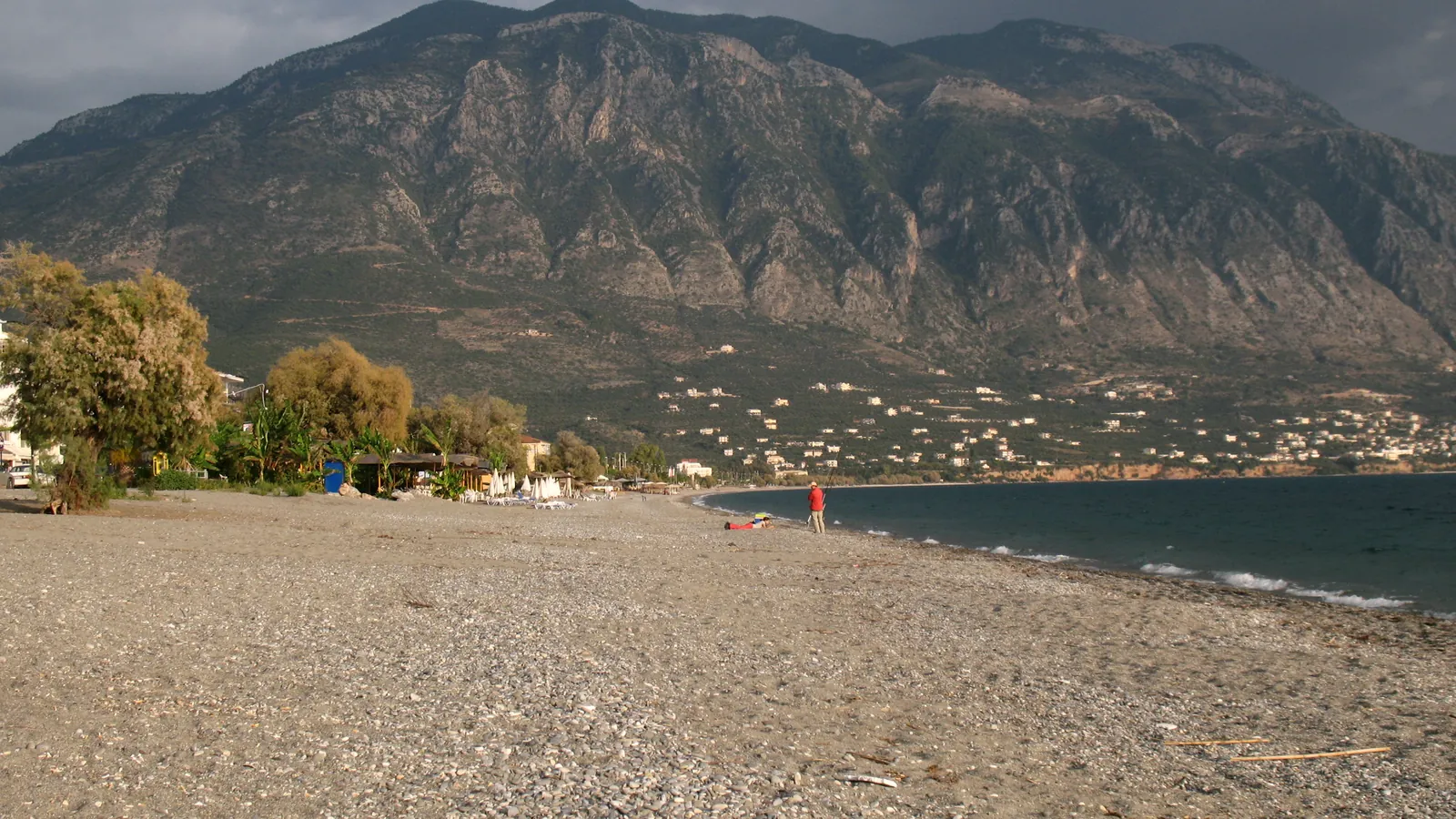
At Anastasis Beach, palm trees, tamarix, and tall pines dot the shoreline, with pink and white oleanders adding color throughout. Low shrubby vegetation fills the gaps between larger plants. The beach stretches about 1000 meters.
Quick Overview
Plan Your Visit to East Kalamata 1-Anastasi
The key facts before you go
About the Beach
What is East Kalamata 1-Anastasi?
East Kalamata 1-Anastasi stretches along the Peloponnese coast near Kalamata with approximately 1000 metres of shoreline. This east-facing beach meets Excellent bathing water quality standards, making it a reliable choice for swimmers in the Municipality of Kalamata. The beach benefits from a natural landscape of palm trees, tamarix, and scattered pines, with pink and white oleanders adding colour to the surroundings. Lifeguards are present to monitor safety. The water temperature builds steadily from June onwards, reaching peak warmth in July and August before gradually cooling through autumn. This makes East Kalamata 1-Anastasi accessible for extended swimming from June through December.
It sits alongside certified beaches along Peloponnese Region, part of a broader network of certified beaches throughout Greece certified annually by the Foundation for Environmental Education.
Sunrise, Sunset & Beach Direction
East Kalamata 1-Anastasi faces east toward Ionian Sea. The best light for photography and swimming is typically in April, May, June. Direct sun hours follow that facing.
Planning
When to Go: Month by Month
| Month | Air Temp | Water Temp | Crowds |
|---|---|---|---|
| Jan | 10°C | 7°C | Low |
| Feb | 11°C | 8°C | Low |
| Mar | 12°C | 9°C | Low |
| Apr | 16°C | 13°C | Low |
| May | 20°C | 17°C | Low |
| Jun | 25°C | 22°C | Low |
| Jul | 28°C | 25°C | Med |
| Aug | 28°C | 25°C | High |
| Sep | 24°C | 21°C | Med |
| Oct | 19°C | 16°C | Low |
| Nov | 16°C | 13°C | Low |
| Dec | 12°C | 9°C | Low |
The best time to visit East Kalamata 1-Anastasi is April, May, June. Air temperatures peak around 27.6°C in summer. Peak water temperature reaches 24.6°C in July.
How crowded does East Kalamata 1-Anastasi get?What visitor patterns emerge at East Kalamata 1-Anastasi? Peak attendance occurs during July and August when water temperatures reach 24.6°C to 24.8°C and air temperatures stay around 27.6°C to 27.8°C. These months attract families and regular swimmers before schools resume. The 1000-metre length provides space for visitor distribution, though popular sections near facilities concentrate crowds. June and early September remain moderately busy with warmer water (21.7°C and 21°C respectively) and pleasant air temperatures in the mid-20s Celsius. How does the season extend? June through December technically opens the swimming window, though October through December sees reduced attendance as water temperatures drop below 16°C. Spring months (March through May) show light visitor numbers despite gradual warming from 9.3°C to 17.1°C. February and March remain quiet with water temperatures around 8°C, deterring casual swimmers. What facilities support visitors? Lifeguards maintain a presence throughout the accessible season, providing safety monitoring. The landscaped environment with natural shade from pines and tamarix offers respite from direct sun. The beach composition and width accommodate varied visitor preferences from swimmers to those seeking quiet time in vegetated areas.
Is East Kalamata 1-Anastasi open year-round?The beach itself is accessible year-round, though staffed facilities including lifeguards typically operate only during the official season (01-07 – 30-09). The Blue Flag is displayed during the certification period only.
The Water
Swimming and Beach Life at East Kalamata 1-Anastasi
Is East Kalamata 1-Anastasi safe to swim?East Kalamata 1-Anastasi is Blue Flag certified, which requires meeting strict bathing water standards set by the EU Bathing Water Directive. Water quality is rated Excellent. Lifeguards are on duty during the official season.
What is the water temperature at East Kalamata 1-Anastasi?Peak water temperature at East Kalamata 1-Anastasi reaches around 24.6°C in July, making it comfortable for swimming during the summer months. In winter (January), air temperatures average 9.7°C.
What is the beach like at East Kalamata 1-Anastasi?East Kalamata 1-Anastasi occupies a 1000-metre coastal stretch defined by mixed vegetation and a gently varied shoreline. What vegetation covers the beach environment? The landscape combines mature pines with lower-growing tamarix and palm trees, creating natural shade in sections. Nerium oleanders with pink and white flowers grow along the beach edge. Small bushy plants fill gaps in the vegetation pattern, offering partial wind protection during certain seasons. What wildlife inhabits the area? Bird diversity is notable due to favourable climatic conditions. Gulls frequent the shoreline, while pigeons, swallows, blackbirds, and sparrows move through the coastal zone. The sea floor supports active fish populations including sand smelt, anchovies, mullets, flying-fishes, and various fry species that fishermen regularly catch. Insects including bees, butterflies, beetles, and grasshoppers appear with greater frequency during spring and summer months. What are the water conditions? Bathing water quality is classified as Excellent year-round. Water temperature remains cool from January through May, averaging 6.7°C in January and reaching only 9.3°C by March. April sees a noticeable shift to 12.8°C. May accelerates warming to 17.1°C, making casual swimming feasible for cold-water swimmers. June water reaches 21.7°C, marking the practical start of the main swimming season. July and August represent peak warmth at 24.6°C and 24.8°C respectively, ideal for extended water time. September remains warm at 21°C. October and November show gradual cooling to 16.1°C and 12.5°C. December reaches 8.6°C, limiting comfortable swimming to brief periods or experienced swimmers. What should swimmers expect? The consistent Excellent water quality rating reflects regular monitoring and maintenance. East-facing orientation means morning sun reaches the beach early, with afternoon shade developing as the sun moves west. The combination of nearshore fish populations and moderate wave activity typical of Peloponnese beaches creates visible ripples but generally manageable swimming conditions for alert swimmers.
Does East Kalamata 1-Anastasi have good facilities?As a Blue Flag certified beach, East Kalamata 1-Anastasi meets the Foundation for Environmental Education's standards for facilities and services. Trained lifeguards are on duty during the season. Showers are available. Parking is available nearby. The beach has disabled access facilities.
East Kalamata 1-Anastasi sits on the Ionian Sea: explore all Blue Flag beaches on the Ionian.
Planning a trip to Greece? How Greece earns the most Blue Flags , our editorial guide to certified beaches across the country.
While You're Here
Beyond East Kalamata 1-Anastasi
Kalamata, the municipality containing East Kalamata 1-Anastasi, offers urban services and dining options within easy reach. The town itself holds historical significance in the Peloponnese and serves as a supply point for beach visitors requiring provisions, restaurants, or accommodation. The broader coastal region provides access to other Peloponnese beaches and villages. Inland from the coast, the Peloponnese landscape features agricultural areas and traditional settlements. The region's climatic stability shown in air temperature data (ranging from 9.7°C in January to 27.8°C in August) reflects Mediterranean conditions that support both coastal and inland activities. Local fishing remains economically relevant, with visible commercial activity in the waters and regular catches of sand smelt, anchovies, mullets, and flying-fish mentioned by regional fishermen.
Transport
Getting to East Kalamata 1-Anastasi
How do I get to East Kalamata 1-Anastasi by car?East Kalamata 1-Anastasi is approximately 1.92 km from Municipality of Kalamata. Follow local road signs to the beach. Check Google Maps or a local map for the most current directions.
What is the nearest airport to East Kalamata 1-Anastasi?The nearest airport is Athens International Airport "El. Venizelos" (ATH), approximately 187.5 km away. Athens International Airport "El. Venizelos" (ATH) lies 187.5 kilometres north of East Kalamata 1-Anastasi. International flights connect to Athens daily from European and Mediterranean airports. Ground transport options include rental car hire, which provides direct access south toward Kalamata via the main highway system, typically requiring 2.5 to 3 hours depending on traffic and specific routing. Alternatively, organised shuttle services and taxi firms operate from the airport for direct Kalamata transfer, though costs are significantly higher than rental vehicles for single journeys.
Can I get to East Kalamata 1-Anastasi by public transport?Public transport options vary by season. Check local transport authority websites for current bus and train schedules connecting to Municipality of Kalamata. The nearest recorded bus stop is 128 m from the beach.
Nearby
Near East Kalamata 1-Anastasi
Mapped toilets, bus stops, cafés, parking, and shops within about 500 m of East Kalamata 1-Anastasi. Distances are walking-line estimates from the beach pin.
Map loads when you ask. Tiles stay off the first paint.
Map: OpenStreetMap (ODbL)
Bus near East Kalamata 1-Anastasi
- 6η Ναβαρίνου Bus stop 128 m
Cafés near East Kalamata 1-Anastasi
- del mar Restaurant 73 m
- Tricky Café 193 m
- Στο κυμα Restaurant 226 m
Parking near East Kalamata 1-Anastasi
- Parking Parking 101 m
- Parking Parking 134 m
Source: © OpenStreetMap contributors (ODbL). Names and positions come from mapped OSM features. Confirm on site.
Practical Details
Practical Information
| At the Beach | |
| Entry | Free: no charge to access the beach |
|---|---|
| Lifeguards | ✓ On duty during official season |
| Disabled Access | ✓ Accessible site facilities and water entry |
| Showers | ✓ Available during season |
| Toilets | ✗ |
| Official Season | 01 Jul – 30 Sep |
| Beach Type | Sandy beach |
| Parking | ✓ Available nearby (surface parking) |
| Nearest supermarket | 110 m from the beach |
| Nearest bus stop | 128 m from the beach |
| Visiting Information | |
| GPS Coordinates | 37.0243°N, 22.1250°E |
| Water Quality | Excellent (EU Bathing Water Directive) |
| Blue Flag Operator | Foundation for Environmental Education (FEE), Greece |
Frequently Asked Questions
East Kalamata 1-Anastasi FAQ
Is East Kalamata 1-Anastasi worth visiting?
Yes, if you prioritise reliable water quality and a natural beach setting. The Excellent bathing water classification confirms consistent safety standards. The 1000-metre shoreline with mixed vegetation offers genuine shade from pines and tamarix, differentiating it from many Mediterranean beaches. Lifeguards provide safety assurance. Visit June through September for warmest water (21–24.8°C). Spring or late autumn visits suit those tolerating cooler water (9–17°C). The landscape supports bird and insect observation alongside swimming.
How do I get to East Kalamata 1-Anastasi?
Athens International Airport (ATH), 187.5 kilometres north, is the primary air gateway. Rental car hire provides most direct beach access, typically requiring 2.5–3 hours driving south toward Kalamata. Shuttle services and taxis operate from Athens airport for direct transfers, though costs exceed rental vehicle rates for individual journeys. Once in Kalamata municipality, local roads provide final approach to the beach. Plan transport before peak July–August periods when demand for rental vehicles peaks.
What is the best time of year to visit?
June through August offers peak conditions with water temperatures from 21.7°C to 24.8°C and air temperatures around 27–28°C. July–August see the warmest water, ideal for extended swimming. June and September provide pleasant conditions (21–24°C water) with fewer crowds than midsummer. Late May shows adequate warmth at 17.1°C for swimming. October through December cool significantly below 16°C, limiting casual swimming unless you have cold-water tolerance. Spring months (March–May) suit those tolerating cooler water while avoiding summer crowds.
What facilities are available at East Kalamata 1-Anastasi?
Lifeguards operate throughout the swimming season, providing safety monitoring and emergency response capability. Natural shade from established pines, tamarix, and scattered palm trees reduces sun exposure without artificial structures. The beach's length and width allow space for different visitor preferences. Kalamata municipality provides nearby dining, supplies, and accommodation options. The exact range of facilities including changing rooms, cafes, or equipment hire requires local inquiry, as specific amenity details are not confirmed.
Is East Kalamata 1-Anastasi suitable for families?
Yes, with practical considerations. Lifeguard presence and Excellent water quality provide safety assurance for children. The natural landscape with shade from large trees offers family-friendly respite from direct sun. Water temperature reaches comfortable levels (21–24°C) from June through September for children's swimming. The 1000-metre length distributes visitors and prevents overcrowding. Nearby Kalamata provides family services. Winter months (December–May) present cooler water temperatures unsuitable for young children, requiring visits during June–October.
Is there a bus near East Kalamata 1-Anastasi?
Yes. OpenStreetMap maps a public-transport stop 128 m from East Kalamata 1-Anastasi (6η Ναβαρίνου). Check current timetables before you travel. © OpenStreetMap contributors (ODbL).
Are there cafés near East Kalamata 1-Anastasi?
Yes. OpenStreetMap lists 3 cafés or restaurants near East Kalamata 1-Anastasi, including del mar (73 m), Tricky (193 m), and Στο κυμα (226 m). Hours and seasonal opening are not verified here. Check on the day. © OpenStreetMap contributors (ODbL).
Is there parking near East Kalamata 1-Anastasi?
Yes. OpenStreetMap maps parking 101 m from East Kalamata 1-Anastasi, with 2 lots or spaces inside about 500 m. Charges and time limits are not recorded here. © OpenStreetMap contributors (ODbL).
Explore More
Nearby Blue Flag Beaches
Editorial
From the Zeach Blog
Everything you need to know about what makes a beach qualify for Blue Flag status, from water quality to environmental education.
Read moreOur editorial team's pick of the standout Blue Flag beaches in Greece, rated for family friendliness, scenery, and facilities.
Explore GreeceWhat the flag actually means, how certification works, and why a Blue Flag is a genuinely reliable signal, not just a marketing tool.
Read moreSources
- Foundation for Environmental Education: Blue Flag programme
- FEE site listing for East Kalamata 1-Anastasi
- Hellenic Society for the Protection of Nature (EEPF)
- European Environment Agency: bathing water quality
Last verified September 2026. National operator pages and FEE listings are the primary certification sources.