Silgar
Galicia, Spain: Excellent water quality
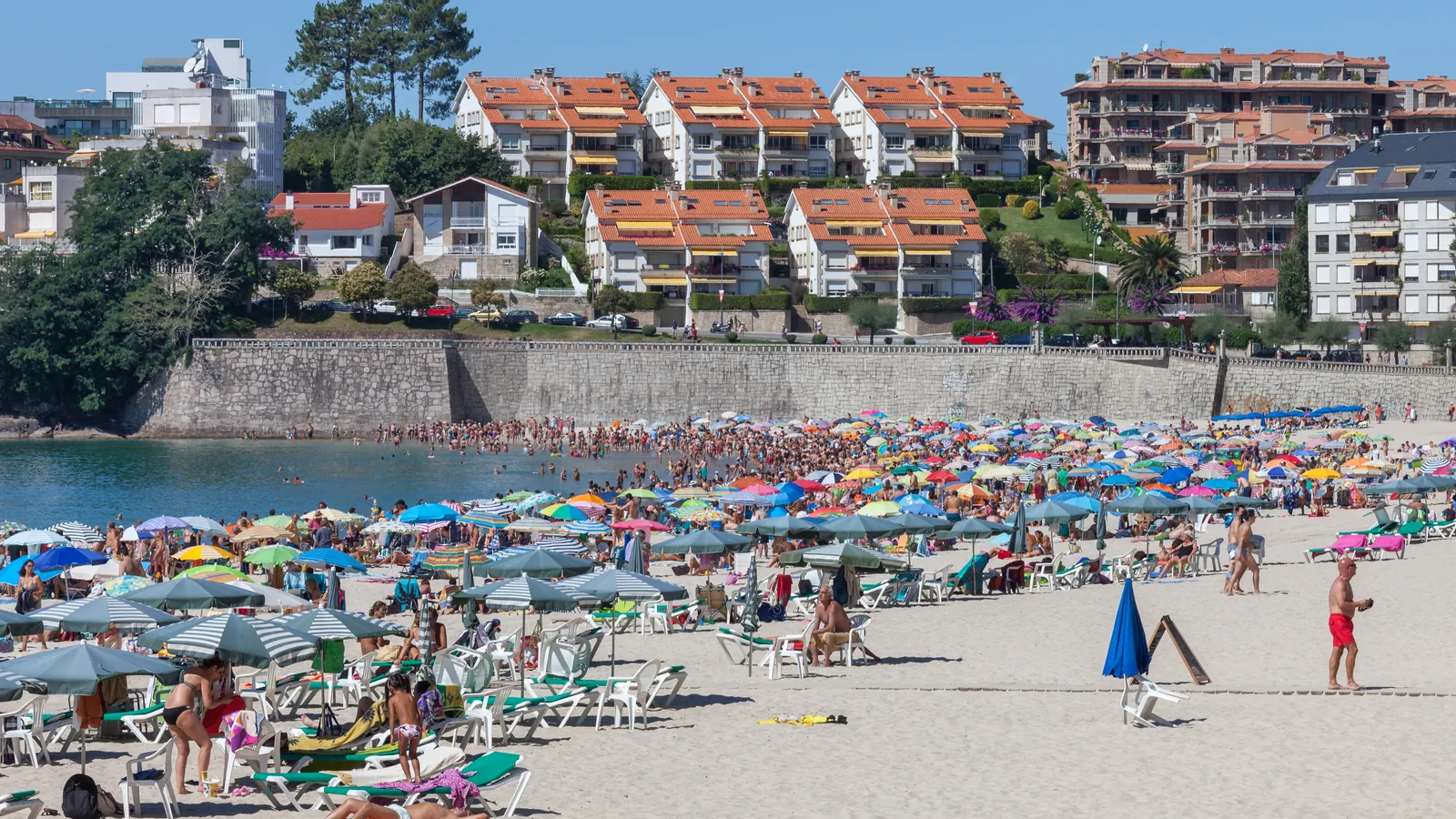
Fine sand. Urban beach near natural sites.
Quick Overview
Plan Your Visit to Silgar
The key facts before you go
About the Beach
What is Silgar?
Silgar Beach stretches along the southern coastline of Sanxenxo, one of Galicia's most popular summer destinations. This urban beach features fine white sand and faces south, catching sunlight throughout the day and offering spectacular sunset views over the Atlantic. The beach holds Blue Flag certification and maintains excellent bathing water quality, reflecting the care taken to preserve this stretch of Galician coast. What makes Silgar particularly special is its proximity to the Umia-O Grove Inter-tidal Complex, a wetland of international importance recognized under the Ramsar Convention. This ecosystem supports over 100 bird species during migratory seasons, from waders to herons and mallards. The beach sits within easy reach of downtown Sanxenxo, with its promenade connecting visitors to the town's restaurants, cafes, and shops. For those seeking Atlantic surf conditions combined with urban convenience, Silgar delivers both within a single location.
It sits alongside certified beaches along Galicia, part of a broader network of certified beaches throughout Spain certified annually by the Foundation for Environmental Education.
Visitor Feedback
What Visitors Say About Silgar
What visitors appreciate
- promenade|urban beach|white sand|fine sand|foot showers|blue flag|sunbed rental|pedal boat rental|sunset walks|absence of showers
- Excellent EU-rated bathing water quality
Points to consider
- Can be busy during July and August peak season
- Limited parking near the beach
- No lifeguards outside the official season
- Facilities may be reduced outside peak months
Based on aggregated public visitor feedback. Themes are synthesised from multiple sources, not individual quotes. Zeach does not reproduce individual reviews.
Sunrise, Sunset & Beach Direction
Silgar faces south toward Atlantic Ocean. The best light for photography and swimming is typically in April, May, June. Direct sun hours follow that facing.
Planning
When to Go: Month by Month
| Month | Air Temp | Water Temp | Crowds |
|---|---|---|---|
| Jan | 10°C | 7°C | Low |
| Feb | 11°C | 8°C | Low |
| Mar | 12°C | 9°C | Low |
| Apr | 13°C | 10°C | Low |
| May | 16°C | 13°C | Low |
| Jun | 18°C | 15°C | Low |
| Jul | 21°C | 18°C | Med |
| Aug | 21°C | 18°C | High |
| Sep | 19°C | 16°C | Med |
| Oct | 16°C | 13°C | Low |
| Nov | 13°C | 10°C | Low |
| Dec | 12°C | 9°C | Low |
The best time to visit Silgar is April, May, June. Air temperatures peak around 20.7°C in summer. Peak water temperature reaches 17.7°C in July.
How crowded does Silgar get?Who visits Silgar Beach throughout the year? The patterns follow the rhythms of Galician tourism and the Atlantic seasons. Winter months see Silgar at its quietest. Water temperatures dropping to 7-8°C and air temperatures around 10°C keep most swimmers away. The promenade attracts local residents taking walks, and the beach itself remains peaceful, offering unobstructed sunset views without summer crowds. Spring brings gradual change. March and April see temperatures climbing slowly, though at 9-10°C the water remains cold for casual swimming. This period attracts visitors interested in the natural surroundings rather than beach bathing, particularly birdwatchers drawn to observe migratory species in the nearby Umia-O Grove Inter-tidal Complex. The transformation begins in May as water reaches 13°C. Early season visitors, often Spanish tourists testing the waters before peak summer, start appearing. June marks the true beginning of beach season with water temperatures approaching 15°C. July and August represent peak season at Silgar. Spanish holidaymakers from inland regions and northern European visitors fill the beach during these months. The combination of 17-18°C water and 20-21°C air temperatures creates comfortable conditions that draw the largest crowds. Sunbed rentals operate at capacity, pedal boats circle the bay, and the promenade buzzes with activity. The urban beach setting means easy access brings day visitors alongside hotel guests. September offers a gentler experience. Water remains swimmable at 16°C while crowds thin considerably. Sunset walks along the beach become more contemplative as the summer rush subsides. By October, with water dropping to 13°C, Silgar returns to its off-season character.
Is Silgar open year-round?The beach itself is accessible year-round, though staffed facilities including lifeguards typically operate only during the official season (01-07 – 15-09). The Blue Flag is displayed during the certification period only.
The Water
Swimming and Beach Life at Silgar
Is Silgar safe to swim?Silgar is Blue Flag certified, which requires meeting strict bathing water standards set by the EU Bathing Water Directive. Water quality is rated Excellent. The beach does not have lifeguards stationed on the beach. Swim with appropriate caution.
What is the water temperature at Silgar?Peak water temperature at Silgar reaches around 17.7°C in July, making it comfortable for swimming during the summer months. In winter (January), air temperatures average 10.3°C.
What is the beach like at Silgar?What makes Silgar Beach the heart of Sanxenxo's coastline? The answer lies in its combination of fine white sand, south-facing orientation, and urban accessibility that has made it Galicia's quintessential summer beach. The sand at Silgar is notably fine, creating a comfortable surface for sunbathers and beachgoers. The beach faces south, which means it receives direct sunlight for most of the day and provides sheltered conditions from the prevailing Atlantic winds that can affect north-facing beaches along this coast. This orientation also creates the conditions for remarkable sunset walks along the shoreline, as the sun drops toward the western horizon over the water. Silgar maintains excellent bathing water quality, a standard verified through regular testing that contributed to its Blue Flag certification. The water temperatures here follow typical Atlantic patterns for this latitude. January sees the coldest conditions at around 7°C, making winter swimming a pursuit for only the most dedicated cold-water enthusiasts. Spring brings gradual warming through March and April, with temperatures climbing from 9°C to 10°C. By May, the water reaches approximately 13°C, still brisk but manageable for many swimmers. Summer transforms Silgar entirely. July and August bring peak water temperatures of around 17-18°C, comfortable for extended swimming sessions. Air temperatures during these months hover around 20-21°C, creating pleasant beach conditions without the extreme heat found further south in Spain. September maintains water temperatures near 16°C, extending the swimming season into early autumn. The surf conditions at Silgar attract wave riders, though the beach's sheltered south-facing position means swells are typically more moderate than exposed Atlantic breaks. This makes it suitable for intermediate surfers and those learning the sport rather than those seeking powerful waves. Facilities along Silgar reflect its urban beach status. Foot showers allow visitors to rinse off sand before heading into town. Sunbed rental services operate during the season for those preferring elevated comfort. Pedal boat rental adds a recreational option for exploring the bay from the water. The promenade running along the beach provides a paved path for walks, connecting the beach to Sanxenxo's commercial center. The ecological significance of Silgar's location deserves attention. The beach sits adjacent to the Umia-O Grove Inter-tidal Complex, recognized as one of the richest ecosystems in the region. This wetland system includes inlets, dunes, and beaches that create diverse habitats supporting remarkable biodiversity. The gradual transition between maritime and terrestrial environments, combined with freshwater input from rivers flowing into the area, enriches the ecosystem substantially. This inter-tidal complex has earned recognition through multiple conservation designations. Its inclusion in the Ramsar Convention acknowledges its international importance for waterfowl. The European designation as a Special Bird Protection Area under Directive 79/409 EEC confirms its value for wild bird conservation. The area has also been proposed for the Natura 2000 network, placing it among Europe's most significant natural sites. For birdwatchers, the nearby wetlands offer opportunities to observe over 100 species using the area as a resting point during migration. Waders, sea crows, herons, and mallards represent just some of the avian visitors that pass through seasonally.
Does Silgar have good facilities?As a Blue Flag certified beach, Silgar meets the Foundation for Environmental Education's standards for facilities and services. The beach has disabled access facilities.
Silgar sits on the Atlantic Ocean: explore all Blue Flag beaches on the Atlantic.
Planning a trip to Spain? Blue Flag Beaches Spain 2026 , our editorial guide to certified beaches across the country.
While You're Here
Beyond Silgar
The natural environment surrounding Silgar extends the experience well beyond the beach itself. The Umia-O Grove Inter-tidal Complex begins just beyond the shoreline, offering wetland exploration for those interested in ecology and birdwatching. Over 100 bird species use this Ramsar-designated site during migration, making it a significant destination for ornithologists visiting the region. Few miles offshore from this stretch of coast lies the National Park of the Atlantic Islands, accessible by boat services during the tourism season. The park encompasses island ecosystems distinct from the mainland beaches. Sanxenxo itself functions as a developed resort town with restaurants serving Galician seafood, including the region's famous pulpo and local shellfish from the Rías Baixas estuaries. The promenade connecting Silgar to the town center provides an evening paseo route popular with visitors and locals alike. The broader Rías Baixas region offers additional beaches, fishing villages, and the distinctive landscape of Galicia's drowned river valleys. Wine enthusiasts will find this is Albariño country, with local bodegas producing the crisp white wines that pair with the region's seafood traditions. The combination of coastal scenery, ecological significance, and Galician gastronomy creates options extending well beyond Silgar's fine sand.
Transport
Getting to Silgar
How do I get to Silgar by car?Silgar is approximately 0.48 km from Sanxenxo. Follow local road signs to the beach. Check Google Maps or a local map for the most current directions.
What is the nearest airport to Silgar?The nearest airport is Vigo Airport (VGO) (VGO), approximately 24.2 km away. Vigo Airport serves as the nearest air gateway to Silgar Beach, located approximately 24 kilometers from Sanxenxo. The airport operates under IATA code VGO and handles domestic Spanish routes along with limited international connections. From the airport, reaching Sanxenxo requires ground transportation as no direct public transit links exist. Rental cars provide the most flexible option, with the drive taking roughly 30-40 minutes depending on traffic conditions. The route follows coastal roads offering views of Galician estuaries. Taxi services operate from the airport terminal, though fares to Sanxenxo should be confirmed before departure. Santiago de Compostela Airport, though further away, offers more international flight options and may prove more convenient for travelers arriving from outside Spain.
Can I get to Silgar by public transport?Bus services connect Sanxenxo to major Galician cities including Pontevedra, Vigo, and Santiago de Compostela. The regional bus network operated by local companies provides regular routes during summer months, with reduced frequency in off-season. Services typically stop at Sanxenxo's central bus station, from where Silgar Beach is within walking distance.
Is there a train to Silgar?Rail connections to Sanxenxo require a two-stage journey. The nearest significant railway stations are located in Pontevedra and Vilagarcía de Arousa, both connected to Spain's RENFE network. Pontevedra sits approximately 18 kilometers from Sanxenxo and receives trains from Vigo, Santiago de Compostela, and connections from Madrid and Barcelona via high-speed services to Galician terminals. From either station, onward travel to Sanxenxo requires bus services or taxi. The lack of direct rail access reflects Sanxenxo's position on the Rías Baixas peninsula, where road transport predominates for final-leg journeys.
Map
Find Silgar
Open the map or get directions to the Silgar pin. Amenity names are listed here only when OpenStreetMap has a mapped feature nearby.
Map loads when you ask. Tiles stay off the first paint.
Map: OpenStreetMap (ODbL)
Practical Details
Practical Information
| At the Beach | |
| Entry | Free: no charge to access the beach |
|---|---|
| Lifeguards | ✗ |
| Disabled Access | ✓ Accessible site facilities and water entry |
| Showers | ✗ |
| Toilets | ✗ |
| Official Season | 01 Jul – 15 Sep |
| Beach Type | Sandy beach |
| Sand | White / ivory sand |
| Visiting Information | |
| GPS Coordinates | 42.4011°N, 8.8123°W |
| Water Quality | Excellent (EU Bathing Water Directive) |
| Blue Flag Operator | Foundation for Environmental Education (FEE), Spain |
Frequently Asked Questions
Silgar FAQ
Is Silgar Beach worth visiting?
Silgar Beach merits a visit for its combination of fine white sand, excellent water quality, and proximity to significant natural sites. The Blue Flag certification confirms environmental standards, while the south-facing orientation provides good sun exposure and sunset views. The location adjacent to the Umia-O Grove Inter-tidal Complex, a Ramsar-designated wetland supporting over 100 bird species, adds ecological interest beyond typical beach visits. Urban amenities including foot showers, sunbed rental, and the connecting promenade provide convenience. Summer water temperatures reaching 17-18°C make comfortable swimming possible during peak season.
How do I get to Silgar Beach?
Silgar Beach lies in Sanxenxo, Galicia. Vigo Airport sits 24 kilometers away, offering the nearest air access with domestic Spanish routes. From the airport, rental car or taxi provides the connection to Sanxenxo. Train travelers can reach Pontevedra station via RENFE services from major Spanish cities, then continue by bus or taxi for the remaining 18 kilometers. Regional bus services operate between Sanxenxo and Galician cities including Pontevedra, Vigo, and Santiago de Compostela. Once in Sanxenxo, Silgar Beach is accessible on foot from the town center.
What is the best time of year to visit Silgar Beach?
July and August offer peak beach conditions with water temperatures around 17-18°C and air temperatures near 20-21°C. These months bring the warmest swimming conditions and longest days. June and September provide shoulder-season alternatives with fewer crowds; water reaches 15°C in June and remains at 16°C in September. For birdwatching in the adjacent Umia-O Grove wetlands, spring and autumn migration periods bring the greatest species diversity. Winter visitors should expect water temperatures of 7-9°C, suitable only for dedicated cold-water swimmers, though sunset walks remain appealing year-round.
What facilities are there at Silgar Beach?
Silgar Beach provides urban beach facilities including foot showers for rinsing sand before leaving the beach. Sunbed rental services operate during the tourism season for those preferring elevated comfort. Pedal boat rental offers on-water recreation for exploring the bay. The promenade along the beach connects to Sanxenxo's restaurants, shops, and services. The beach maintains Blue Flag certification, indicating standards for water quality, environmental management, and safety. The urban location means additional amenities in the adjacent town remain within walking distance.
Is Silgar Beach suitable for families?
Silgar Beach offers several family-friendly characteristics. The fine sand creates comfortable conditions for children playing on the beach. The south-facing orientation provides shelter from Atlantic winds that can affect exposed beaches. Excellent bathing water quality, verified through Blue Flag certification, ensures clean swimming conditions. The urban setting means facilities and services remain close at hand. Pedal boat rentals add family activity options. The adjacent promenade allows easy access with strollers. Note that dog policy information is not confirmed, so families with pets should verify current regulations before visiting.
Explore More
Nearby Blue Flag Beaches
Editorial
From the Zeach Blog
Everything you need to know about what makes a beach qualify for Blue Flag status, from water quality to environmental education.
Read moreOur editorial team's pick of the standout Blue Flag beaches in Spain, rated for family friendliness, scenery, and facilities.
Explore SpainWhat the flag actually means, how certification works, and why a Blue Flag is a genuinely reliable signal, not just a marketing tool.
Read moreSources
- Foundation for Environmental Education: Blue Flag programme
- FEE site listing for Silgar
- ADEAC (Asociación de Educación Ambiental y del Consumidor)
- European Environment Agency: bathing water quality
Last verified September 2026. National operator pages and FEE listings are the primary certification sources.