Newgale
Wales, United Kingdom
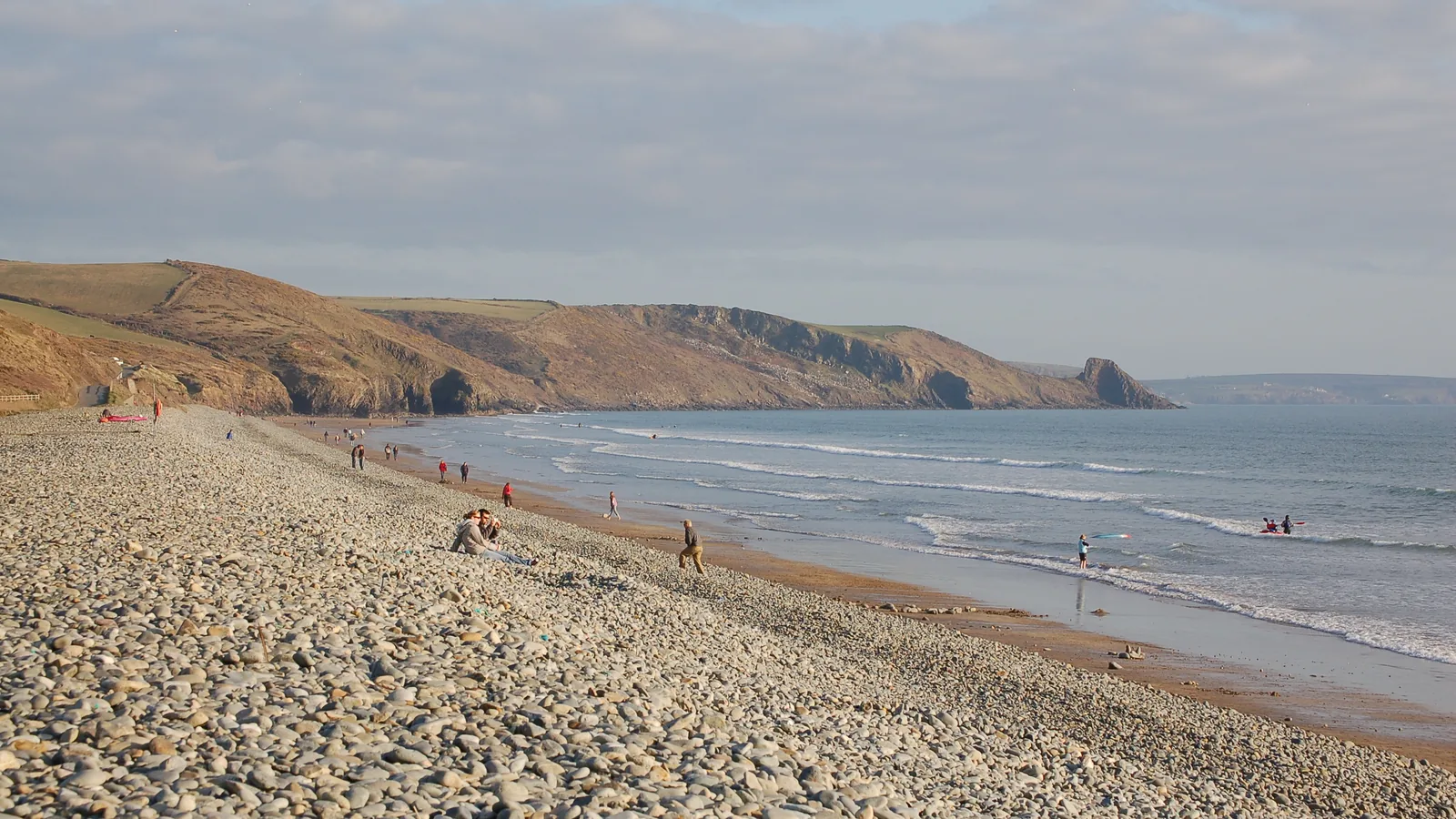
Newgale Sands stretches for two miles of golden sand and is one of Wales's best surf spots, with consistent large waves that draw surfers year-round. Swimmers should watch the flag warnings carefully, particularly at high tide when the water can be rough. A natural ridge…
Quick Overview
Plan Your Visit to Newgale
The key facts before you go
About the Beach
What is Newgale?
Newgale Sands stretches for two miles along the Pembrokeshire coast, offering a rare expanse of golden sand backed by a natural pebble ridge. The beach has held Blue Flag status since 1998, reflecting consistent water quality and safety standards. West-facing and renowned for its large surf, Newgale draws experienced surfers alongside swimmers and families. The pebble bank serves as a natural flood defence at high tide, making it essential to monitor the warning flags during your visit. Located near St Davids, this beach combines serious wave conditions with accessible facilities, making it a substantial draw for the Welsh coast.
It sits alongside Blue Flag beaches in Wales, part of a broader network of Blue Flag certified beaches across United Kingdom certified annually by the Foundation for Environmental Education.
Sunrise, Sunset & Beach Direction
Newgale faces west toward Atlantic Ocean. The best light for photography and swimming is typically in May, June. Direct sun hours follow that facing.
Planning
When to Go: Month by Month
| Month | Air Temp | Water Temp | Crowds |
|---|---|---|---|
| Jan | 7°C | 10°C | Low |
| Feb | 7°C | 9°C | Low |
| Mar | 7°C | 9°C | Low |
| Apr | 9°C | 9°C | Low |
| May | 12°C | 11°C | Med |
| Jun | 14°C | 14°C | High |
| Jul | 16°C | 16°C | High |
| Aug | 16°C | 17°C | Med |
| Sep | 15°C | 16°C | Low |
| Oct | 12°C | 15°C | Low |
| Nov | 9°C | 13°C | Low |
| Dec | 8°C | 11°C | Low |
The best time to visit Newgale is May, June. Air temperatures peak around 16.2°C in summer. Peak water temperature reaches 15.6°C in July.
How crowded does Newgale get?How busy is Newgale? Visitor patterns follow predictable seasonal rhythms. Summer months (July-August) bring families drawn by the long sandy beach and the novelty of being able to paddle in water reaching 13.2°C without immediately numbing. Weekends in good weather see the beach populated, though two miles of sand disperses crowds more effectively than shorter beaches. Surfers arrive in autumn and winter when Atlantic swells are strongest, typically October through March when water temperatures drop to 12.8°C. These seasons attract dedicated wave riders but fewer casual beach visitors. The pebble ridge creates natural crowd management. High tide significantly reduces usable beach, concentrating visitors in a narrower band and making the beach feel busier even when absolute numbers haven't increased dramatically. This is actually helpful for safety during high tide periods, groups stay more compact where they can be monitored. Weekday visits outside school holidays tend quieter. If you prefer fewer people, target winter weekdays or early morning visits in any season. The lifeguard presence means the beach maintains order around flagged hazards, preventing the kind of crowding that develops when warnings go unheeded. Family groups with young children generally prefer summer visits despite more people, because water temperature and air temperature both favour paddling and swimming. Experienced swimmers and surfers visit year-round, driven by conditions rather than comfort.
Is Newgale open year-round?The beach itself is accessible year-round, though staffed facilities including lifeguards typically operate only during the official season (15-05 – 31-08). The Blue Flag is displayed during the certification period only.
The Water
Swimming and Beach Life at Newgale
Is Newgale safe to swim?Newgale is Blue Flag certified, which requires meeting strict bathing water standards set by the EU Bathing Water Directive.
What is the water temperature at Newgale?Peak water temperature at Newgale reaches around 15.6°C in July, making it comfortable for swimming during the summer months. In winter (January), air temperatures average 6.8°C.
What is the beach like at Newgale?Newgale's defining feature is its two-mile stretch of golden sand, one of the longest unbroken stretches in Pembrokeshire. The beach faces west, which means it catches Atlantic swells directly, creating the large surf that has made it popular with the surfing community. What should I know about the conditions here? The water temperature varies significantly by season, reaching 13.2°C in July and August but dropping to just 3.8°C in January and February. Swimmers typically wear wetsuits year-round, and surfers certainly do outside summer months. The pebble ridge backing the beach isn't merely decorative. It's a functioning flood defence that becomes active at high tide, so the usable beach area shrinks considerably. This is why the beach prominently displays warning flags, you need to respect these. During high tide, the sand disappears rapidly, and the ridge becomes a significant feature. This natural system means timing your visit around tidal schedules matters more here than at many other beaches. The beach composition changes with the tide and season. Golden sand dominates the lower beach during low tide, while the upper beach transitions to the pebble field. This mix means the beach works for different activities depending on conditions. Swimmers favour calmer periods and lower tides when the sand is exposed and the pebbles are less intrusive. Surfers, meanwhile, prefer the conditions that create that large surf, typically autumn and winter when Atlantic storms generate consistent swells. Air temperatures follow a typical Welsh pattern, ranging from 6.8°C in January to a maximum of 16.2°C in July and August. Even summer months feel cool by southern England standards, so you'll want a wetsuit for water activities and a windproof layer for the beach itself. The beach receives lifeguard cover, which matters given the powerful conditions and tidal complexity. Facilities are described as excellent, supporting the beach's popularity. The combination of two miles of sand, the natural pebble defence system, west-facing exposure to swells, and maintained safety infrastructure makes Newgale distinct from other Welsh beaches. What makes this beach different is the scale (two miles is substantial) combined with its specialisation in big wave conditions.
Newgale sits on the Atlantic Ocean: explore all Blue Flag beaches on the Atlantic.
While You're Here
Beyond Newgale
St Davids, the nearest city, is approximately 8 km from Newgale and worth exploring. This small cathedral city offers accommodation options, restaurants, and shops supporting coastal visits. The surrounding Pembrokeshire coast contains numerous other beaches and coves accessible by car within 30 minutes, allowing multi-beach itineraries. Walking routes depart from Newgale itself, connecting to the broader Pembrokeshire Coast Path, the beach serves as both a destination and a trailhead. Nearby attractions include St Davids Cathedral and various coastal coves. The area supports water sports instruction if you want tuition for surfing or swimming, and local facilities cater to the established beach culture. Winter months bring fewer competing activities, making the beach experience more straightforward, while summer offers broader choices for non-water-based activities in the St Davids area.
Transport
Getting to Newgale
How do I get to Newgale by car?Newgale is approximately 10.13 km from St Davids. Follow local road signs to the beach. Check Google Maps or a local map for the most current directions.
What is the nearest airport to Newgale?The nearest airport is Cardiff International Airport (CWL), approximately 133.1 km away.
Can I get to Newgale by public transport?Public transport options vary by season. Check local transport authority websites for current bus and train schedules connecting to St Davids. The nearest recorded bus stop is 366 m from the beach.
Is there a train to Newgale?Newgale lists Haverfordwest as the nearest railway station, 12.66 km away. Check current timetables before travelling.
Nearby
Near Newgale
Mapped toilets, bus stops, cafés, parking, and shops within about 500 m of Newgale. Distances are walking-line estimates from the beach pin.
Map loads when you ask. Tiles stay off the first paint.
Map: OpenStreetMap (ODbL)
Toilets near Newgale
- Public toilets Public toilets 226 m
- Public toilets Public toilets 361 m
Bus near Newgale
- Newgale (Edinburgh Inn) Bus stop 366 m
Parking near Newgale
- Newgale (lower) Parking 178 m
- Newgale (upper) Parking 316 m
- Duke Of Edinburgh Inn parking Parking 395 m
- Parking Parking 450 m
- Parking Parking 452 m
Source: © OpenStreetMap contributors (ODbL). Names and positions come from mapped OSM features. Confirm on site.
On the beach
Facilities at Newgale
- Lifeguards
- Yes, during the certified season
- Wheelchair access
- No dedicated disabled access listed
- Visual assistance
- No
- Toilets
- No
- Showers
- No
- Parking
- Available nearby (surface parking). 137 m away, a fee is charged
- Dogs
- Not allowed
- Surface
- Golden sand
- Entry
- Free to enter
These details can change. Check on arrival.
Map data © OpenStreetMap contributors
Practical Details
Practical Information
| At the Beach | |
| Official Season | 15 May – 31 Aug |
|---|---|
| Beach Type | Sandy beach |
| Nearest bus stop | 366 m from the beach |
| Visiting Information | |
| GPS Coordinates | 51.8530°N, 5.1256°W |
| Blue Flag Operator | Foundation for Environmental Education (FEE), United Kingdom |
Frequently Asked Questions
Newgale FAQ
Is Newgale worth visiting?
Yes, if you're interested in surf or extended beach walks. The two-mile sand stretch and Blue Flag status (maintained since 1998) confirm reliable water quality and safety infrastructure. Experienced surfers specifically seek Newgale for its large Atlantic swells. Swimmers and families can visit in calmer periods, though you must respect tidal conditions and warning flags. The beach suits visitors who appreciate practical, no-nonsense coastal experiences rather than sheltered, artificial environments. It's less about scenic prettiness and more about functional, substantial beach access with real conditions to manage.
How do I get to Newgale?
By car is most practical. From there, hire a vehicle or arrange a transfer for the 20-25 minute drive. St Davids is the nearest town (approximately 8 km). Public transport options are limited in rural Pembrokeshire, making car access important if you're arriving without your own vehicle. Planning ground transport before arrival matters, as taxi availability can be seasonal and booking ahead is sensible during peak periods.
What's the best time of year to visit?
This depends on your activity. Surfers target October-March when Atlantic storms generate consistent large swells, despite water temperatures of 14.6°C requiring wetsuits. Swimmers preferring warmer water visit July-August (13.2°C) with better air temperatures (16.2°C), though crowds increase. Intermediate seasons (April-June, September) offer compromise conditions. Winter provides the fewest visitors and best swell. Families often choose July-August despite being busiest, because thermal comfort is better. Always check forecast conditions and tidal patterns before visiting. Newgale's experience depends heavily on what's happening weather and tide-wise.
What facilities are there?
The beach is described as having excellent facilities supporting its Blue Flag status and popularity. Lifeguards are present, providing safety oversight especially important given tidal complexity and powerful conditions. Specific facilities (toilets, showers, cafes, parking) aren't detailed in available information, but the beach's reputation and infrastructure support substantial daily use. You should verify current facility details before visiting, as seasonal opening varies. The pebble ridge provides natural shelter for some activities, and the broad beach allows space for different user groups.
Is Newgale suitable for families?
Conditionally, yes. The two-mile sand expanse and lifeguard presence support family visits, particularly July-August when water reaches 13.2°C and air temperature 16.2°C. However, families must understand tidal mechanics and respect warning flags, high tide eliminates usable sand, creating hazards. Young children need close supervision given wave conditions, and older children should be strong swimmers. The pebble ridge, while naturally interesting, requires careful footing. Summer weekday visits offer better conditions than winter and weekends. Families seeking straightforward paddling should visit low tide in calm conditions and understand the beach demands more attention than protected, artificial beaches.
Are there toilets near Newgale?
Yes. OpenStreetMap maps 2 toilet locations near Newgale, including 226 m away and 361 m away. Distances are walking-line estimates within about 500 m of the beach pin. Confirm opening hours on site; some facilities are seasonal. © OpenStreetMap contributors (ODbL).
Is there a bus near Newgale?
Yes. OpenStreetMap maps a public-transport stop 366 m from Newgale (Newgale (Edinburgh Inn)). Check current timetables before you travel. © OpenStreetMap contributors (ODbL).
Is there parking near Newgale?
Yes. OpenStreetMap maps parking 178 m from Newgale (Newgale (lower)), with 5 lots or spaces inside about 500 m. Charges and time limits are not recorded here. © OpenStreetMap contributors (ODbL).
Explore More
Nearby Blue Flag Beaches
Editorial
From the Zeach Blog
Everything you need to know about what makes a beach qualify for Blue Flag status, from water quality to environmental education.
Read moreOur editorial team's pick of the standout Blue Flag beaches in United Kingdom, rated for family friendliness, scenery, and facilities.
What the flag actually means, how certification works, and why a Blue Flag is a genuinely reliable signal, not just a marketing tool.
Read moreSources
- Foundation for Environmental Education: Blue Flag programme
- FEE site listing for Newgale
- Keep Britain Tidy / Foundation for Environmental Education
Last verified September 2026. National operator pages and FEE listings are the primary certification sources.