Maria Luisa
Faro, Portugal: Excellent water quality
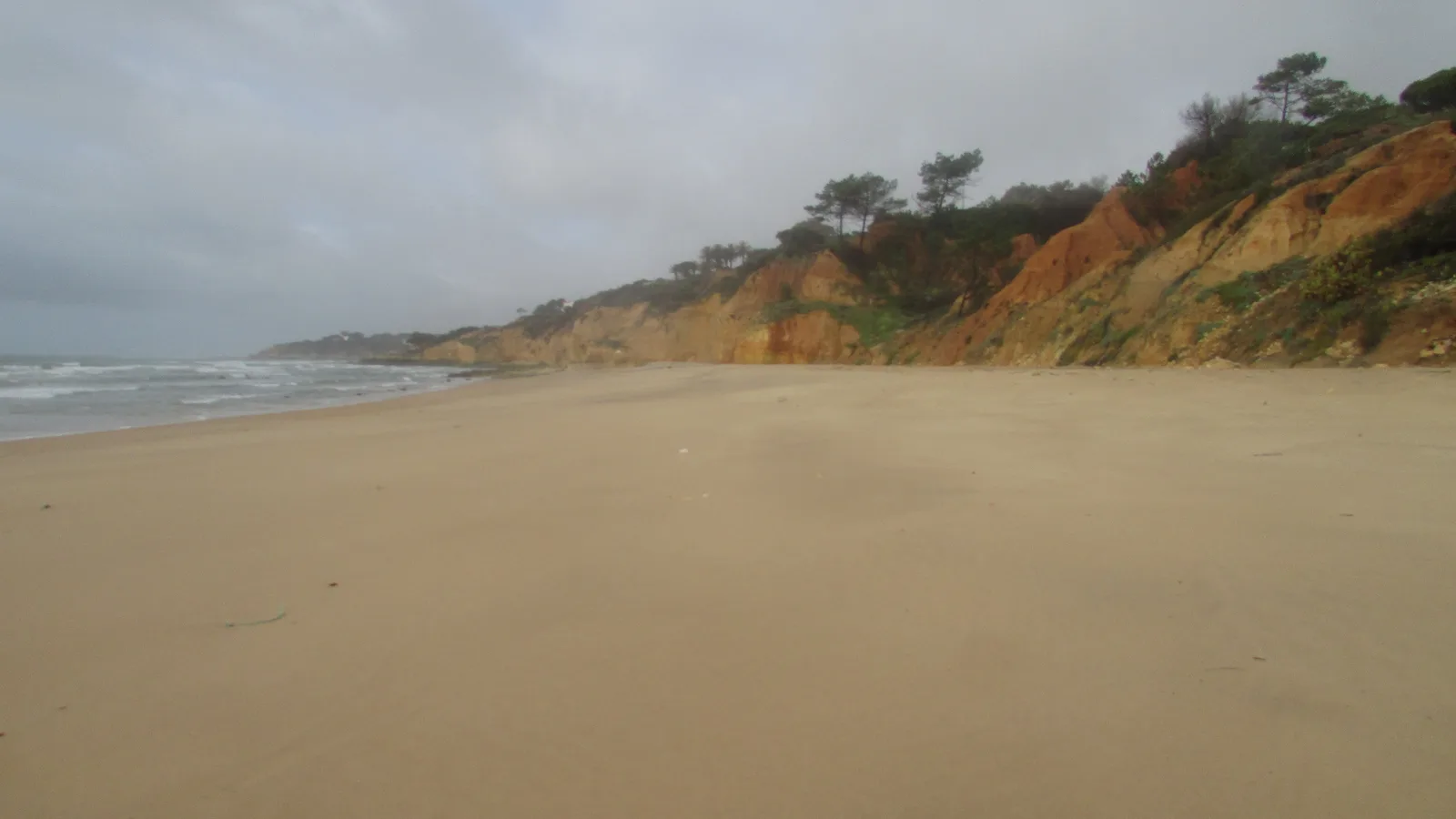
This beach sits at the base of a cliff with a gorge above it. When it rains, water flows down onto the sand. You can reach it by road or via a sand path. There's a parking area at the entrance with spaces for disabled…
Quick Overview
Plan Your Visit to Maria Luisa
The key facts before you go
About the Beach
What is Maria Luisa?
Maria Luisa is a compact beach located south of Albufeira in the Faro region, distinguished by its dramatic cliff setting and natural gorge formation. Protected by limestone cliffs, this small beach offers a sheltered environment with fine sand and visible tidal characteristics. Access is straightforward via road or sand path, with dedicated parking and facilities for disabled visitors at the entrance. The beach's south-facing orientation and wave patterns make it notable for surf activity, while its enclosed geography creates a distinct microclimate. Bathing water quality is rated as Excellent, and lifeguards are present during the summer season.
It sits alongside other certified beaches in Faro, part of a broader network of other Blue Flag beaches in Portugal certified annually by the Foundation for Environmental Education.
Visitor Feedback
What Visitors Say About Maria Luisa
What visitors appreciate
- small beach|stones|tide|cliffs|landscape|fine sand|waves|walking access|supervised beach|sunbeds
- Well-staffed with lifeguards during season
- Excellent EU-rated bathing water quality
Points to consider
- Can be busy during July and August peak season
- Facilities may be reduced outside peak months
Based on aggregated public visitor feedback. Themes are synthesised from multiple sources, not individual quotes. Zeach does not reproduce individual reviews.
Sunrise, Sunset & Beach Direction
Maria Luisa faces south toward Atlantic Ocean. The best light for photography and swimming is typically in September. Direct sun hours follow that facing.
Planning
When to Go: Month by Month
| Month | Air Temp | Water Temp | Crowds |
|---|---|---|---|
| Jan | 12°C | 9°C | Low |
| Feb | 13°C | 10°C | Low |
| Mar | 14°C | 11°C | Low |
| Apr | 16°C | 13°C | Low |
| May | 19°C | 16°C | Low |
| Jun | 22°C | 19°C | Low |
| Jul | 25°C | 22°C | Med |
| Aug | 25°C | 22°C | High |
| Sep | 23°C | 20°C | Med |
| Oct | 20°C | 17°C | Low |
| Nov | 16°C | 13°C | Low |
| Dec | 14°C | 11°C | Low |
The best time to visit Maria Luisa is September. Air temperatures peak around 24.9°C in summer. Peak water temperature reaches 21.9°C in July.
How crowded does Maria Luisa get?What draws people to Maria Luisa? Primarily, its enclosed setting and small scale. This isn't a beach aimed at high-volume visitors. You'll encounter other beach-goers, particularly during July and August, but the physical size limits crowding compared to larger Albufeira beaches. Visitors tend to be a mix of local knowledge users and those specifically seeking smaller, cliff-backed alternatives. During July and August (the core swim season) afternoon crowds form, particularly on weekends and school holidays. Morning visits offer noticeably fewer people. Sunbed rental happens here, indicating some tourist presence, but not at the scale of major commercial beaches. The supervised beach status means lifeguards manage capacity and safety during summer. Outside the declared swim season (July-August officially), you'll find the beach substantially quieter, though water temperatures in June and September remain swimmable for most visitors. Tone here is relatively relaxed. The small size and cliff geography naturally discourage the party-beach atmosphere. Visitors are often walkers exploring the cliff landscape, families using the accessible parking, or people specifically aware of the beach's particular conditions.
Is Maria Luisa open year-round?The beach itself is accessible year-round, though staffed facilities including lifeguards typically operate only during the official season (01-07 – 30-09). The Blue Flag is displayed during the certification period only.
The Water
Swimming and Beach Life at Maria Luisa
Is Maria Luisa safe to swim?Maria Luisa is Blue Flag certified, which requires meeting strict bathing water standards set by the EU Bathing Water Directive. Water quality is rated Excellent. Lifeguards are on duty during the official season.
What is the water temperature at Maria Luisa?Peak water temperature at Maria Luisa reaches around 21.9°C in July, making it comfortable for swimming during the summer months. In winter (January), air temperatures average 12.1°C.
What is the beach like at Maria Luisa?Maria Luisa's defining feature is its cliff-enclosed setting with an active gorge system. During rainfall, water flows down the cliff face onto the beach, a natural phenomenon that shapes both the landscape and beach conditions. The shoreline comprises a mix of fine sand and stones, particularly visible at different tide states. The beach is genuinely small in size, what you see here is intimate rather than sprawling. The waves at Maria Luisa are consistent enough to justify its surf classification, though this is a working beach rather than a dedicated spot for advanced water sports. What conditions are like depends significantly on tide and seasonal swell patterns. Access comes via two routes: a sand path for those preferring a walk, or the road option if mobility is a consideration. Neither approach is particularly strenuous. Stone content varies with tide state. At low tide, you'll find more exposed sand; at higher tides, stones become more prominent on the working beach area. This isn't a polished, manicured space, it's a functioning coastal environment. The cliff formation provides natural shelter from wind, which can be significant elsewhere along this coast. Facilities include sunbed rental options, and the supervised beach status means lifeguards are present during peak season. The parking area at the entrance accommodates standard vehicles and has designated disabled spaces. Facilities appear basic rather than comprehensive, which aligns with the beach's small size and character. Walking access is straightforward from the parking area. The landscape here rewards observation, the cliff formations, gorge system, and the way water moves across the beach tell a story of coastal geology and tidal dynamics.
Does Maria Luisa have good facilities?As a Blue Flag certified beach, Maria Luisa meets the Foundation for Environmental Education's standards for facilities and services. Trained lifeguards are on duty during the season. Toilet facilities are on site. Parking is available nearby. The beach has disabled access facilities.
Maria Luisa sits on the Atlantic Ocean: explore all Blue Flag beaches on the Atlantic.
Planning a trip to Portugal? Blue Flag Beaches Portugal , our editorial guide to certified beaches across the country.
While You're Here
Beyond Maria Luisa
The Albufeira region around Maria Luisa offers diverse activity options. The town center, roughly 8 km north, provides full commercial facilities, restaurants, shops, and nightlife ranging from quiet dining to active bars. The coastline itself is worth exploring, cliff walks connect various small beaches and coves, offering landscape variety within short distances. The Ponta da Piedade area further west showcases similar cliff formations and is accessible via coastal paths. Inland, the Algarve landscape offers typical Portuguese villages, agricultural zones, and hill country. Water activities beyond the beach include boat trips departing from Albufeira harbor, kayaking in sheltered areas, and diving sites concentrated around reef formations. The region has modest archaeological interest. Roman sites and Moorish heritage exist in surrounding towns.
Transport
Getting to Maria Luisa
How do I get to Maria Luisa by car?Maria Luisa is approximately 4.34 km from Albufeira. Follow local road signs to the beach. Check Google Maps or a local map for the most current directions.
What is the nearest airport to Maria Luisa?The nearest airport is Faro Airport (FAO), approximately 22.1 km away. Faro Airport (FAO) is the nearest air gateway, located 22.1 km northwest of Maria Luisa. Flight time from major European hubs typically ranges from 2-4 hours. From the airport, ground transport options include car rental (30-40 minute drive to the beach), ride-sharing services, or organized transfers. The road route follows the EN125 towards Albufeira, then south toward the beach. Standard hire car availability at the airport is good. If using a shuttle or taxi, confirm the driver knows the specific beach location, it's smaller and less widely known than central Albufeira beaches.
Can I get to Maria Luisa by public transport?Regional bus services connect Faro and Albufeira, with services running several times daily. Journey time is approximately 45-60 minutes depending on route and stops. From Albufeira town center, local buses or taxis reach Maria Luisa. The beach's parking area and road access make it viable via bus, though you'll need secondary transport from Albufeira unless staying within walking distance. Bus frequencies reduce significantly outside summer months. The nearest recorded bus stop is 387 m from the beach.
Is there a train to Maria Luisa?Maria Luisa lists Albufeira - Ferreiras as the nearest railway station, 5.1 km away. Check current timetables before travelling.
Nearby
Near Maria Luisa
Mapped toilets, bus stops, cafés, parking, and shops within about 500 m of Maria Luisa. Distances are walking-line estimates from the beach pin.
Map loads when you ask. Tiles stay off the first paint.
Map: OpenStreetMap (ODbL)
Toilets near Maria Luisa
- Public toilets Public toilets 321 m
Bus near Maria Luisa
- Balaia Bus stop 387 m
- Balaia Bus stop 406 m
Cafés near Maria Luisa
- Bar da Júlia Restaurant 323 m
Parking near Maria Luisa
- Parking Parking 246 m
Supermarket near Maria Luisa
- Favorita Supermarket 432 m
Source: © OpenStreetMap contributors (ODbL). Names and positions come from mapped OSM features. Confirm on site.
Practical Details
Practical Information
| At the Beach | |
| Entry | Free: no charge to access the beach |
|---|---|
| Lifeguards | ✓ On duty during official season |
| Disabled Access | ✓ Accessible site facilities and water entry |
| Showers | ✗ |
| Toilets | ✓ Available during season |
| Official Season | 01 Jul – 30 Sep |
| Beach Type | Sandy beach |
| Parking | ✓ Available nearby (surface parking) |
| Nearest supermarket | 430 m from the beach |
| Nearest bus stop | 387 m from the beach |
| Visiting Information | |
| GPS Coordinates | 37.0892°N, 8.2037°W |
| Water Quality | Excellent (EU Bathing Water Directive) |
| Blue Flag Operator | Foundation for Environmental Education (FEE), Portugal |
Frequently Asked Questions
Maria Luisa FAQ
Is Maria Luisa worth visiting?
Yes, if you seek a small, cliff-backed beach with genuine character rather than commercial scale. The setting is distinctive, enclosed by limestone cliffs with an active gorge system. Water quality is rated Excellent, and lifeguards are present during summer. It works well for people wanting quieter conditions or with mobility needs (accessible parking at entrance). Not ideal if you want large sandy beaches or high-capacity facilities, but worthwhile if the location appeals to you specifically.
How do I get to Maria Luisa?
From Faro Airport (22 km away), take a rental car or transfer toward Albufeira, then south to the beach via road access. This takes 30-40 minutes by car. Bus routes from Faro to Albufeira exist, but require secondary transport to reach the beach. The beach has dedicated parking at the entrance with disabled spaces available. Access is also possible via sand path from the parking area if you prefer walking. Road access is the standard approach.
What is the best time of year to visit?
July and August offer the warmest water (21.9-22.2°C) and declared swim season with lifeguard presence. June and September are also viable with water temperatures around 18.9-20°C. Air temperatures peak in August at 25.2°C. If seeking fewer crowds, June or early September work well. Winter (December-February) sees water temperatures drop to 9-10°C and minimal swimming appeal. Overall, June through September suits most visitors.
What facilities are there at Maria Luisa?
Sunbeds are available for rental. Lifeguards supervise the beach during summer season. Parking includes disabled-access spaces at the entrance. Facilities appear basic rather than comprehensive, suitable for a small beach but not expecting shops, cafés, or extensive amenities on-site. Albufeira town center (8 km north) offers full commercial facilities. The beach prioritizes accessibility and safety over resort-style infrastructure.
Is Maria Luisa suitable for families?
Yes, with specific considerations. Accessible parking and disabled facilities indicate family-friendly infrastructure. Lifeguards are present during peak season. The small, enclosed setting provides natural supervision and is less overwhelming than large beaches. Water quality is Excellent. However, stone presence at some tide states requires footwear, and the small scale means it fills quickly during peak times. Best for families seeking quieter, safer beaches rather than family resort facilities.
Are there toilets near Maria Luisa?
Yes. OpenStreetMap maps toilets near Maria Luisa, including 321 m away. Distances are walking-line estimates within about 500 m of the beach pin. Confirm opening hours on site; some facilities are seasonal. © OpenStreetMap contributors (ODbL).
Is there a bus near Maria Luisa?
Yes. OpenStreetMap maps a public-transport stop 387 m from Maria Luisa (Balaia), plus 1 more within about 500 m. Check current timetables before you travel. © OpenStreetMap contributors (ODbL).
Are there cafés near Maria Luisa?
Yes. OpenStreetMap lists a café or restaurant near Maria Luisa, including Bar da Júlia (323 m). Hours and seasonal opening are not verified here. Check on the day. © OpenStreetMap contributors (ODbL).
Is there parking near Maria Luisa?
Yes. OpenStreetMap maps parking 246 m from Maria Luisa. Charges and time limits are not recorded here. © OpenStreetMap contributors (ODbL).
Is there a supermarket near Maria Luisa?
Yes. OpenStreetMap maps a supermarket 432 m from Maria Luisa (Favorita). Walking-line distance; confirm opening hours locally. © OpenStreetMap contributors (ODbL).
Explore More
Nearby Blue Flag Beaches
Editorial
From the Zeach Blog
Everything you need to know about what makes a beach qualify for Blue Flag status, from water quality to environmental education.
Read moreOur editorial team's pick of the standout Blue Flag beaches in Portugal, rated for family friendliness, scenery, and facilities.
Explore PortugalWhat the flag actually means, how certification works, and why a Blue Flag is a genuinely reliable signal, not just a marketing tool.
Read moreSources
- Foundation for Environmental Education: Blue Flag programme
- FEE site listing for Maria Luisa
- ABAE (Associação Bandeira Azul da Europa)
- European Environment Agency: bathing water quality
Last verified September 2026. National operator pages and FEE listings are the primary certification sources.