Margate Main Sands
England, United Kingdom
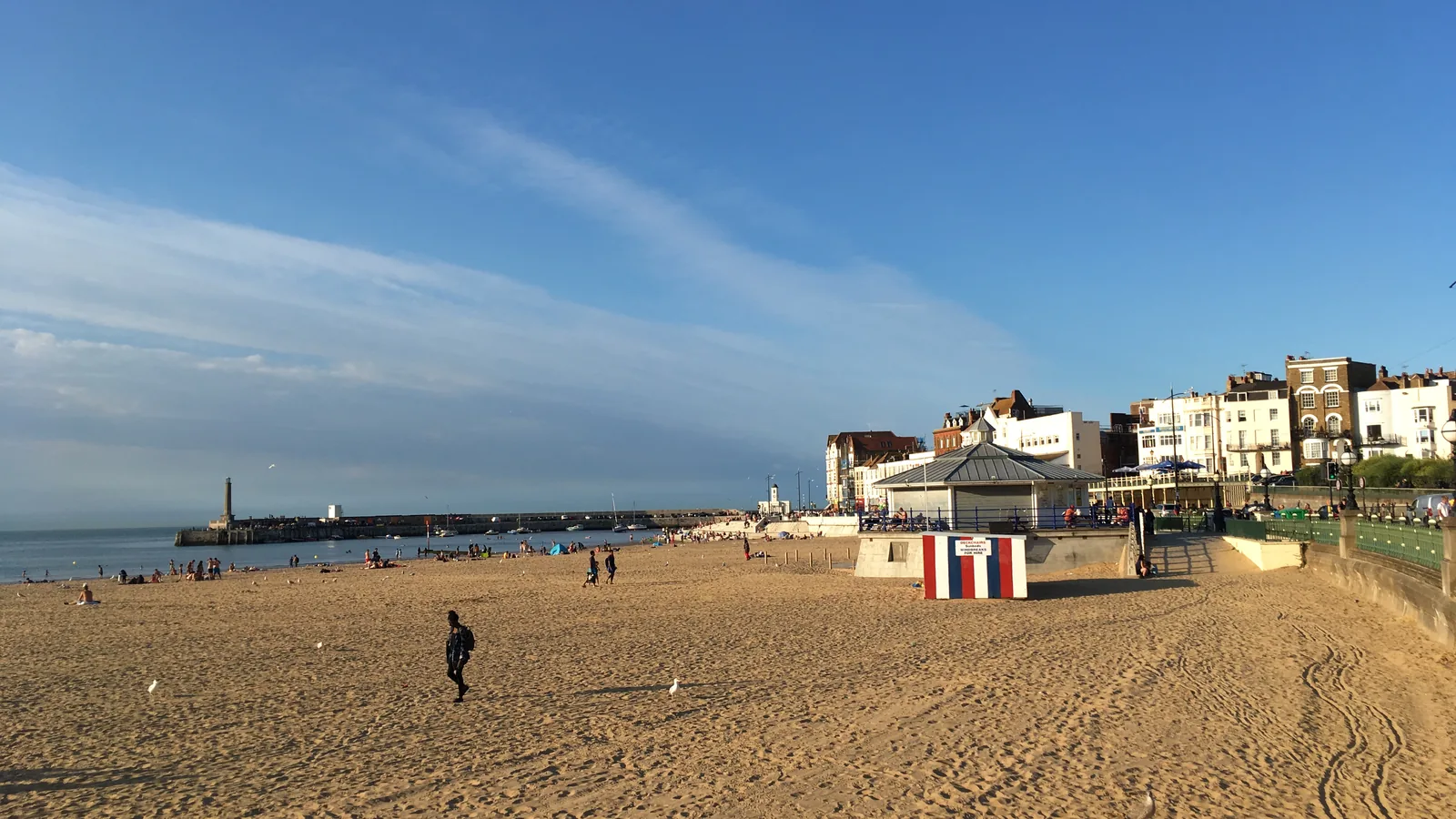
Margate is a classic English seaside resort with a wide sandy bay that works well for families. The beach has rock pools, children's rides, and amusement arcades. Even at high tide, there's enough sand for building castles. A short walk into the Old Town brings…
Quick Overview
Plan Your Visit to Margate Main Sands
The key facts before you go
About the Beach
What is Margate Main Sands?
Margate Main Sands sits along the Kent coast as one of England's original seaside destinations. This south-facing bay offers a wide sandy expanse backed by the town's traditional promenade, complete with amusement arcades and seafood stalls. The beach draws families seeking conventional seaside experiences, bucket-and-spade holidays with deck chairs, paddling pools, and rock pools. Even at high tide, there's sufficient sand for activities. Turner Contemporary art gallery anchors the cultural side of the town, though most visitors come for the beach itself. The bay's natural light has attracted artists for centuries, and watching the evening colours reflect across the water remains a simple pleasure.
It sits alongside certified beaches along England, part of a broader network of certified beaches throughout United Kingdom certified annually by the Foundation for Environmental Education.
Visitor Feedback
What Visitors Say About Margate Main Sands
What visitors appreciate
- beach|sandy beach|arcades|clean beach|seaside town|promenade|deck chair rental|soft sand|paddling pool|rock pools
Points to consider
- Can be busy during July and August peak season
- Facilities may be reduced outside peak months
Based on aggregated public visitor feedback. Themes are synthesised from multiple sources, not individual quotes. Zeach does not reproduce individual reviews.
Sunrise, Sunset & Beach Direction
Margate Main Sands faces south toward North Sea. The best light for photography and swimming is typically in May, June, September. Direct sun hours follow that facing.
Planning
When to Go: Month by Month
| Month | Air Temp | Water Temp | Crowds |
|---|---|---|---|
| Jan | 6°C | 8°C | Low |
| Feb | 7°C | 8°C | Low |
| Mar | 8°C | 8°C | Low |
| Apr | 9°C | 9°C | Low |
| May | 13°C | 11°C | Med |
| Jun | 16°C | 14°C | High |
| Jul | 19°C | 16°C | High |
| Aug | 19°C | 18°C | High |
| Sep | 16°C | 18°C | Med |
| Oct | 13°C | 16°C | Low |
| Nov | 9°C | 13°C | Low |
| Dec | 7°C | 10°C | Low |
The best time to visit Margate Main Sands is May, June, September. Air temperatures peak around 18.5°C in summer. Peak water temperature reaches 16°C in July.
How crowded does Margate Main Sands get?Margate Main Sands is a family-oriented beach, and that determines its visitor profile and atmosphere. During school holidays and weekends, especially in summer, the beach fills with parents, children, and multi-generational groups. The amusement arcades and paddling pool draw younger visitors consistently. The promenade can feel busy on warm days and during peak holiday periods. Weekday visits outside school holidays tend quieter, particularly in shoulder seasons. Winter sees significantly fewer people; from January through March, you'll find the beach calmer, though water temperature (2.6–7.7°C) limits swimming appeal. Summer months (July, August, and September) bring the heaviest crowds. Air temperatures peak in July and August at 18.5°C; September remains reasonable at 16.3°C. For those seeking solitude or manageable crowds, visit midweek in May, June, or early September. The combination of sandy beach, family facilities, and accessible promenade means the beach doesn't stay empty even outside peak season; locals and day-trippers from nearby towns use it year-round. The lifeguard presence suggests it's monitored during official summer seasons, though verification of exact lifeguard operating dates would be advisable before visiting.
Is Margate Main Sands open year-round?The beach itself is accessible year-round, though staffed facilities including lifeguards typically operate only during the official season (15-05 – 30-09). The Blue Flag is displayed during the certification period only.
The Water
Swimming and Beach Life at Margate Main Sands
Is Margate Main Sands safe to swim?Margate Main Sands is Blue Flag certified, which requires meeting strict bathing water standards set by the EU Bathing Water Directive.
What is the water temperature at Margate Main Sands?Peak water temperature at Margate Main Sands reaches around 16°C in July, making it comfortable for swimming during the summer months. In winter (January), air temperatures average 5.6°C.
What is the beach like at Margate Main Sands?Margate Main Sands stretches as a generous sandy beach facing south, which means you'll catch afternoon and evening light across the bay. The sand is soft underfoot, making it comfortable for walking and children's play. The beach benefits from lifeguard presence, adding a safety layer for swimmers and families. What makes this beach work for families? The combination of accessibility and traditional seaside infrastructure. Even when the tide comes in (and it does significantly here in the Thames Estuary) you retain usable beach space for sitting, paddling, and sandcastle building. Tidal pools form among the rocks, offering children the chance to spot small crabs and anemones without needing specialist equipment. The amusement arcades dotting the promenade cater to the rainy-day entertainment gap. Deck chair rentals are available along the waterfront, a low-cost way to stake out a comfortable spot for the day. Seafood stalls and fish-and-chip shops occupy the Old Town just back from the beach, so food is never far away. Water temperature follows the English Channel pattern: cold from January through April (2.6–9.1°C), warming through summer to a peak of 15.5°C in July and August, then cooling again. Early swimmers and winter dippers should expect 3–6°C water; summer swimmers enjoy 13–15°C. The beach faces directly south, so afternoon warmth from the sun helps counteract the cool water. Margate's history as a resort stretches back centuries, and Main Sands retains that character, functional, unpretentious, focused on delivering straightforward seaside fun rather than any fashionable reinvention.
Margate Main Sands sits on the North Sea: explore all Blue Flag beaches on the North Sea.
While You're Here
Beyond Margate Main Sands
Margate town extends significantly beyond Main Sands. Turner Contemporary, a purpose-built art gallery, occupies prime seafront position and hosts rotating exhibitions focused on visual art and artists. Entry is free, and the building itself merits a visit for its architecture and bay views. The Old Town, uphill from the beach, contains independent shops, galleries, cafes, and restaurants serving both tourists and locals. This warren of narrow streets has character and history distinct from the beachfront. The promenade offers the traditional seaside walk, amusement arcades, seafood stalls, and deck chairs. Dreamland, a vintage amusement park, provides rides and entertainment. Ramsgate, immediately adjacent, offers alternative beaches and a working harbour with fishing boats and seafood restaurants. Local pubs and fish-and-chip shops populate both Margate and Ramsgate. For those interested in broader Kent exploration, the Thanet area (which includes Margate, Ramsgate, and Broadstairs) contains coastal scenery, walking paths, and small towns. None of these require travel far from the beach.
Transport
Getting to Margate Main Sands
How do I get to Margate Main Sands by car?Margate Main Sands is approximately 4.82 km from Thanet. Follow local road signs to the beach. Check Google Maps or a local map for the most current directions.
What is the nearest airport to Margate Main Sands?The nearest airport is London Southend Airport (SEN), approximately 51.5 km away.
Can I get to Margate Main Sands by public transport?Coach services connect London and other southeast towns to Margate via National Express and regional operators. Journey times from London are longer than rail (typically 2–2.5 hours) but fares are often cheaper. Services run daily with variable frequency. Margate bus station is centrally located, a short walk from the promenade and Main Sands. Coastal bus services link Margate to Ramsgate and other local destinations, useful if combining beach visits. Check timetables in advance as frequency varies seasonally. The nearest recorded bus stop is 71 m from the beach.
Is there a train to Margate Main Sands?National Rail services connect central London to Margate regularly. Journey time from London Victoria or London Bridge stations to Margate runs approximately 1.5 hours. Services operate throughout the day, with half-hourly frequency during peak hours. The Margate station sits a short walk from Main Sands, roughly 10 minutes on foot downhill toward the seafront. Train fares vary based on booking time and time of travel; advance purchase offers savings. The route runs along the Kent coast, providing viewpoints of countryside and towns. This is the most straightforward access point for London visitors without a car.
Nearby
Near Margate Main Sands
Mapped toilets, bus stops, cafés, parking, and shops within about 500 m of Margate Main Sands. Distances are walking-line estimates from the beach pin.
Map loads when you ask. Tiles stay off the first paint.
Map: OpenStreetMap (ODbL)
Toilets near Margate Main Sands
- Public toilets Public toilets 193 m
- Public toilets Public toilets 242 m
- Public toilets Public toilets 288 m
- Public toilets Public toilets 408 m
Bus near Margate Main Sands
- Marine Terrace Bus stop 71 m
- Marine Terrace Bus stop 79 m
- Marine Terrace Bus stop 93 m
- Marine Terrace Bus stop 104 m
- Eaton Hill Bus stop 219 m
Cafés near Margate Main Sands
- Sea Shed Café 44 m
- The Stylish Ice Cream Co Ice cream 146 m
- Sands Restaurant & Cafe Bar Café 184 m
- Ice cream Ice cream 191 m
- Mia Restaurant 225 m
Parking near Margate Main Sands
- Parking Parking 117 m
- Dreamland Car Park Parking 177 m
- Parking Parking 180 m
- Parking Parking 207 m
- Parking Parking 221 m
Source: © OpenStreetMap contributors (ODbL). Names and positions come from mapped OSM features. Confirm on site.
On the beach
Facilities at Margate Main Sands
- Lifeguards
- Yes, during the certified season
- Wheelchair access
- Accessible site facilities and water entry
- Visual assistance
- Yes
- Toilets
- Yes
- Showers
- No
- Drinking water
- Yes
- Parking
- Available nearby (multi-storey parking). 78 m away, no parking fee
- Entry
- Free to enter
These details can change. Check on arrival.
Map data © OpenStreetMap contributors
Practical Details
Practical Information
| At the Beach | |
| Official Season | 15 May – 30 Sep |
|---|---|
| Beach Type | Sandy beach |
| Nearest supermarket | 320 m from the beach |
| Nearest bus stop | 71 m from the beach |
| Visiting Information | |
| GPS Coordinates | 51.3867°N, 1.3762°E |
| Blue Flag Operator | Foundation for Environmental Education (FEE), United Kingdom |
Frequently Asked Questions
Margate Main Sands FAQ
Is Margate Main Sands worth visiting?
Yes, particularly if you want traditional British seaside experience. Main Sands offers genuine family functionality, soft sand, lifeguards, rock pools, amusement arcades, and food vendors close by. The beach works at all tides thanks to its width. If you prefer unmarked wilderness or secluded coves, look elsewhere. If you value convenience, safety infrastructure, and established entertainment, Margate delivers. The quality of light Turner noted remains observable, and the beach connects to a town with independent character and art gallery. It's honest seaside entertainment, not reinvented or fashionable, but reliable.
How do I get to Margate Main Sands?
From central London, National Rail service to Margate station takes 1.5 hours; the beach is a 10-minute walk downhill. Coaches run from London but take 2–2.5 hours. Margate has local bus links to surrounding Thanet towns. For most people without a car, train from London or a southeast town is fastest and simplest.
What's the best time of year to visit?
May, June, and early September offer balanced conditions: air temperatures of 13–18.5°C, water temperatures of 9.8–15.5°C, and smaller crowds than July–August. July and August are warmest (18.5°C air, 15.5°C water) but busiest. For families, school holidays drive visits. Winter water is cold (2.6–6°C) but the beach quieter. Avoid Easter and summer half-terms if you dislike crowds. Late spring and early autumn offer pleasant conditions and manageable visitor numbers.
What facilities are there at Margate Main Sands?
Main Sands has lifeguards, a paddling pool, rock pools, amusement arcades, and deck chair rental. Restaurants, bars, and seafood stalls line the Old Town and promenade, within easy walking distance. The beach works at all tides. Public toilets and changing facilities are standard for this type of UK resort beach. Turner Contemporary art gallery is nearby. The promenade is fully accessible. Dog-friendly status is unconfirmed; check with local authorities before bringing pets.
Is Margate Main Sands suitable for families?
Yes. The beach is explicitly family-oriented. Soft sand, lifeguards, paddling pools, rock pools, amusement arcades, and nearby restaurants support family visits. Even high tides leave usable beach for children. Water temperature reaches 15.5°C in summer, warm enough for many children. The promenade provides shelter and entertainment. Deck chairs and food are readily available. The town's traditional seaside character (amusement parks, ice cream, seafood) aligns with family expectations. This is a purpose-built family destination, not an accidental one.
Are there toilets near Margate Main Sands?
Yes. OpenStreetMap maps 4 toilet locations near Margate Main Sands, including 193 m away, 242 m away, 288 m away, and 408 m away. Distances are walking-line estimates within about 500 m of the beach pin. Confirm opening hours on site; some facilities are seasonal. © OpenStreetMap contributors (ODbL).
Is there a bus near Margate Main Sands?
Yes. OpenStreetMap maps a public-transport stop 71 m from Margate Main Sands (Marine Terrace), plus 4 more within about 500 m. Check current timetables before you travel. © OpenStreetMap contributors (ODbL).
Are there cafés near Margate Main Sands?
Yes. OpenStreetMap lists 5 cafés or restaurants near Margate Main Sands, including Sea Shed (44 m), The Stylish Ice Cream Co (146 m), Sands Restaurant & Cafe Bar (184 m), and 191 m away. Hours and seasonal opening are not verified here. Check on the day. © OpenStreetMap contributors (ODbL).
Is there parking near Margate Main Sands?
Yes. OpenStreetMap maps parking 117 m from Margate Main Sands, with 5 lots or spaces inside about 500 m. Charges and time limits are not recorded here. © OpenStreetMap contributors (ODbL).
Explore More
Nearby Blue Flag Beaches
Editorial
From the Zeach Blog
Everything you need to know about what makes a beach qualify for Blue Flag status, from water quality to environmental education.
Read moreOur editorial team's pick of the standout Blue Flag beaches in United Kingdom, rated for family friendliness, scenery, and facilities.
What the flag actually means, how certification works, and why a Blue Flag is a genuinely reliable signal, not just a marketing tool.
Read moreSources
- Foundation for Environmental Education: Blue Flag programme
- FEE site listing for Margate Main Sands
- Keep Britain Tidy / Foundation for Environmental Education
Last verified September 2026. National operator pages and FEE listings are the primary certification sources.