L'Argentière
Provence-Alpes-Côte d'Azur, France: Excellent water quality
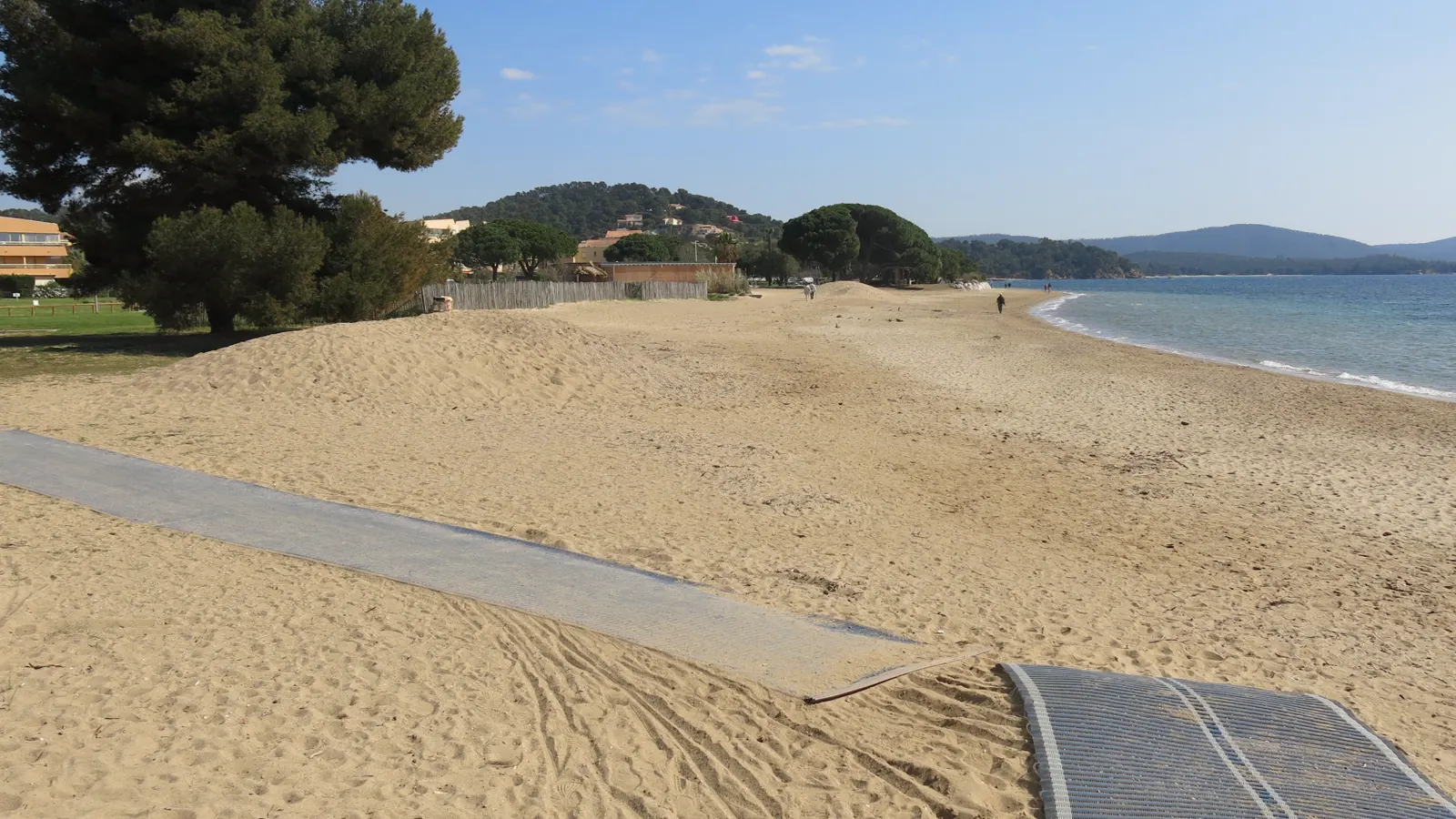
Our village offers genuine variety. The coastline remains largely undeveloped, with sandy beaches and clear views of the Porquerolles and Port-Cros islands. Inland, vineyards stretch across the landscape, while the Maures massif rises beyond, home to diverse wildlife. The climate here is mild year-round, making…
Quick Overview
Plan Your Visit to L'Argentière
The key facts before you go
About the Beach
What is L'Argentière?
L'Argentière is a sand beach near La Londe-les-Maures in the Var, facing south with clear views across to the Îles de Porquerolles and Port-Cros. The beach sits within a coastline that remains relatively unspoilt, backed by Mediterranean pine forest rather than sprawling development. Water quality here is rated Excellent, and lifeguards are on duty during the season. The beach draws families and those looking for a quieter stretch of Côte d'Azur coast, combining accessible facilities with natural surroundings. Swimming conditions are viable from June through September, when water temperatures climb from 16°C to nearly 24°C.
It sits alongside certified beaches along Provence-Alpes-Côte d'Azur, part of a broader network of certified beaches throughout France certified annually by the Foundation for Environmental Education.
Visitor Feedback
What Visitors Say About L'Argentière
What visitors appreciate
- coastal path|pine forest|shaded beach|fine sand beach|submarine|family beach|supervised beach|shaded spots|shade under the pines|view of the islands
- Excellent EU-rated bathing water quality
Points to consider
- Can be busy during July and August peak season
- Facilities may be reduced outside peak months
Based on aggregated public visitor feedback. Themes are synthesised from multiple sources, not individual quotes. Zeach does not reproduce individual reviews.
Sunrise, Sunset & Beach Direction
L'Argentière faces south toward Mediterranean Sea. The best light for photography and swimming is typically in May, June, September. Direct sun hours follow that facing.
Planning
When to Go: Month by Month
| Month | Air Temp | Water Temp | Crowds |
|---|---|---|---|
| Jan | 9°C | 14°C | Low |
| Feb | 9°C | 13°C | Low |
| Mar | 11°C | 14°C | Low |
| Apr | 14°C | 15°C | Low |
| May | 18°C | 17°C | Low |
| Jun | 22°C | 20°C | Low |
| Jul | 25°C | 23°C | High |
| Aug | 25°C | 24°C | High |
| Sep | 22°C | 22°C | Low |
| Oct | 17°C | 20°C | Low |
| Nov | 13°C | 17°C | Low |
| Dec | 10°C | 15°C | Low |
The best time to visit L'Argentière is May, June, September. Air temperatures peak around 25.4°C in summer. Peak water temperature reaches 22.7°C in July.
How crowded does L'Argentière get?L'Argentière draws a particular crowd: families, older visitors who value quieter conditions, and people exploring the lesser-known Var coast. It's not a party beach or backpacker magnet. Summer weekends and French school holidays (mid-July to late August) bring numbers, but the beach doesn't suffer from the extreme congestion of famous names further east. What should you expect on an average July day? Morning visitors tend to arrive between 9 and 11 a.m., claiming spots under the pines or in open sand. By midday, the beach is busy but navigable, you won't struggle to find space. The afternoon sees some drift away for lunch and siesta (real in this region), then return around 4 p.m. September quiets noticeably. The supervised status and lifeguard presence shape behaviour, it's orderly rather than chaotic. Families with young children arrive with proper kit. Couples and small groups use the beach steadily across the season. Very few arrive expecting nightlife; they're here for the coast, the quiet, and the island views. Dog policy remains uncertain in the data, so you'd need to check locally before bringing a pet. The shaded spots under the pines fill quickly in peak summer, suggesting many visitors value that feature specifically.
Is L'Argentière open year-round?The beach itself is accessible year-round, though staffed facilities including lifeguards typically operate only during the official season (02-07 – 28-08). The Blue Flag is displayed during the certification period only.
The Water
Swimming and Beach Life at L'Argentière
Is L'Argentière safe to swim?L'Argentière is Blue Flag certified, which requires meeting strict bathing water standards set by the EU Bathing Water Directive. The latest official class is Excellent (2025).
Water quality
Excellent (2025)
Earlier seasons: 2024 Excellent, 2023 Excellent, 2022 Excellent.
Excellent is the top class under the EU Bathing Water Directive. Recent samples stayed inside the strictest limits for bacteria.
Source: European Environment Agency
Peak water temperature at L'Argentière reaches around 22.7°C in July, making it comfortable for swimming during the summer months. In winter (January), air temperatures average 8.6°C.
What is the beach like at L'Argentière?L'Argentière offers fine sand underfoot and genuinely benefits from shade under the pine trees that line parts of the beach, a real asset during July and August heat. The southern aspect means good sun exposure for most of the day. What questions do people ask most about this beach? They want to know about crowds, facilities, and whether the reported island views are real. On those counts: the beach is quieter than purpose-built resort beaches further along the coast, the pine cover provides natural shelter spots, and yes, the views of Porquerolles and Port-Cros are there on clear days. The sand is genuinely fine, not coarse or pebbly, which matters for families with young children and anyone who prefers classic Mediterranean beach conditions. The seabed shelves gradually, making entry straightforward. Lifeguard supervision is in place, which regular visitors appreciate, it's a genuine safety presence rather than token staffing. Water temperature data shows the reality: January sits at 9.1°C (wetsuits essential), warming to 13.5°C by March. By May you're at 16°C, still cool but swimmable. June brings 20.1°C, the practical start of the season. July and August peak at 23.9°C, the genuine warm-water months. September remains respectable at 22.2°C, while October drops to 20.0°C. November and December retreat to around 10–13°C. The beach connects to a coastal path system, which matters if you want to explore beyond your immediate patch of sand. The pine forest backing creates a genuine sense of separation from urban pressures. There's no sense of being channelled into a concrete resort; instead, the Maures massif rises inland, and the wine-producing hinterland extends beyond that. One practical note: shade under pines matters more here than at fully exposed beaches. On July afternoons, that's not a luxury, it's functional.
L'Argentière sits on the Mediterranean Sea: explore all Blue Flag beaches on the Mediterranean.
Planning a trip to France? Blue Flag Beaches France , our editorial guide to certified beaches across the country.
While You're Here
Beyond L'Argentière
La Londe-les-Maures itself is an active wine-producing village, with vineyards surrounding the coast, visiting a winery or tasting room is practical if you're staying a few days. The view toward Porquerolles and Port-Cros is more than scenery; these islands are accessible by ferry from nearby ports and hold their own beaches, hiking, and Mediterranean ecology. The Maures massif inland offers walking routes through pine and cork forest, varying in difficulty from gentle to challenging. The coastline eastward toward Bormes-les-Mimosas and Lavandou includes other beaches and a more developed tourist infrastructure if you want amenities beyond L'Argentière itself. The broader region supports active tourism beyond beach time, kayaking, diving spots, and boat rentals operate seasonally. The pine forest and protected coastline suggest serious environmental management, which means visitor facilities are constrained by design rather than accident. That shapes the character of the area: you come here for the natural setting, not for resort facilities.
Transport
Getting to L'Argentière
How do I get to L'Argentière by car?L'Argentière is approximately 2.63 km from La Londe-les-Maures. Follow local road signs to the beach. Check Google Maps or a local map for the most current directions.
What is the nearest airport to L'Argentière?The nearest airport is Toulon-Hyères Airport (TLN), approximately 9.5 km away.
Can I get to L'Argentière by public transport?Public transport options vary by season. Check local transport authority websites for current bus and train schedules connecting to La Londe-les-Maures.
Is there a train to L'Argentière?L'Argentière lists Hyères as the nearest railway station, 10.99 km away. Check current timetables before travelling.
Nearby
Near L'Argentière
Mapped toilets, bus stops, cafés, parking, and shops within about 500 m of L'Argentière. Distances are walking-line estimates from the beach pin.
Map loads when you ask. Tiles stay off the first paint.
Map: OpenStreetMap (ODbL)
Toilets near L'Argentière
- Public toilets Public toilets 131 m
- Public toilets Public toilets 310 m
- Public toilets Public toilets 348 m
Cafés near L'Argentière
- Côté plage Restaurant 179 m
- L’Hemingway Restaurant 351 m
Parking near L'Argentière
- Parking Parking 21 m
- Parking plage de l'Argentière Parking 164 m
- Parking Parking 313 m
- Parking Parking 420 m
Source: © OpenStreetMap contributors (ODbL). Names and positions come from mapped OSM features. Confirm on site.
On the beach
Facilities at L'Argentière
- Lifeguards
- Yes, during the certified season
- Wheelchair access
- Accessible site facilities and water entry
- Visual assistance
- No
- Toilets
- Yes
- Showers
- Yes
- Parking
- Available nearby (surface parking). No parking fee
- Entry
- Free to enter
These details can change. Check on arrival.
Map data © OpenStreetMap contributors
Practical Details
Practical Information
| At the Beach | |
| Official Season | 02 Jul – 28 Aug |
|---|---|
| Beach Type | Sandy beach |
| Nearest supermarket | 1.4 km from the beach |
| Visiting Information | |
| GPS Coordinates | 43.1214°N, 6.2584°E |
| Water Quality | Excellent (2025) (EU Bathing Water Directive) |
| Blue Flag Operator | Foundation for Environmental Education (FEE), France |
Frequently Asked Questions
L'Argentière FAQ
Is L'Argentière worth visiting?
Yes, if you value quieter Mediterranean beaches with genuine shade, fine sand, and views of offshore islands. It suits families, older visitors, and anyone avoiding crowded resort beaches. Water quality is Excellent, lifeguards are present, and the natural setting (pine forest, Maures backdrop, vineyards) offers more than sand and sea. It's not a nightlife destination or a purpose-built resort beach, but a genuine coastal village setting with proper swimming conditions June through September.
How do I get to L'Argentière?
By car is most practical. The journey takes 75–90 minutes. Public transport options exist but involve multiple changes and longer journey times, making them less efficient unless you're avoiding driving. Once in the village, parking is available near the beach.
What's the best time of year to visit?
June through September is the swimming season, with water temperatures ranging from 16°C (June) to nearly 24°C (July–August). July and August are warmest but busiest. June and September offer warmer water than spring/autumn while avoiding peak summer crowds. Air temperatures in July and August average 25°C. If you want fewer people and milder conditions, June and September are practical choices.
What facilities are there?
L'Argentière has lifeguard supervision during the season, making it safe for swimming. Fine sand and shade under pine trees are available. Parking is accessible. The beach connects to a coastal path system for exploration. Facilities appear focused on beach use itself rather than resort infrastructure, bring essentials you might not find at the beach. La Londe village nearby will have shops, restaurants, and accommodation.
Is L'Argentière suitable for families?
Yes. It's tagged as a family beach with lifeguard supervision, fine sand that's comfortable for children, and a gradual seabed entry. Shade under pines provides relief from heat. Water quality is Excellent. The setting is peaceful rather than chaotic, and the views of islands add interest beyond swimming. Quieter conditions suit families with young children better than crowded resort beaches. Dog policy is unclear locally, so check before visiting with pets.
Are there toilets near L'Argentière?
Yes. OpenStreetMap maps 3 toilet locations near L'Argentière, including 131 m away, 310 m away, and 348 m away. Distances are walking-line estimates within about 500 m of the beach pin. Confirm opening hours on site; some facilities are seasonal. © OpenStreetMap contributors (ODbL).
Are there cafés near L'Argentière?
Yes. OpenStreetMap lists 2 cafés or restaurants near L'Argentière, including Côté plage (179 m) and L’Hemingway (351 m). Hours and seasonal opening are not verified here. Check on the day. © OpenStreetMap contributors (ODbL).
Is there parking near L'Argentière?
Yes. OpenStreetMap maps parking 21 m from L'Argentière, with 4 lots or spaces inside about 500 m. Charges and time limits are not recorded here. © OpenStreetMap contributors (ODbL).
Explore More
Nearby Blue Flag Beaches
Editorial
From the Zeach Blog
Everything you need to know about what makes a beach qualify for Blue Flag status, from water quality to environmental education.
Read moreOur editorial team's pick of the standout Blue Flag beaches in France, rated for family friendliness, scenery, and facilities.
What the flag actually means, how certification works, and why a Blue Flag is a genuinely reliable signal, not just a marketing tool.
Read moreSources
- Foundation for Environmental Education: Blue Flag programme
- FEE site listing for L'Argentière
- FEE France (Pavillon Bleu)
Last verified September 2026. National operator pages and FEE listings are the primary certification sources.