Tynemouth King Edwards Bay
England, United Kingdom
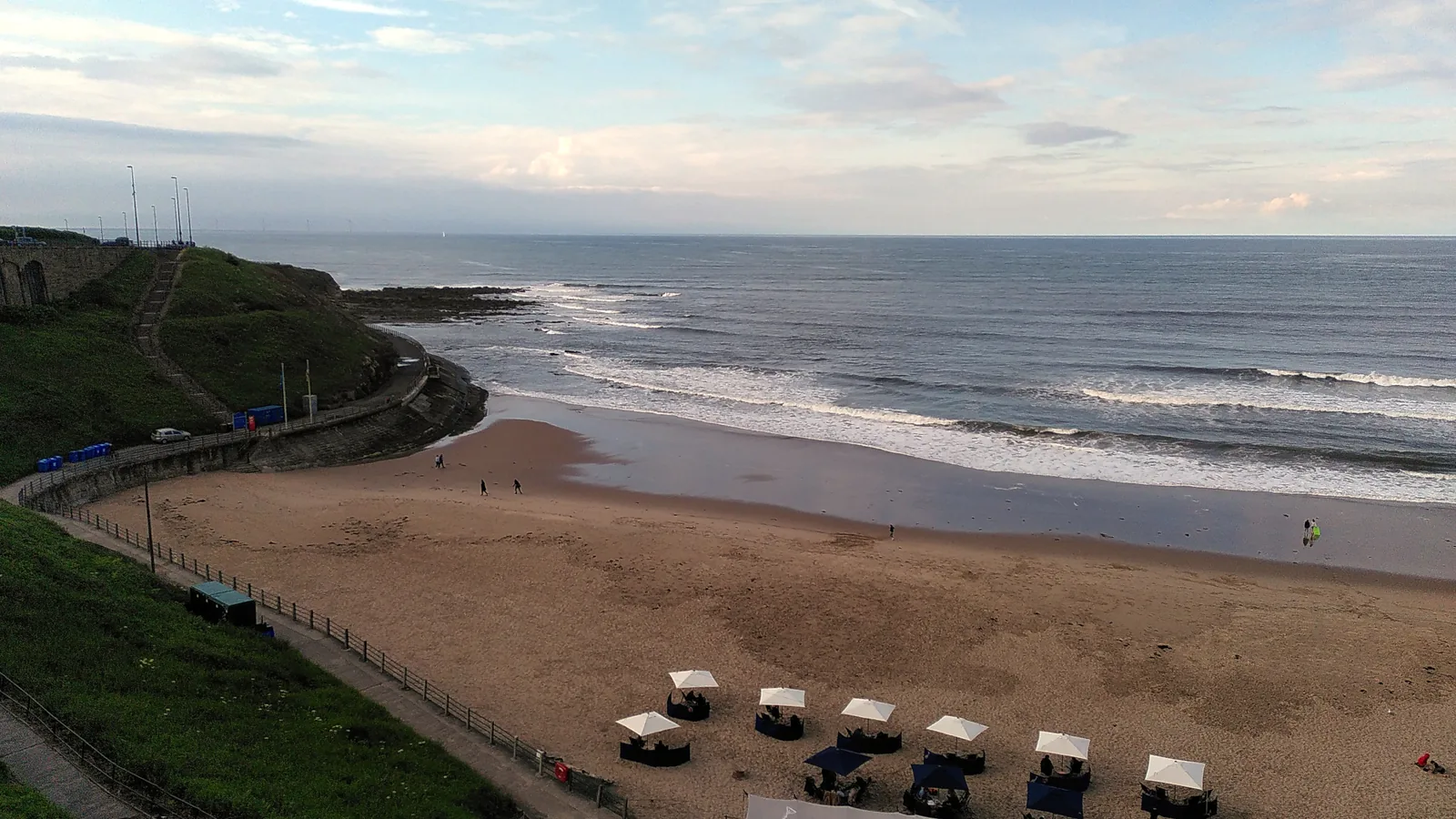
King Edwards Bay is a small sandy beach about 200 metres long, tucked between cliffs and steep grass banks. It's ideal for families, the enclosed setting keeps things calm and sheltered. The beach sits directly below Tynemouth Priory and Castle, a historic site managed by…
Quick Overview
Plan Your Visit to Tynemouth King Edwards Bay
The key facts before you go
About the Beach
What is Tynemouth King Edwards Bay?
Tynemouth King Edwards Bay is a compact sandy beach roughly 200 metres long, tucked beneath cliffs and grassy banks on the North Tyneside coast. The beach sits directly below Tynemouth Priory and Castle, an English Heritage site that dominates the skyline. This sheltered setting makes it a practical choice for families and dog owners. The bay faces south, catching whatever sun is available on the northeast coast. Water temperatures range from 7.4°C in January to 14.2°C in July, so a wetsuit is advisable for most of the year. The steep access means it's not the easiest beach to reach, but that containment creates a quieter atmosphere compared to busier stretches nearby.
It sits alongside other certified beaches in England, part of a broader network of other Blue Flag beaches in United Kingdom certified annually by the Foundation for Environmental Education.
Visitor Feedback
What Visitors Say About Tynemouth King Edwards Bay
What visitors appreciate
- castle|bay|cliffs|fish shack|lovely beach|sheltered bay|sea views|coastal spot|steep steps|dog restrictions
Points to consider
- Can be busy during July and August peak season
- Facilities may be reduced outside peak months
Based on aggregated public visitor feedback. Themes are synthesised from multiple sources, not individual quotes. Zeach does not reproduce individual reviews.
Sunrise, Sunset & Beach Direction
Tynemouth King Edwards Bay faces south toward North Sea. The best light for photography and swimming is typically in May, June, September. Direct sun hours follow that facing.
Planning
When to Go: Month by Month
| Month | Air Temp | Water Temp | Crowds |
|---|---|---|---|
| Jan | 5°C | 7°C | Low |
| Feb | 5°C | 7°C | Low |
| Mar | 6°C | 7°C | Low |
| Apr | 8°C | 7°C | Low |
| May | 11°C | 9°C | Med |
| Jun | 14°C | 12°C | High |
| Jul | 16°C | 14°C | High |
| Aug | 16°C | 15°C | High |
| Sep | 14°C | 14°C | Med |
| Oct | 11°C | 12°C | Low |
| Nov | 8°C | 10°C | Low |
| Dec | 5°C | 9°C | Low |
The best time to visit Tynemouth King Edwards Bay is May, June, September. Air temperatures peak around 16.1°C in summer. Peak water temperature reaches 14.2°C in July.
How crowded does Tynemouth King Edwards Bay get?Tynemouth King Edwards Bay experiences variable crowd levels tied directly to school holidays and weather. The 200-metre length fills noticeably when conditions are decent, particularly Saturday and Sunday during summer months. The contained space means it never feels genuinely empty, even off-season visits have visible numbers of people. Weekday usage outside school holidays is lighter. You'll encounter dog walkers, local families, and the occasional visitor exploring the Priory. Winter months see far fewer visitors. The cold water temperatures and short daylight deter casual swimmers, leaving the beach to dedicated users and those living locally. The steep access is a practical filter. Families with very young children or limited mobility bypass King Edwards Bay in favor of beaches with easier entry. This naturally reduces overall numbers but doesn't prevent genuine crowding on peak days. School holidays transform the situation. Summer holidays bring sustained visitor pressure. Half-term breaks create short spikes. Easter sees moderate increases. The cliff-top location and nearby Priory attraction secondary family groups to the area, feeding beach demand. Dog restrictions exist (mentioned in visitor feedback) but haven't eliminated dog-walker presence. Early morning sessions see the highest dog concentration before restrictions typically begin. Weather matters significantly. Strong winds are frequent given the coastal exposure. Rain, common in northeast England, drives people away quickly. Calm, dry days create the most crowded conditions.
Is Tynemouth King Edwards Bay open year-round?The beach itself is accessible year-round, though staffed facilities including lifeguards typically operate only during the official season (15-05 – 30-09). The Blue Flag is displayed during the certification period only.
The Water
Swimming and Beach Life at Tynemouth King Edwards Bay
Is Tynemouth King Edwards Bay safe to swim?Tynemouth King Edwards Bay is Blue Flag certified, which requires meeting strict bathing water standards set by the EU Bathing Water Directive.
What is the water temperature at Tynemouth King Edwards Bay?Peak water temperature at Tynemouth King Edwards Bay reaches around 14.2°C in July, making it comfortable for swimming during the summer months. In winter (January), air temperatures average 4.8°C.
What is the beach like at Tynemouth King Edwards Bay?King Edwards Bay presents a straightforward proposition. The beach itself is small (around 200 metres of sand) which means it fills up on decent days, particularly weekends and school holidays. What distinguishes it is the natural enclosure: sheer cliffs and steep grass banks funnel you into a contained space. This isn't a sprawling expanse; it's a pocket of sand with defined boundaries. The northern aspect of this coastline means you're dealing with the North Sea. Water temperatures stay cold year-round. Even at the summer peak in July, average temperatures reach only 14.2°C. Winter plunges to 7.4°C in January. Air temperatures mirror the continental climate: around 4.8°C in January, rising to 16.1°C in July. Bring layers, not summer clothing. The sand is workable for families with young children. The cliffs provide wind protection on blustery days, which are common here. The enclosure has a double edge, it shelters you from exposure but also traps damp air and creates shadier conditions than you'd find on open beaches. Access involves steep steps down from the cliff-top approach near the Priory. The description mentions 'steep steps' repeatedly in visitor feedback, so mobility issues require consideration. Once down, the beach is manageable. The sand holds firm at the water's edge. Dog access is permitted here, which broadens its appeal. The enclosed nature suits dogs reasonably well, there's limited space for them to wander onto neighboring beaches. The cliffs prevent dogs from roaming inland. The historic site above adds context. Tynemouth Priory and Castle date back centuries and are maintained by English Heritage. Views from the beach looking up reinforce the sense of location within something larger. This isn't just a beach; it's part of a defended medieval settlement. Visibility of the broader coastline is limited by the bay's configuration. You're looking out across the bay itself rather than along extended stretches of sand. The focal point becomes the water, the cliffs, and the historic structures above. Parking and facilities require a short walk from the main Tynemouth area, adding friction to access. The beach itself offers no on-sand facilities; everything is elsewhere.
Tynemouth King Edwards Bay sits on the North Sea: explore all Blue Flag beaches on the North Sea.
While You're Here
Beyond Tynemouth King Edwards Bay
Tynemouth Priory and Castle occupies the headland immediately above King Edwards Bay. English Heritage manages the site, offering visitor access and historical context. The Priory dates back centuries as a monastic settlement and fortification. Exploring the ruins takes 45 minutes to over an hour depending on your interest level. Admission charges apply. The broader Tynemouth area includes restaurants, cafes, and a fish shack (noted in visitor feedback). These cluster in the main Tynemouth village, a short walk from the beach. The Priory View area and coastal path extensions provide additional walking routes. The Long Sands beach lies adjacent to King Edwards Bay (to the south), offering a different configuration and longer stretches of sand if you want to explore alternatives without traveling far. Cullercoats Bay is nearby if you're willing to move further along the coast. Newcastle city center is approximately 10 kilometres away, accessible by Metro train from Tynemouth station. Cultural attractions, museums, and urban amenities are available as day-trip extensions.
Transport
Getting to Tynemouth King Edwards Bay
How do I get to Tynemouth King Edwards Bay by car?Tynemouth King Edwards Bay is approximately 5.76 km from North Tyneside. Follow local road signs to the beach. Check Google Maps or a local map for the most current directions.
What is the nearest airport to Tynemouth King Edwards Bay?The nearest airport is Newcastle International Airport (NCL), approximately 17.3 km away. Newcastle Airport (NCL) is 17.4 kilometres from Tynemouth King Edwards Bay, roughly a 25-30 minute drive depending on traffic patterns. Direct flights connect Newcastle to UK regional airports and European destinations. Car hire is the most practical onward option; public transport from the airport to Tynemouth exists but involves connections. A taxi or ride-share is straightforward though not budget-conscious for the distance. From the airport, follow signs toward Newcastle city center, then northeast toward the coast at Tynemouth. Parking near King Edwards Bay requires navigation to the Priory car park area.
Can I get to Tynemouth King Edwards Bay by public transport?Local bus services connect North Tyneside to Tynemouth and the Priory area. Journey times and frequencies vary by route. Walking from Tynemouth bus stops to King Edwards Bay requires navigation toward the cliffside location near the Priory.
Is there a train to Tynemouth King Edwards Bay?Tynemouth railway station is on the Tyne and Wear Metro line, serving the local area. Incoming rail connections require changing onto the Metro system via Newcastle Central Station. Journey times from Newcastle Central to Tynemouth are approximately 20-25 minutes. From Tynemouth station, King Edwards Bay is walkable but involves a moderate climb toward the Priory; allow 10-15 minutes depending on fitness.
Nearby
Near Tynemouth King Edwards Bay
Mapped toilets, bus stops, cafés, parking, and shops within about 500 m of Tynemouth King Edwards Bay. Distances are walking-line estimates from the beach pin.
Map loads when you ask. Tiles stay off the first paint.
Map: OpenStreetMap (ODbL)
Toilets near Tynemouth King Edwards Bay
- Public toilets Public toilets 33 m
- Public toilets Public toilets 56 m
- Public toilets Public toilets 84 m
- Public toilets Public toilets 179 m
Bus near Tynemouth King Edwards Bay
- Tynemouth Village (M) Bus stop 104 m
- Tynemouth Village Bus stop 157 m
- Tynemouth Percy Park Road Bus stop 336 m
- Tynemouth Village Bus stop 358 m
- TYNEMOUTH VILLAGE (M) Bus stop 387 m
Cafés near Tynemouth King Edwards Bay
- Riley's Fish Shack Restaurant 35 m
- Woods Café 140 m
- Iztuzu Restaurant 165 m
- Deep North Café 217 m
- The Cove Restaurant 228 m
Parking near Tynemouth King Edwards Bay
- Parking Parking 206 m
- Sea Banks Parking 232 m
- Parking Parking 314 m
- Priors Haven Car Park Parking 362 m
- Parking Parking 395 m
Source: © OpenStreetMap contributors (ODbL). Names and positions come from mapped OSM features. Confirm on site.
On the beach
Facilities at Tynemouth King Edwards Bay
- Lifeguards
- Yes, during the certified season
- Wheelchair access
- No dedicated disabled access listed
- Visual assistance
- No
- Toilets
- Yes
- Drinking water
- Yes
- Parking
- 135 m away, a fee is charged
- Dogs
- Allowed
- Surface
- Sand and rock
- Entry
- Free to enter
These details can change. Check on arrival.
Map data © OpenStreetMap contributors
Practical Details
Practical Information
| At the Beach | |
| Official Season | 15 May – 30 Sep |
|---|---|
| Beach Type | Sandy beach |
| Visiting Information | |
| GPS Coordinates | 55.0187°N, 1.4200°W |
| Blue Flag Operator | Foundation for Environmental Education (FEE), United Kingdom |
Frequently Asked Questions
Tynemouth King Edwards Bay FAQ
Is Tynemouth King Edwards Bay worth visiting?
Tynemouth King Edwards Bay works well if you want a sheltered, compact beach with historical interest nearby. The 200-metre sandy cove suits families seeking protection from wind and exposure. The cold water (14.2°C peak in July) requires wetsuits for swimming. The historic Priory and Castle above add cultural value. Access via steep steps filters out casual visitors. Dog-friendly status appeals to dog owners. If you expect warm water, long sandy stretches, or easy accessibility, look elsewhere. If you value local character, medieval history, and protected conditions, it's worth considering.
How do I get to Tynemouth King Edwards Bay?
By air: Newcastle Airport (17.4 km away) handles UK and European flights. Car hire or taxi from the airport to Tynemouth. By train: Arrive at Newcastle Central, switch to the Tyne and Wear Metro toward Tynemouth (20-25 minutes). Walk from Tynemouth station to the beach (10-15 minutes uphill). By bus: Local services connect North Tyneside to Tynemouth; walk from the bus stop. By car: Navigate to the Priory car park area near Tynemouth village. Parking fills during peak periods.
What's the best time of year to visit Tynemouth King Edwards Bay?
Summer months (June-August) offer the warmest water (14.2°C) and air (16.1°C), though still cold for swimming without a wetsuit. July is the peak month. Winter (December-February) brings water temperatures of 8.8°C and air temperatures around 4.8°C, suitable only for hardy swimmers. Spring (March-May) and autumn (September-November) are intermediate. Off-season visits (October-April) mean fewer crowds and quieter conditions. School holidays (summer, Easter, half-terms) create sustained visitor pressure. Visit during term-time weekdays if you prefer lower crowds.
What facilities are there at Tynemouth King Edwards Bay?
The beach itself has no on-sand facilities. Nearby Tynemouth village (short walk away) provides cafes, restaurants, and a fish shack mentioned in visitor feedback. Public toilets and parking exist in the Priory car park area. Lifeguards are present (important given cold water and exposure). The Priory and Castle site (English Heritage) offers visitor facilities and admission. No beach shops, equipment hire, or changing facilities operate directly on the sand. Plan to base yourself in Tynemouth village for essentials.
Is Tynemouth King Edwards Bay suitable for families?
Yes, with caveats. The enclosed, sandy bay and sheltered position suit young children well. Lifeguards provide safety oversight. Dog-friendly status appeals to families with pets. However, steep steps down to the beach challenge parents with pushchairs or very young children. Cold water (14.2°C peak) requires supervision and likely wetsuits for swimming. The small size (200 metres) means limited running space. Summer crowds intensify during school holidays. Easy vehicle and facility access is limited. Families seeking straightforward accessibility and warm water should look elsewhere. Those comfortable with mild logistical friction and cold-water activity find it suitable.
Are there toilets near Tynemouth King Edwards Bay?
Yes. OpenStreetMap maps 4 toilet locations near Tynemouth King Edwards Bay, including 33 m away, 56 m away, 84 m away, and 179 m away. Distances are walking-line estimates within about 500 m of the beach pin. Confirm opening hours on site; some facilities are seasonal. © OpenStreetMap contributors (ODbL).
Is there a bus near Tynemouth King Edwards Bay?
Yes. OpenStreetMap maps a public-transport stop 104 m from Tynemouth King Edwards Bay (Tynemouth Village (M)), plus 4 more within about 500 m. Check current timetables before you travel. © OpenStreetMap contributors (ODbL).
Are there cafés near Tynemouth King Edwards Bay?
Yes. OpenStreetMap lists 5 cafés or restaurants near Tynemouth King Edwards Bay, including Riley's Fish Shack (35 m), Woods (140 m), Iztuzu (165 m), and Deep North (217 m). Hours and seasonal opening are not verified here. Check on the day. © OpenStreetMap contributors (ODbL).
Is there parking near Tynemouth King Edwards Bay?
Yes. OpenStreetMap maps parking 206 m from Tynemouth King Edwards Bay, with 5 lots or spaces inside about 500 m. Charges and time limits are not recorded here. © OpenStreetMap contributors (ODbL).
Explore More
Nearby Blue Flag Beaches
Editorial
From the Zeach Blog
Everything you need to know about what makes a beach qualify for Blue Flag status, from water quality to environmental education.
Read moreOur editorial team's pick of the standout Blue Flag beaches in United Kingdom, rated for family friendliness, scenery, and facilities.
What the flag actually means, how certification works, and why a Blue Flag is a genuinely reliable signal, not just a marketing tool.
Read moreSources
- Foundation for Environmental Education: Blue Flag programme
- FEE site listing for Tynemouth King Edwards Bay
- Keep Britain Tidy / Foundation for Environmental Education
Last verified September 2026. National operator pages and FEE listings are the primary certification sources.