Sabinillas
Spain: Excellent water quality
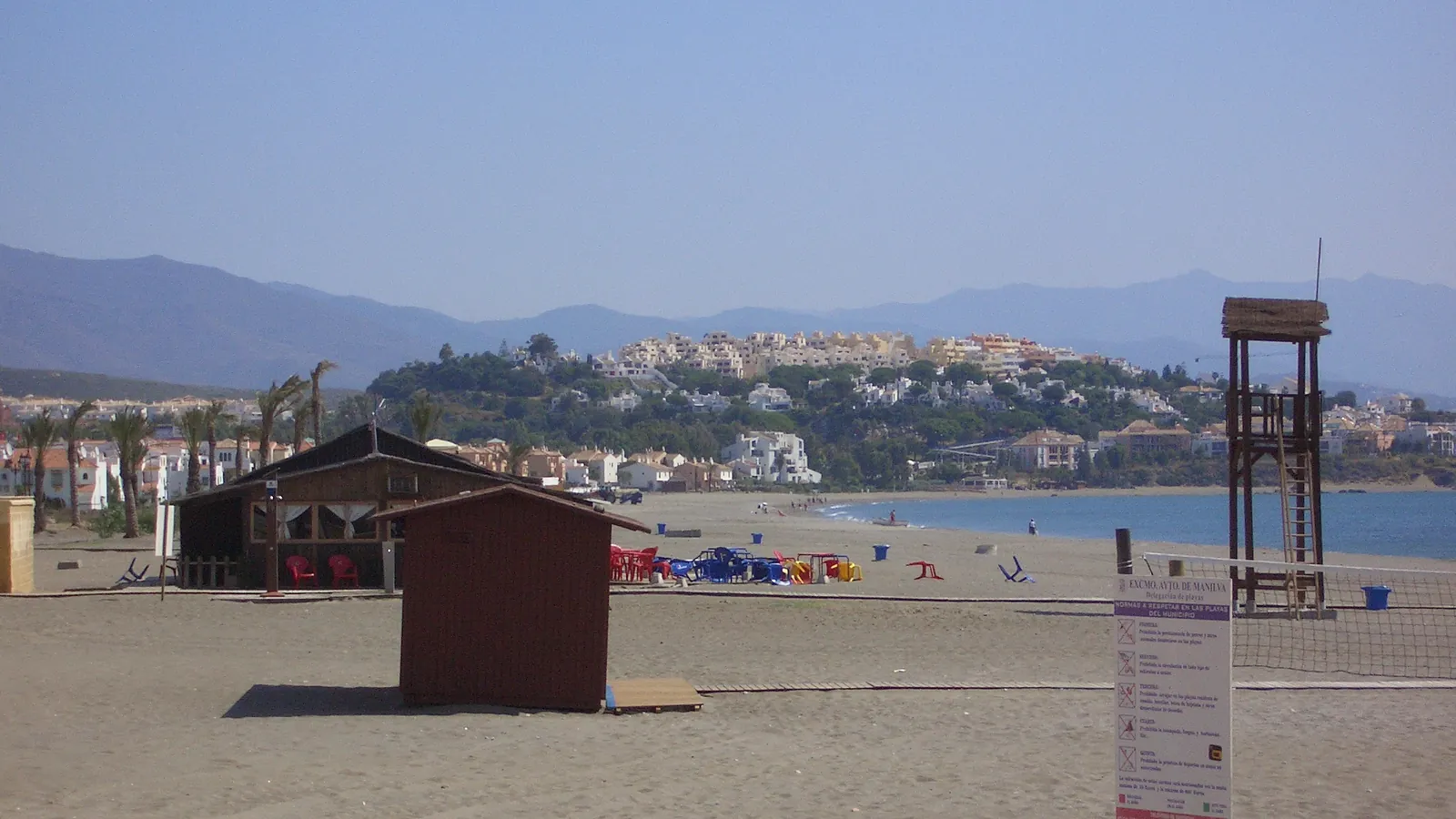
Fine Sand.Urban Beach.
Quick Overview
Plan Your Visit to Sabinillas
The key facts before you go
About the Beach
What is Sabinillas?
Sabinillas is an urban beach on Spain's western Costa del Sol, located in the province of Málaga. This west-facing shoreline offers fine sand and sits within the developed coastal area between Estepona and Manilva. The beach benefits from excellent bathing water quality and is staffed with lifeguards during peak season. The water temperature varies significantly through the year, from a chilly 8.8°C in January to a warm 23°C in August. Air temperatures follow the typical Costa del Sol pattern, ranging from around 12°C in winter to over 26°C in summer. For most swimmers, the practical season runs through July and August when water temperatures peak above 22°C.
It is part of a wider group of other Blue Flag beaches in Spain that meet FEE's annual standards for water quality, safety, and environmental management.
Sunrise, Sunset & Beach Direction
Sabinillas faces west toward Atlantic Ocean. The best light for photography and swimming is typically in June. Direct sun hours follow that facing.
Planning
When to Go: Month by Month
| Month | Air Temp | Water Temp | Crowds |
|---|---|---|---|
| Jan | 12°C | 9°C | Low |
| Feb | 13°C | 10°C | Low |
| Mar | 14°C | 11°C | Low |
| Apr | 16°C | 13°C | Low |
| May | 19°C | 16°C | Low |
| Jun | 23°C | 20°C | Med |
| Jul | 26°C | 23°C | High |
| Aug | 26°C | 23°C | High |
| Sep | 24°C | 21°C | Med |
| Oct | 20°C | 17°C | Low |
| Nov | 15°C | 12°C | Low |
| Dec | 14°C | 11°C | Low |
The best time to visit Sabinillas is June. Air temperatures peak around 25.6°C in summer. Peak water temperature reaches 22.6°C in July.
How crowded does Sabinillas get?Sabinillas draws visitors across the summer tourist season, with peak numbers typically during July and August when water temperatures finally become inviting and air temperatures are warmest. As an urban beach within a developed coastal town, it doesn't experience the extreme isolation of more remote options, nor does it serve as a major resort destination attracting vast tour groups. The lifeguard presence indicates the beach accommodates regular visitor flow with organized safety oversight. Outside the July-August window, crowds thin considerably, spring and early summer visitors will find it less busy, though the cold water limits swimming appeal. Autumn sees declining numbers as both water and air temperatures drop. Winter months see minimal bathing activity, though the beach remains accessible to walkers and those tolerant of cold water. The urban setting means the beach functions as part of town life rather than operating as a seasonal attraction that empties entirely in off-season. This creates a local character through much of the year, with summer tourism layering additional activity on top of regular community use.
Is Sabinillas open year-round?The beach itself is accessible year-round, though staffed facilities including lifeguards typically operate only during the official season (01-06 – 15-09). The Blue Flag is displayed during the certification period only.
The Water
Swimming and Beach Life at Sabinillas
Is Sabinillas safe to swim?Sabinillas is Blue Flag certified, which requires meeting strict bathing water standards set by the EU Bathing Water Directive. Water quality is rated Excellent. Lifeguards are on duty during the official season.
What is the water temperature at Sabinillas?Peak water temperature at Sabinillas reaches around 22.6°C in July, making it comfortable for swimming during the summer months. In winter (January), air temperatures average 11.8°C.
What is the beach like at Sabinillas?Sabinillas occupies a stretch of fine sand typical of this section of the Costa del Sol. As an urban beach, it integrates with the town infrastructure rather than offering isolation or wilderness. The beach faces west, which affects both sun exposure patterns and wave conditions throughout the day. The excellent bathing water quality classification reflects consistent monitoring and management of coastal conditions. Water temperature data shows the beach remains cold for swimming for much of the year. January temperatures sit at 8.8°C, rising gradually through spring to 12.7°C by April. May brings a notable jump to 16.3°C, still cool but becoming more tolerable. June reaches 19.9°C, and by July the water hits 22.6°C, the point where most casual swimmers feel comfortable. August represents the warmest month at 23°C. Autumn cooling is steady: September holds at 20.5°C, October drops to 16.9°C, and by November it's back down to 12.4°C. The presence of lifeguards indicates organized beach management and supervision. Air temperatures complement the water conditions reasonably well in summer (July averages 25.6°C and August 26°C) but the discrepancy between air and water temperature in spring and autumn months means thermal protection becomes important for extended swimming outside peak season. The beach's urban setting means you'll find built environment nearby, with services and accommodation integrated into the surrounding town rather than isolated facilities.
Does Sabinillas have good facilities?As a Blue Flag certified beach, Sabinillas meets the Foundation for Environmental Education's standards for facilities and services. Trained lifeguards are on duty during the season. Toilet facilities are on site. Parking is available nearby. The beach has disabled access facilities.
Sabinillas sits on the Atlantic Ocean: explore all Blue Flag beaches on the Atlantic.
Planning a trip to Spain? Blue Flag Beaches Spain 2026 , our editorial guide to certified beaches across the country.
While You're Here
Beyond Sabinillas
The Sabinillas location sits within the western Costa del Sol town area, positioned between the larger resort towns of Estepona and Manilva. The surrounding region offers the typical mix of developed coastal settlement, shops, restaurants, and accommodation serving the tourist and residential population. The beach itself provides the main draw, but the urban setting means access to town-based services and facilities. The coastline in this sector is characterized by similar sandy beaches and developed infrastructure stretching along the western Costa del Sol. The hinterland rises toward the Serranía de Ronda mountains, though these are not immediately visible from beach level. Visitors seeking activities beyond beach use will find them concentrated in the nearby town centers rather than in natural or wilderness attractions adjacent to the beach itself.
Transport
Getting to Sabinillas
How do I get to Sabinillas by car?Sabinillas is located in Spain. Follow local road signs to the beach. Check Google Maps or a local map for the most current directions.
What is the nearest airport to Sabinillas?The nearest airport is Málaga-Costa del Sol Airport (AGP), approximately 137.4 km away. Málaga-Costa del Sol Airport (AGP) is the nearest air gateway, located 137.4 kilometers from Sabinillas. This is a major international airport handling numerous European connections alongside domestic Spanish flights. From the airport, ground transport to Sabinillas requires either car rental or public transport onward connection. Journey time by road is typically 90-120 minutes depending on traffic along the coast. The route follows the A-7 motorway westward toward the Estepona-Manilva area. Airport shuttle services and car rental desks operate from terminal facilities. Direct flights serve major European cities, making this a straightforward entry point for international visitors.
Can I get to Sabinillas by public transport?Public transport options vary by season. Check local transport authority websites for current bus and train schedules connecting to Spain. The nearest recorded bus stop is 350 m from the beach.
Is there a train to Sabinillas?Sabinillas lists Jimena de la Frontera as the nearest railway station, 19.91 km away. Check current timetables before travelling.
Map
Find Sabinillas
Open the map or get directions to the Sabinillas pin. Amenity names are listed here only when OpenStreetMap has a mapped feature nearby.
Map loads when you ask. Tiles stay off the first paint.
Map: OpenStreetMap (ODbL)
Practical Details
Practical Information
| At the Beach | |
| Entry | Free: no charge to access the beach |
|---|---|
| Lifeguards | ✓ On duty during official season |
| Disabled Access | ✓ Accessible site facilities and water entry |
| Showers | ✗ |
| Toilets | ✓ Available during season |
| Official Season | 01 Jun – 15 Sep |
| Beach Type | Sandy beach |
| Parking | ✓ Available nearby (surface parking) |
| Nearest supermarket | 330 m from the beach |
| Nearest bus stop | 350 m from the beach |
| Visiting Information | |
| GPS Coordinates | 36.3632°N, 5.2251°W |
| Water Quality | Excellent (EU Bathing Water Directive) |
| Blue Flag Operator | Foundation for Environmental Education (FEE), Spain |
Frequently Asked Questions
Sabinillas FAQ
Is Sabinillas worth visiting?
Sabinillas offers a straightforward urban beach option with excellent water quality and lifeguard coverage, making it a safe bathing location. It suits visitors prioritizing swimming comfort and town-based facilities over isolation or natural scenery. The beach's main value proposition centers on reliable facilities and warm-season swimming rather than distinctive character. For those seeking a simple coastal swim within a developed setting, it delivers that function reliably.
How do I get to Sabinillas?
Málaga-Costa del Sol Airport, 137.4 kilometers away, is the primary air gateway. From there, car rental or connecting transport takes you westward along the coast toward Estepona and Manilva. Ground journey time is typically 90-120 minutes. The beach sits within the developed coastal town, so final access is straightforward once you reach the area. No direct rail or long-distance bus routes serve Sabinillas directly from major hubs.
What's the best time of year to visit?
July and August offer the warmest conditions for swimming, with water temperatures reaching 22.6°C and 23°C respectively, and air temperatures around 25-26°C. June provides earlier-season warmth with water at 19.9°C. September maintains reasonable conditions at 20.5°C water temperature. Outside this July-August core window, water temperatures drop significantly. May sits at only 16.3°C, and winter months are below 12°C. For comfortable bathing without thermal protection, limit visits to July-August.
What facilities are there at Sabinillas?
Lifeguard supervision is present, indicating organized beach management. The urban beach setting means facilities integrate with the town rather than being isolated beach-only amenities. You can expect standard coastal town services (shops, restaurants, and accommodation) in the nearby developed area. Specific facility details beyond lifeguard presence are not documented in available records, so direct inquiry with local tourism services will clarify current amenities.
Is Sabinillas suitable for families?
The combination of excellent water quality, lifeguard presence, and fine sand provides a foundation for family beach use. The urban setting offers town-based facilities and services supporting family needs. Water temperatures limit comfortable family swimming to the July-August window, and outside this period parents should assess whether cold-water exposure suits their children. The developed surroundings eliminate isolation but may limit the natural or quiet appeal some families prefer.
Explore More
Nearby Blue Flag Beaches
Editorial
From the Zeach Blog
Everything you need to know about what makes a beach qualify for Blue Flag status, from water quality to environmental education.
Read moreOur editorial team's pick of the standout Blue Flag beaches in Spain, rated for family friendliness, scenery, and facilities.
Explore SpainWhat the flag actually means, how certification works, and why a Blue Flag is a genuinely reliable signal, not just a marketing tool.
Read moreSources
- Foundation for Environmental Education: Blue Flag programme
- FEE site listing for Sabinillas
- ADEAC (Asociación de Educación Ambiental y del Consumidor)
- European Environment Agency: bathing water quality
Last verified September 2026. National operator pages and FEE listings are the primary certification sources.