Platja d'Aro (Platja Gran)
Catalonia, Spain: Excellent water quality
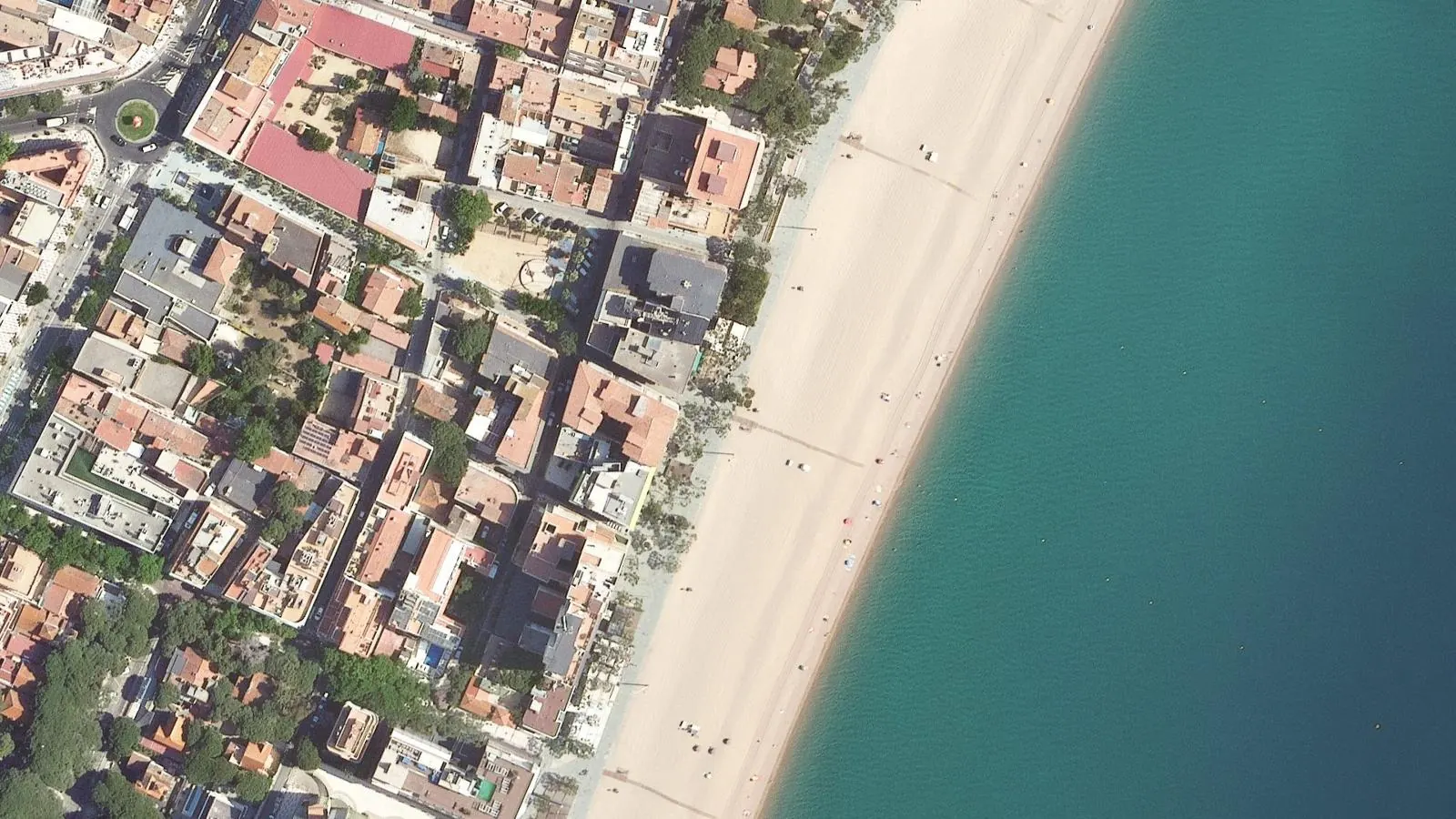
Gross Sand is an urban beach located directly in front of town, with fifteen streets connecting it to the main area. The southern end of the beach sits near Puig Pinell, a mountain that rises above the shoreline.
Quick Overview
Plan Your Visit to Platja d'Aro (Platja Gran)
The key facts before you go
About the Beach
What is Platja d'Aro (Platja Gran)?
Platja D'Aro, also known as Platja Gran, stretches along the Catalan coast near the town of Castell d'Aro in the Costa Brava region. This urban beach offers direct access to the seafront with fifteen connecting streets linking it to the town centre. The sand composition is coarse, typical of this stretch of coastline. Water quality is rated as excellent, making it a reliable choice for swimmers. The beach faces west, catching afternoon and evening light. Lifeguards are present during the main season, providing supervision for bathers. The nearby Puig Pinell mountain rises at the southern end, adding some topographical interest to the landscape. The beach serves as the social hub for the local community and attracts visitors throughout the year.
It sits alongside certified beaches along Catalonia, part of a broader network of certified beaches throughout Spain certified annually by the Foundation for Environmental Education.
Sunrise, Sunset & Beach Direction
Platja d'Aro (Platja Gran) faces west toward Mediterranean Sea. The best light for photography and swimming is typically in June. Direct sun hours follow that facing.
Planning
When to Go: Month by Month
| Month | Air Temp | Water Temp | Crowds |
|---|---|---|---|
| Jan | 9°C | 6°C | Low |
| Feb | 11°C | 8°C | Low |
| Mar | 12°C | 9°C | Low |
| Apr | 14°C | 11°C | Low |
| May | 17°C | 14°C | Low |
| Jun | 22°C | 19°C | Med |
| Jul | 25°C | 22°C | High |
| Aug | 25°C | 22°C | High |
| Sep | 21°C | 18°C | Med |
| Oct | 18°C | 15°C | Low |
| Nov | 13°C | 10°C | Low |
| Dec | 11°C | 8°C | Low |
The best time to visit Platja d'Aro (Platja Gran) is June. Air temperatures peak around 24.6°C in summer. Peak water temperature reaches 21.6°C in July.
How crowded does Platja d'Aro (Platja Gran) get?As an urban beach directly connected to the town via fifteen access streets, Platja D'Aro experiences predictable crowd patterns tied to the local population and visitor seasons. Summer months, particularly July and August, bring peak numbers as water temperatures reach 21.6°C to 21.7°C and air temperatures stay around 24.6°C to 24.7°C. These warm conditions attract both day-trippers and holiday visitors. The integration with the town centre means Platja D'Aro functions as the primary recreational waterfront for residents, not a secluded escape. Early mornings and weekday visits offer quieter conditions compared to weekends and holiday periods. May through June provide intermediate crowds, with water at 14.3°C to 18.8°C, warm enough for swimming but not yet peak summer heat. Winter months (November through February) see significantly reduced visitor numbers, with water temperatures dropping to 6.3°C through 10.4°C. This period suits those seeking calm conditions and fewer people, though swimming requires thermal protection. The lifeguard presence during busier periods suggests crowd management infrastructure exists. September offers a transition point: pleasant air temperatures of 21.4°C and water at 18.4°C, with fewer crowds than July-August. Late autumn and winter visiting means accepting cold water but gaining near-empty beach conditions.
Is Platja d'Aro (Platja Gran) open year-round?The beach itself is accessible year-round, though staffed facilities including lifeguards typically operate only during the official season (01-06 – 21-09). The Blue Flag is displayed during the certification period only.
The Water
Swimming and Beach Life at Platja d'Aro (Platja Gran)
Is Platja d'Aro (Platja Gran) safe to swim?Platja d'Aro (Platja Gran) is Blue Flag certified, which requires meeting strict bathing water standards set by the EU Bathing Water Directive. Water quality is rated Excellent. Lifeguards are on duty during the official season.
What is the water temperature at Platja d'Aro (Platja Gran)?Peak water temperature at Platja d'Aro (Platja Gran) reaches around 21.6°C in July, making it comfortable for swimming during the summer months. In winter (January), air temperatures average 9.3°C.
What is the beach like at Platja d'Aro (Platja Gran)?Platja D'Aro is an urban beach fully integrated with the town of Castell d'Aro, with fifteen streets providing direct access from the town centre to the waterfront. The beach composition is coarse sand, which is characteristic of the Costa Brava's geological makeup. The westward-facing orientation means the beach receives good afternoon sun, though morning swimmers will find less direct light exposure. Water quality ratings are excellent, monitored according to bathing water quality standards. This consistency makes it reliable for regular swimming throughout the year. The beach operates with lifeguard supervision, indicated by the presence of official lifeguards during peak seasons and busy periods. Water temperatures show a clear seasonal pattern. Winter months from January through March see cold water ranging from 6.3°C to 8.8°C, requiring a wetsuit for any extended time in the water. Spring brings gradual warming from 10.8°C in April to 14.3°C in May. Summer reaches peak temperatures of 21.6°C in July and 21.7°C in August, making these months most comfortable for casual swimming. Early autumn still offers pleasant temperatures of 18.4°C in September, cooling to 14.9°C by October. Late autumn and early winter see temperatures drop back below 10°C. The main swimming season officially runs from July through August, when water temperatures reach their warmest and air temperatures average 24.6°C to 24.7°C. Shoulder seasons like May and June (18.8°C water) or September (18.4°C water) remain viable for swimmers comfortable with slightly cooler conditions. Puig Pinell, a mountain located at the beach's southern section, provides a geographical landmark and potential point of reference for swimmers. The urban integration means immediate access to town facilities rather than isolated beach conditions.
Does Platja d'Aro (Platja Gran) have good facilities?As a Blue Flag certified beach, Platja d'Aro (Platja Gran) meets the Foundation for Environmental Education's standards for facilities and services. Trained lifeguards are on duty during the season. Parking is available nearby. The beach has disabled access facilities.
Platja d'Aro (Platja Gran) sits on the Mediterranean Sea: explore all Blue Flag beaches on the Mediterranean.
Planning a trip to Spain? Blue Flag Beaches Spain 2026 , our editorial guide to certified beaches across the country.
While You're Here
Beyond Platja d'Aro (Platja Gran)
The broader Castell d'Aro, Platja d'Aro i s'Agaró municipality offers more than just beach time. Puig Pinell, the mountain visible at the southern end of the beach, presents exploration opportunities for those interested in coastal topography and views over the seafront. The town itself features fifteen streets connecting to the beach, indicating a developed infrastructure with restaurants, shops, and local services within walking distance of the waterfront. The Costa Brava location places Platja D'Aro within reach of other coastal attractions and villages. The region is known for its rocky coves and Mediterranean character. Nearby towns in the s'Agaró area offer additional beaches and waterfront experiences. The proximity to Barcelona (roughly 100 kilometres) via Josep Tarradellas Airport opens possibilities for combining beach time with city visits. The excellent bathing water quality reflects the general cleanliness and environmental management of this stretch of coastline, making surrounding water-based activities viable throughout the swimming season.
Transport
Getting to Platja d'Aro (Platja Gran)
How do I get to Platja d'Aro (Platja Gran) by car?Platja d'Aro (Platja Gran) is approximately 3.01 km from Castell d'Aro, Platja d'Aro i s'Agaró. Follow local road signs to the beach. Check Google Maps or a local map for the most current directions.
What is the nearest airport to Platja d'Aro (Platja Gran)?The nearest airport is Josep Tarradellas Barcelona-El Prat Airport (BCN), approximately 100.3 km away. Platja D'Aro is approximately 100 kilometres from Josep Tarradellas Barcelona-El Prat Airport (BCN), the nearest major air facility. This Barcelona airport serves as the primary international gateway for the region. Journey time from the airport to the beach is typically 90 minutes to two hours by car, depending on traffic conditions around Barcelona. Rental car services are available at the airport. Alternative options include taking a train from Barcelona centre (connected to the airport) toward the Girona or Costa Brava regional lines, which requires a change or connection to reach the Castell d'Aro area.
Can I get to Platja d'Aro (Platja Gran) by public transport?Public transport options vary by season. Check local transport authority websites for current bus and train schedules connecting to Castell d'Aro, Platja d'Aro i s'Agaró. The nearest recorded bus stop is 304 m from the beach.
Map
Find Platja d'Aro (Platja Gran)
Open the map or get directions to the Platja d'Aro (Platja Gran) pin. Amenity names are listed here only when OpenStreetMap has a mapped feature nearby.
Map loads when you ask. Tiles stay off the first paint.
Map: OpenStreetMap (ODbL)
Practical Details
Practical Information
| At the Beach | |
| Entry | Free: no charge to access the beach |
|---|---|
| Lifeguards | ✓ On duty during official season |
| Disabled Access | ✓ Accessible site facilities and water entry |
| Showers | ✗ |
| Toilets | ✗ |
| Official Season | 01 Jun – 21 Sep |
| Beach Type | Sandy beach |
| Parking | ✓ Available nearby (surface parking) |
| Nearest supermarket | 230 m from the beach |
| Nearest bus stop | 304 m from the beach |
| Visiting Information | |
| GPS Coordinates | 41.8170°N, 3.0692°E |
| Water Quality | Excellent (EU Bathing Water Directive) |
| Blue Flag Operator | Foundation for Environmental Education (FEE), Spain |
Frequently Asked Questions
Platja d'Aro (Platja Gran) FAQ
Is Platja D'Aro worth visiting?
Platja D'Aro offers reliable conditions for beach visitors. Excellent water quality and the presence of lifeguards provide reassurance for swimmers. The urban setting with direct town access means amenities are within walking distance rather than at a beachside distance. Summer water temperatures of 21.6°C to 21.7°C and air temperatures around 24.6°C to 24.7°C make July and August comfortable. The westward-facing orientation suits afternoon swimmers. The beach works well as a regular swimming spot rather than a special destination, particularly if you're staying in or near Castell d'Aro town.
How do I get to Platja D'Aro?
The nearest major airport is Josep Tarradellas Barcelona-El Prat (BCN), approximately 100 kilometres away, requiring roughly 90 minutes to two hours by car. Rental cars are available at the airport. Alternative transport involves taking a train from Barcelona centre to regional lines serving the Costa Brava or Girona areas, with a connection needed to reach Castell d'Aro. The town of Castell d'Aro itself is the reference point for navigation, with fifteen streets providing direct access to Platja D'Aro from the town centre.
What is the best time of year to visit Platja D'Aro?
July and August offer peak conditions with water temperatures of 21.6°C to 21.7°C and air temperatures of 24.6°C to 24.7°C, making casual swimming most comfortable. These months see the main swimming season. May through June provide a good alternative with water at 14.3°C to 18.8°C for those comfortable with slightly cooler swimming. September maintains pleasant air temperatures of 21.4°C with water at 18.4°C, offering good conditions with fewer summer crowds. Winter months require thermal protection with water below 10°C but offer minimal visitor numbers.
What facilities are there at Platja D'Aro?
As an urban beach integrated with Castell d'Aro town, Platja D'Aro has direct access to town services via fifteen connecting streets. This proximity means restaurants, shops, and local facilities are within walking distance rather than immediately on the beach itself. Lifeguards are present during peak seasons, providing safety supervision. The excellent bathing water quality is maintained and monitored. Specific details about individual beach facilities like changing rooms, showers, or sun lounger rentals require direct contact with local beach management or the town municipality.
Is Platja D'Aro suitable for families?
Platja D'Aro's urban setting and lifeguard presence support family visits. The direct connection to town means facilities, food, and services are accessible without lengthy walks. Water quality is excellent and consistent. Summer water temperatures of 21.6°C to 21.7°C make swimming comfortable for children during July and August. The coarse sand composition is typical of the region. The town integration allows families to move between beach and town activities easily. Winter visits are possible but require thermal protection due to water temperatures dropping below 10°C.
Explore More
Nearby Blue Flag Beaches
Editorial
From the Zeach Blog
Everything you need to know about what makes a beach qualify for Blue Flag status, from water quality to environmental education.
Read moreOur editorial team's pick of the standout Blue Flag beaches in Spain, rated for family friendliness, scenery, and facilities.
Explore SpainWhat the flag actually means, how certification works, and why a Blue Flag is a genuinely reliable signal, not just a marketing tool.
Read moreSources
- Foundation for Environmental Education: Blue Flag programme
- FEE site listing for Platja d'Aro (Platja Gran)
- ADEAC (Asociación de Educación Ambiental y del Consumidor)
- European Environment Agency: bathing water quality
Last verified September 2026. National operator pages and FEE listings are the primary certification sources.