Monte Gordo
Faro, Portugal: Excellent water quality
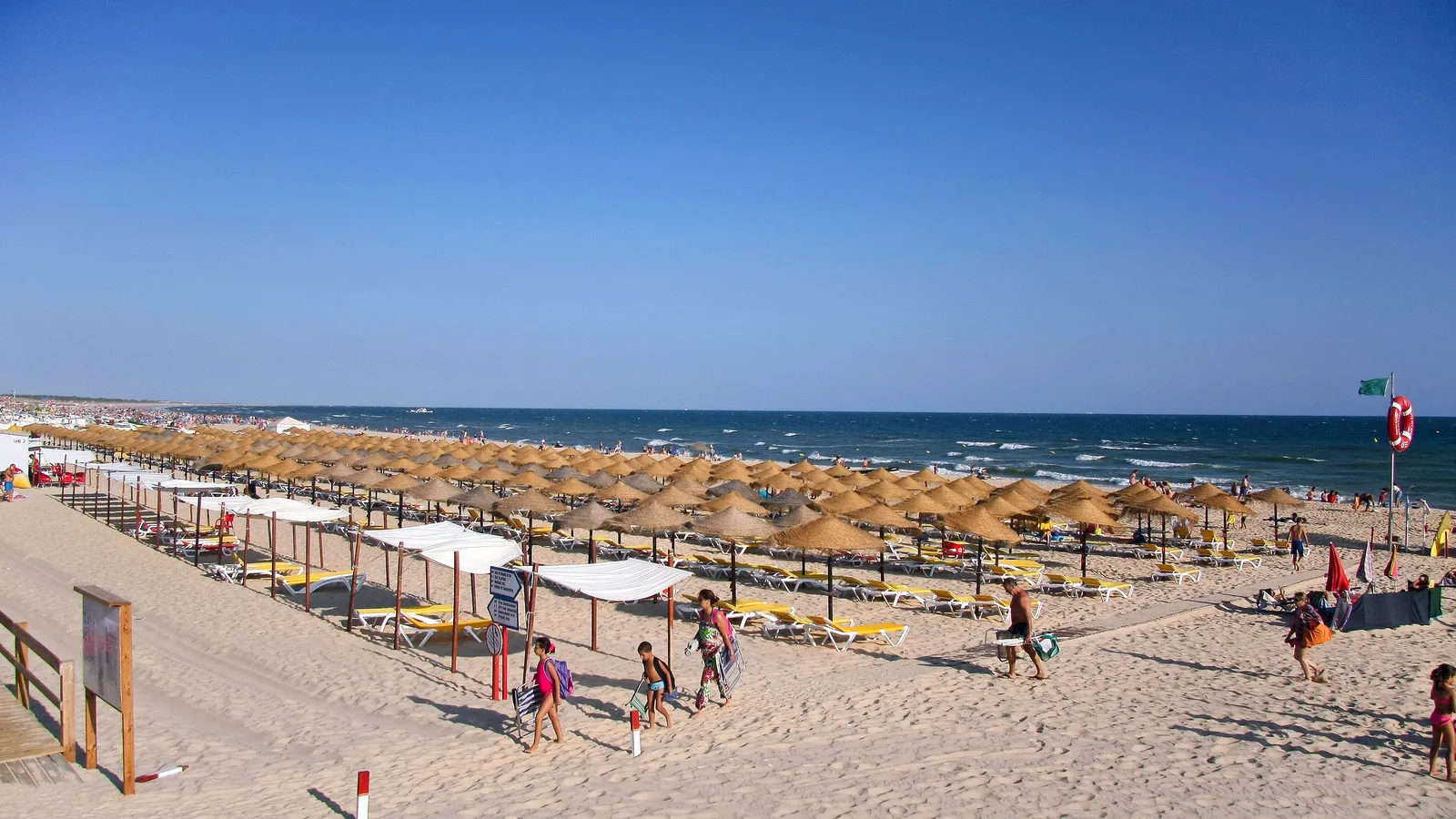
Monte Gordo sits between Praia Verde (in Castro Marim) and Santo António beach in Vila Real de Santo António. The bay is flanked by two protected areas: the Sapal de Castro Marim/VRSA Natural Reserve and the National Forest of coastal dunes. The beach itself has…
Quick Overview
Plan Your Visit to Monte Gordo
The key facts before you go
About the Beach
What is Monte Gordo?
Monte Gordo stretches across the largest expanse of beach in this corner of the Algarve, backed by fine golden sand and positioned where the Guadiana River meets the Atlantic. Located between Praia Verde and Santo António, near Vila Real de Santo António, the beach benefits from a sheltered bay and warm water currents that make it notably warmer than many other Portuguese beaches. What began as a quiet fishing village has evolved into an established international resort, complete with a casino and beachfront promenade. The setting combines practical beach infrastructure with proximity to protected natural areas (the Castro Marim salt marsh and coastal dune forest) creating a working balance between tourism and environmental conservation.
It sits alongside certified beaches along Faro, part of a broader network of certified beaches throughout Portugal certified annually by the Foundation for Environmental Education.
Sunrise, Sunset & Beach Direction
Monte Gordo faces south toward Atlantic Ocean. The best light for photography and swimming is typically in June, September. Direct sun hours follow that facing.
Planning
When to Go: Month by Month
| Month | Air Temp | Water Temp | Crowds |
|---|---|---|---|
| Jan | 12°C | 9°C | Low |
| Feb | 13°C | 10°C | Low |
| Mar | 14°C | 11°C | Low |
| Apr | 16°C | 13°C | Low |
| May | 20°C | 17°C | Low |
| Jun | 23°C | 20°C | Med |
| Jul | 25°C | 22°C | High |
| Aug | 26°C | 23°C | High |
| Sep | 23°C | 20°C | Med |
| Oct | 20°C | 17°C | Low |
| Nov | 15°C | 12°C | Low |
| Dec | 13°C | 10°C | Low |
The best time to visit Monte Gordo is June, September. Air temperatures peak around 25.4°C in summer. Peak water temperature reaches 22.4°C in July.
How crowded does Monte Gordo get?How crowded does Monte Gordo get? During July and August, the official swimming season, the beach draws both Portuguese holidaymakers and international visitors, particularly given the nearby casino and established hotel base. The marginal road and promenade infrastructure accommodate this traffic without creating gridlock conditions. The beach's size helps distribute visitors, the large expanse of sand prevents the severely packed appearance of smaller beaches. Morning and early-afternoon hours in summer will be busier than late afternoon. Outside July and August, visitor numbers drop significantly. The international reputation means it attracts repeat visitors and older demographics alongside families. Weekend crowds are heavier than weekdays even in shoulder months. The calm bay and protected setting appeal to swimmers of varying confidence levels, so you'll see a mix of active swimmers and sunbathers. The casino and tourism-focused amenities mean the beach functions as part of a broader resort experience rather than as an isolated stretch of coast.
Is Monte Gordo open year-round?The beach itself is accessible year-round, though staffed facilities including lifeguards typically operate only during the official season (15-06 – 30-09). The Blue Flag is displayed during the certification period only.
The Water
Swimming and Beach Life at Monte Gordo
Is Monte Gordo safe to swim?Monte Gordo is Blue Flag certified, which requires meeting strict bathing water standards set by the EU Bathing Water Directive. Water quality is rated Excellent. Lifeguards are on duty during the official season.
What is the water temperature at Monte Gordo?Peak water temperature at Monte Gordo reaches around 22.4°C in July, making it comfortable for swimming during the summer months. In winter (January), air temperatures average 11.6°C.
What is the beach like at Monte Gordo?Monte Gordo's defining feature is the breadth of its sandy bay, offering ample space even during peak season. The sand is characteristically fine and golden, typical of beaches near river mouths where sediment has been deposited over time. The water quality is rated Excellent, and the south-facing orientation means consistent sun exposure throughout the day. Why does Monte Gordo feel different from other Algarve beaches? Its location near the Guadiana River mouth creates a microclimate with noticeably warmer water temperatures than western beaches. Summer water temperatures reach 22–23°C, extending the practical swimming season. The bay's gentle slope and relatively calm conditions reflect its sheltered position. Year-round, water temperatures range from 8.6°C in January to 22.7°C in August. Air temperatures follow a typical Mediterranean pattern, peaking at 25–26°C in summer months. Lifeguards are present during the bathing season, and the beach includes a sealed marginal road that handles vehicle traffic, keeping the sand itself quieter for walking and lounging. The nearby Natural Reserve of Sapal de Castro Marim/VRSA and the National Forest of coastal dunes restrict development in adjacent areas, preserving the ecological context. The promenade allows evening strolls with sea views, and the established tourist infrastructure means facilities are available without the beach feeling overdeveloped. The long shoreline means it's possible to find quieter spots even in July and August.
Does Monte Gordo have good facilities?As a Blue Flag certified beach, Monte Gordo meets the Foundation for Environmental Education's standards for facilities and services. Trained lifeguards are on duty during the season. Toilet facilities are on site. Parking is available nearby. The beach has disabled access facilities.
Monte Gordo sits on the Atlantic Ocean: explore all Blue Flag beaches on the Atlantic.
Planning a trip to Portugal? Blue Flag Beaches Portugal , our editorial guide to certified beaches across the country.
While You're Here
Beyond Monte Gordo
Monte Gordo's position near the Guadiana River mouth creates natural history interest. The Castro Marim salt marsh (Sapal de Castro Marim/VRSA) is accessible for observation; historically, these shallow lagoons supplied Portugal's salt industry and remain important wetland habitat. The National Forest of coastal dunes protects native vegetation and provides walking routes. Vila Real de Santo António, immediately adjacent, is a planned 18th-century town with a geometric grid layout and riverside promenade facing Spain. The nearby Ponta da Bandeira fort offers historical context and water views. The Guadiana River itself marks the border with Spain and can be crossed by ferry or bridge for exploring the Huelva region. The casino at Monte Gordo operates year-round. The region supports fishing villages along the estuary where traditional methods remain visible. Birdwatching opportunities exist in the protected wetland areas, particularly during spring and autumn migration periods. Restaurant and café culture is straightforward rather than haute cuisine, reflecting the working-town character beneath the tourism layer.
Transport
Getting to Monte Gordo
How do I get to Monte Gordo by car?Monte Gordo is approximately 3.78 km from Vila Real de Santo António. Follow local road signs to the beach. Check Google Maps or a local map for the most current directions.
What is the nearest airport to Monte Gordo?The nearest airport is Faro Airport (FAO), approximately 49.6 km away. Faro Airport (FAO) is 49.6 km away, roughly 50 minutes by road to Monte Gordo. The airport handles direct flights from most European cities and connects to Lisbon for longer-haul routes. Car rental is the most practical option, offering flexibility for exploring the Algarve coast. Shuttle services and taxis operate from the airport but are more expensive than car rental for a week-long stay. The drive from Faro follows the EN125 eastward, a well-signposted route that passes through established towns. Driving is straightforward but can be busy during peak summer weeks.
Can I get to Monte Gordo by public transport?Coach services connect Faro and Vila Real de Santo António, with local buses running to Monte Gordo town and beach areas. Journey time from Faro is typically 1.5–2 hours. Buses are inexpensive and run year-round, though frequency increases in summer. Timetables are available through Algarve transport providers. The nearest recorded bus stop is 509 m from the beach.
Is there a train to Monte Gordo?Monte Gordo lists Monte Gordo as the nearest railway station, 1.43 km away. Check current timetables before travelling.
Nearby
Near Monte Gordo
Mapped toilets, bus stops, cafés, parking, and shops within about 500 m of Monte Gordo. Distances are walking-line estimates from the beach pin.
Map loads when you ask. Tiles stay off the first paint.
Map: OpenStreetMap (ODbL)
Toilets near Monte Gordo
- Public toilets Public toilets 39 m
- Public toilets Public toilets 51 m
- Public toilets Public toilets 97 m
- Public toilets Public toilets 201 m
- Public toilets Public toilets 213 m
Cafés near Monte Gordo
- Muxama Restaurant 28 m
- Coco Bambu Restaurant 65 m
- La Pizza Restaurant 84 m
- 100 Montaditos Restaurant 110 m
- Palácio da China Restaurant 175 m
Parking near Monte Gordo
- Parking Parking 119 m
- Parking Parking 258 m
- Parking Parking 305 m
- Parking Parking 426 m
- Parking Parking 466 m
Supermarket near Monte Gordo
- Loja Fresca Supermarket 254 m
- My Auchan Supermarket 316 m
- Intermarché Supermarket 442 m
- Spar Supermarket 447 m
Source: © OpenStreetMap contributors (ODbL). Names and positions come from mapped OSM features. Confirm on site.
Practical Details
Practical Information
| At the Beach | |
| Entry | Free: no charge to access the beach |
|---|---|
| Lifeguards | ✓ On duty during official season |
| Disabled Access | ✓ Accessible site facilities and water entry |
| Showers | ✗ |
| Toilets | ✓ Available during season |
| Official Season | 15 Jun – 30 Sep |
| Beach Type | Sandy beach |
| Sand | Golden / yellow sand |
| Parking | ✓ Available nearby (surface parking) |
| Nearest supermarket | 250 m from the beach |
| Nearest bus stop | 509 m from the beach |
| Visiting Information | |
| GPS Coordinates | 37.1776°N, 7.4526°W |
| Water Quality | Excellent (EU Bathing Water Directive) |
| Blue Flag Operator | Foundation for Environmental Education (FEE), Portugal |
Frequently Asked Questions
Monte Gordo FAQ
Is Monte Gordo worth visiting?
Yes, if you want reliable water quality, warm temperatures (July–August exceed 22°C), and established beach facilities without seeking isolated wilderness. The beach suits swimmers of varying ability because of its calm bay and lifeguard presence. The setting balances tourism infrastructure with nearby protected natural areas. It's a practical choice for families and older visitors rather than a destination for wave sports or seeking solitude.
How do I get to Monte Gordo?
Faro Airport (49.6 km, ~50 minutes by car) is the nearest major transport hub. Car rental offers the most flexibility. Coaches connect Faro and Vila Real de Santo António (1.5–2 hours) with local buses to the beach. Vila Real de Santo António is the nearest town, immediately adjacent to Monte Gordo. Driving from Faro follows the EN125 eastward, a straightforward route.
What is the best time of year to visit?
July and August offer peak temperatures (25–26°C air, 22–23°C water) and are the official swimming season with lifeguards present. June and September provide warmer water (19–20°C) with fewer crowds. Winter (December–February) sees air temperatures around 10–12°C and water below 10°C, making swimming uncomfortable for most visitors. Spring (April–May) shows water warming to 13–17°C.
What facilities are there at Monte Gordo?
Lifeguards operate during the bathing season. The sealed marginal road handles vehicle traffic and allows vehicle access near the beach. A promenade runs along the waterfront for walking. The town provides restaurants, cafés, and a casino. Basic beach facilities exist, though specific details on changing rooms or equipment rental are not confirmed. Nearby Vila Real de Santo António offers additional services.
Is Monte Gordo suitable for families?
Yes. The calm bay, fine sand, and lifeguard presence make it safer for children than rough Atlantic beaches. The gentle slope and warm summer water (22–23°C) suit younger swimmers. The promenade allows evening walks with sea views. The established resort status means hotels, restaurants, and entertainment are available. The beach's size allows families to find less crowded spots, and the environment is oriented toward multigenerational tourism.
Are there toilets near Monte Gordo?
Yes. OpenStreetMap maps 5 toilet locations near Monte Gordo, including 39 m away, 51 m away, 97 m away, and 201 m away. Distances are walking-line estimates within about 500 m of the beach pin. Confirm opening hours on site; some facilities are seasonal. © OpenStreetMap contributors (ODbL).
Are there cafés near Monte Gordo?
Yes. OpenStreetMap lists 5 cafés or restaurants near Monte Gordo, including Muxama (28 m), Coco Bambu (65 m), La Pizza (84 m), and 100 Montaditos (110 m). Hours and seasonal opening are not verified here. Check on the day. © OpenStreetMap contributors (ODbL).
Is there parking near Monte Gordo?
Yes. OpenStreetMap maps parking 119 m from Monte Gordo, with 5 lots or spaces inside about 500 m. Charges and time limits are not recorded here. © OpenStreetMap contributors (ODbL).
Is there a supermarket near Monte Gordo?
Yes. OpenStreetMap maps a supermarket 254 m from Monte Gordo (Loja Fresca). Walking-line distance; confirm opening hours locally. © OpenStreetMap contributors (ODbL).
Explore More
Nearby Blue Flag Beaches
Editorial
From the Zeach Blog
Everything you need to know about what makes a beach qualify for Blue Flag status, from water quality to environmental education.
Read moreOur editorial team's pick of the standout Blue Flag beaches in Portugal, rated for family friendliness, scenery, and facilities.
Explore PortugalWhat the flag actually means, how certification works, and why a Blue Flag is a genuinely reliable signal, not just a marketing tool.
Read moreSources
- Foundation for Environmental Education: Blue Flag programme
- FEE site listing for Monte Gordo
- ABAE (Associação Bandeira Azul da Europa)
- European Environment Agency: bathing water quality
Last verified September 2026. National operator pages and FEE listings are the primary certification sources.