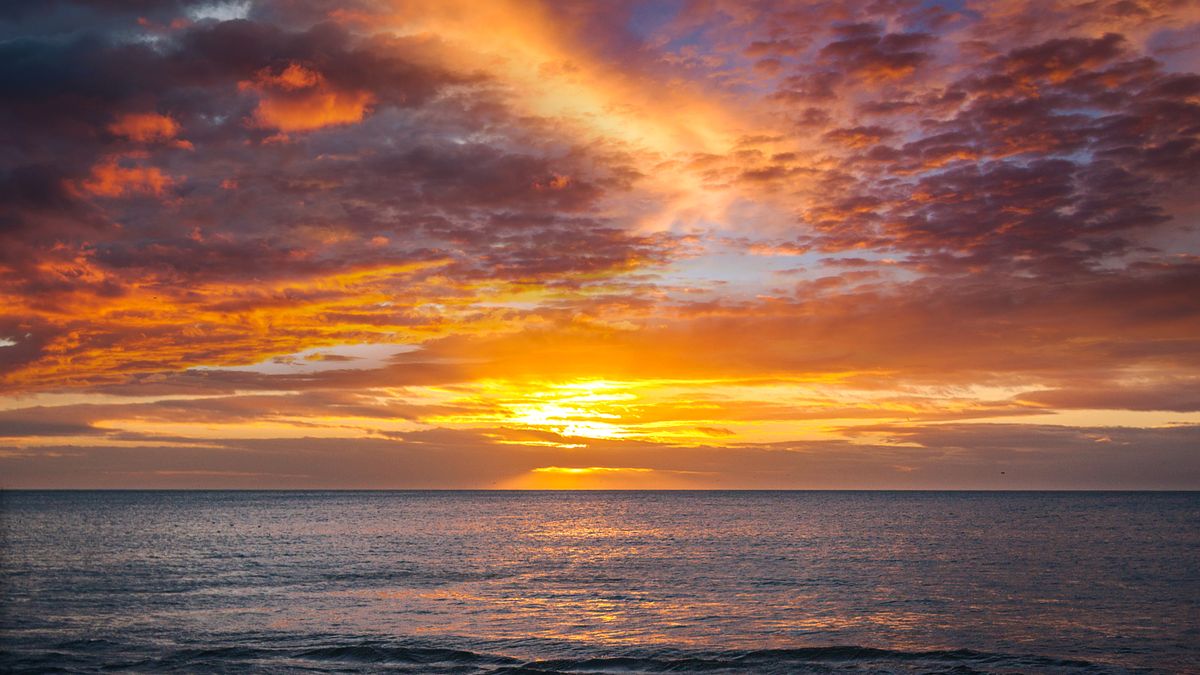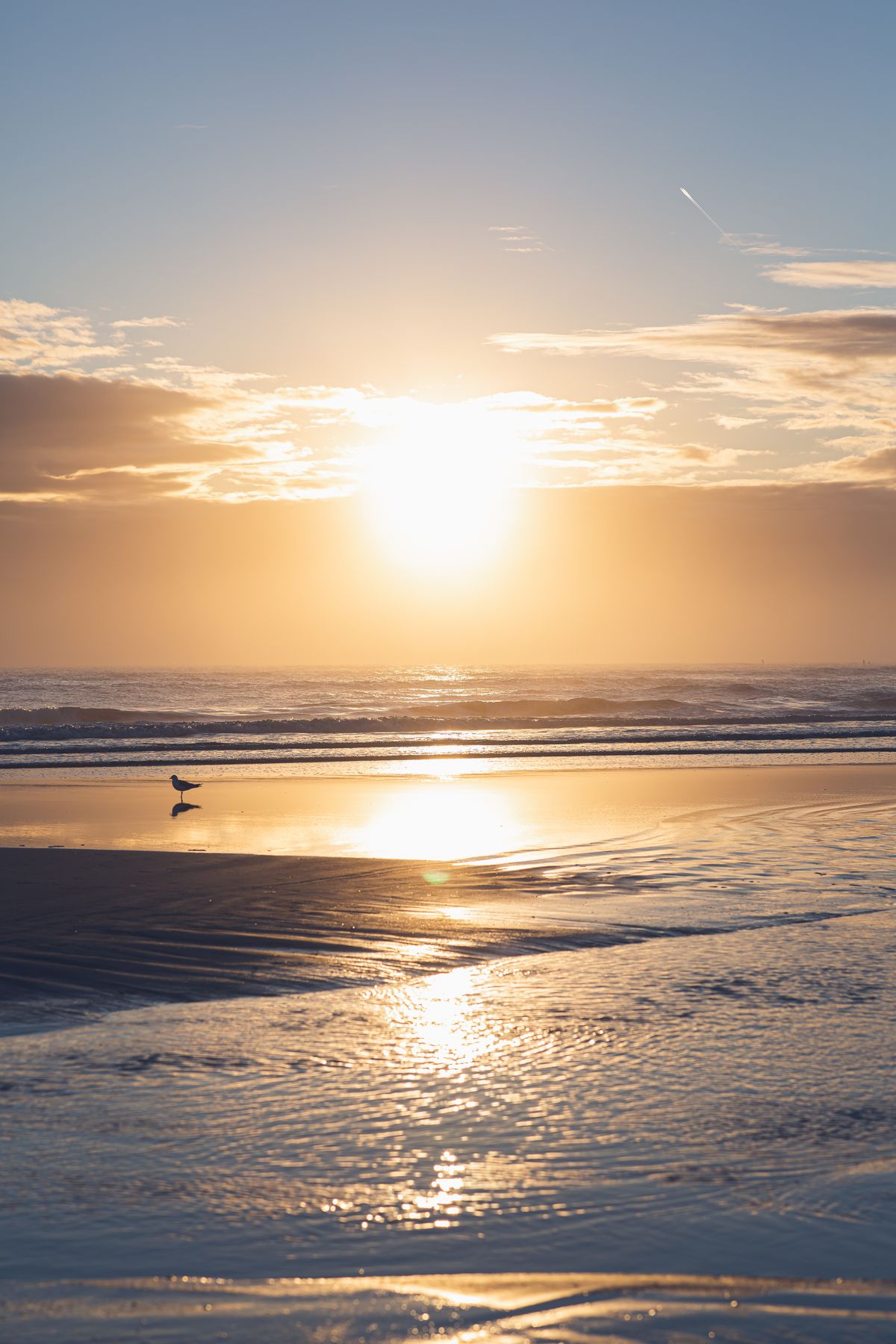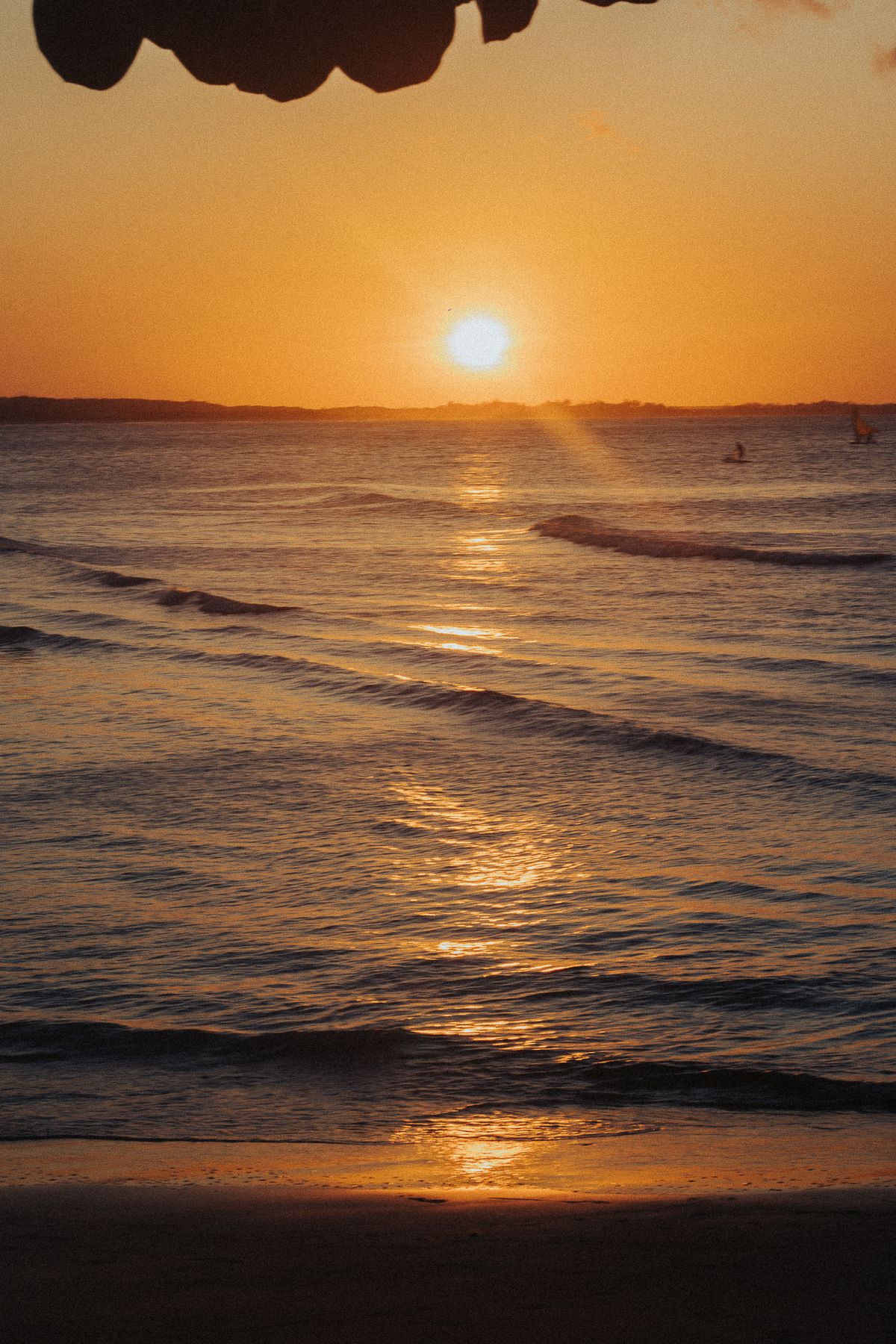
West-facing beaches catch the evening light as the sun drops. At a Blue Flag beach, that evening moment arrives somewhere with tested water, clean facilities, and a foreshore that has been properly managed throughout the day. Combining sunset orientation with certification is a higher bar than either alone — here's where to find beaches that clear both.
What Makes a Sunset Beach
A sunset beach faces west or northwest, with an unobstructed western horizon. The sun sets over the sea rather than behind land. Headlands, buildings, or coastal topography that blocks the western horizon will cut the sunset short or distort the light. The best sunset beaches have open water to the west for at least 30–40 degrees of horizon arc.
Beach orientation data on Zeach is sourced from the CSV dataset where available, using compass bearing of the beach face. Each beach page shows the direction the beach faces, the sea body name, and for many beaches the expected sunrise and sunset quality based on orientation and local topography.
Best Sunset-Facing Blue Flag Beaches by Country
Portugal — Atlantic West Coast
Portugal's entire Atlantic coast faces west, making it one of the best countries in Europe for sunset beaches. Comporta on the Alentejo coast is wide, exposed, and entirely west-facing — sunsets here are unobstructed over the open Atlantic. The beaches around Sagres at Portugal's southwestern tip face southwest, catching the last light of the day with dramatic clifftop context. Nazaré's main beach faces directly west and is well-known for striking evening light.
Spain — Atlantic and Bay of Biscay
The Atlantic coast of Spain — Galicia, Asturias, Cantabria — is less visited than the Mediterranean coast but has many west-facing certified beaches. The Rías Baixas in Galicia offer beaches in sheltered estuary mouths with western exposures and calm evening water. The Bay of Biscay coast can be rougher but sunsets over the sea are striking when conditions are clear.
Greece — Ionian Islands
The west coast of Greece and the Ionian Islands face the Ionian Sea to the west, making them the best sunset destinations in the Greek certified beach network. Lefkada's west coast beaches catch direct western light. Kefalonia and Zakynthos have west-facing certified beaches that combine the Excellent water quality of the Ionian Sea with some of the best evening light in the Mediterranean.
Ireland — Wild Atlantic Way
Ireland's certified beaches on the Wild Atlantic Way — Clare, Galway, Mayo, Sligo, Donegal — face directly west into the Atlantic. Water temperatures are cool (14–17°C even in August), but on clear evenings the sunsets are exceptional — long Atlantic horizon, no obstruction, the full sky turning from blue to orange. The combination of Blue Flag certification and Wild Atlantic sunset is genuinely distinctive.
Planning a Sunset Beach Visit
Arrive 30–60 minutes before sunset for optimal light. Sunset times vary dramatically by season and latitude: in June, northern European Blue Flag beaches see sun after 9–10 PM. In September, sunset comes earlier (7–8 PM) but the light is warmer and lower. October sunsets on the Portuguese and Spanish Atlantic coast — around 7–7:30 PM — often produce exceptional photography conditions with lower sun angle and golden hour lasting longer.
Most Blue Flag beaches close formal lifeguard operations at sunset. After sunset, official bathing supervision ends. Swimming after dark on an unsupervised beach is not recommended regardless of water quality certification.